
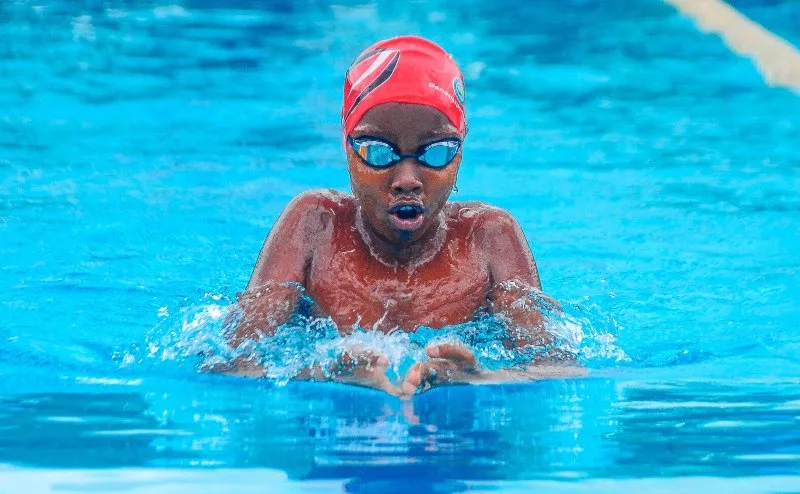
A total of 50 teams are expected to converge on Nanyuki for the third edition of the Kenya Aquatics National Junior Swimming Championship, scheduled for August 22–23 at St Christopher’s School.
The two-day championship will gather some of the nation’s most promising young swimmers as Kenya Aquatics continues to expand its junior development programme and identify emerging talent for future national duties.
Bandari Swim Club from Mombasa emerged as overall champions during last year’s second edition in Kisumu, and will be keen defend the title.
They, however, face a strong contingent of confirmed teams including Aqua Elite, Castle Sports, Genesis Sports, Gold Fish, Moi Educational Centre, Orca, Otters, Thika Academy, Premier Club, Pro Academy, Rupaz Elite, Nyeri Rware, Harpoons, Nyali School, Torpedo, Visa Dolphin, Wave Warriors, Aqua Shark Fin and Kilifi Aquatics.
Kenya Aquatics Technical Director Omar Omari said the widespread participation signals positive momentum for the sport.
“We anticipate about 50 teams in Nanyuki. This is encouraging because it shows that competitive swimming is growing beyond the traditional centres,” he said. “More schools, clubs, coaches and parents are investing in the development of young swimmers.”
The meet will prioritise technique, stroke development and progressive athlete growth, with strict qualifying standards raising the competitive bar. Omari emphasised that long-term development remains the core focus.
“The National Junior Championship is not just about winning medals. It gives us an opportunity to assess the progress of our young swimmers, identify areas that require improvement and expose them to competition at a higher level,” he said.
“Our objective is to build a clear pathway from club and school swimming to county, national and international competition. We want young swimmers to develop the right technique, discipline and confidence without putting them under unnecessary pressure.”
Coming two months ahead of the XI Africa Aquatics Zone III Championships—set for October 21–25 at Kampala International School in Uganda—the Nanyuki meet offers an important benchmark for national team hopefuls. Omari stressed the need for steady investment.
“International success starts with strong junior programmes. We must identify talent early, provide qualified coaching and give swimmers regular opportunities to compete. Nanyuki is part of that long-term process,” he said.
The Nanyuki event aims to boost swimming across the Mt Kenya region while offering athletes experience competing outside traditional hubs like Nairobi and Mombasa.
The federation expects coaches, parents, and fans to boost local hospitality and transport sectors.
Omari added, “We want to deliver a well-organised meet that gives every swimmer a positive experience. We also invite the people of Nanyuki and the surrounding counties to attend, support the children and experience the growth of Kenyan swimming.”