The battle for the Western Kenya vote is entering a new phase, with the emergence of Nairobi Senator Edwin Sifuna as a significant political force.
His rise is forcing both the opposition and Kenya Kwanza to rethink their strategies ahead of the 2027 General Election.
Barely a year before the polls, political activity in the region has intensified, revealing an emerging contest that could pit a younger generation of politicians against some of Western Kenya’s most established political figures.
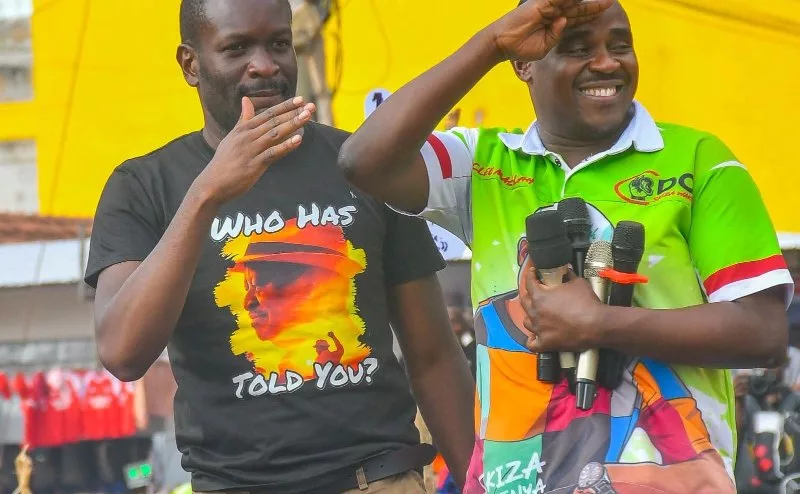
Sifuna’s Linda Mwananchi movement has been gaining visibility through rallies and meet-the-people tours, while allies of President William Ruto have responded with a wave of grassroots mobilisation, empowerment programmes and meetings with various groups.
The increasingly visible presence of Prime Cabinet Secretary Musalia Mudavadi in the region is part of that response.
So too is the involvement of other senior leaders, including National Assembly Speaker Moses Wetang’ula and Co-operatives Cabinet Secretary Wycliffe Oparanya, who are campaigning for the President’s re-election.
The emerging political duel is therefore about more than rallies. It is increasingly a contest over who will define Western Kenya’s political interests in 2027 and whether the region will once again negotiate its political influence through established leaders or seek a new generation of political brokers.
The appearance of DCP deputy party leader Cleophas Malala at Linda Mwananchi rallies in Kakamega county last weekend offered a further indication that the opposition camp is beginning to consolidate around the movement.
At the same time, the decision by ODM officials in Vihiga to convert all party offices into Linda Mwananchi movement offices points to an attempt to build an organisational structure that can operate beyond the Orange party’s current cooperation with Kenya Kwanza under the broad-based arrangement.
That development could present a challenge to the political calculations of the broad-based government, particularly if the movement succeeds in converting growing public enthusiasm into an organised electoral base.
Political scientist Prof Amukowa Anangwe said Sifuna’s emergence had injected new energy into Western Kenya politics and forced Kenya Kwanza leaders to respond.
He said the renewed activity by President Ruto’s allies reflects concern over the traction Sifuna has gained both in Western and beyond the region.
He said Kenya Kwanza’s strength in Western was largely anchored in the individual political interests and influence of leaders holding senior government positions and supporting Ruto’s re-election.
“The Kenya Kwanza interest in Western is the total sum of the individual interests of those supporting its agenda,” he said.
The implication is that the President’s camp faces the challenge of translating the influence of senior leaders into a coherent regional political project.
Sifuna, meanwhile, appears to be pursuing a different strategy: building grassroots momentum first and allowing the numbers to strengthen his position in the opposition’s eventual search for a presidential candidate.
Anangwe said Sifuna’s emergence had excited a region that wants to play a more direct role in determining the 2027 presidential contest.
Political analyst Martin Andati sees the heightened activity by Mudavadi and Wetang’ula as an attempt to contain what he calls the “Sifuna effect”.
But he argues that relying on established political methods may not be enough to neutralise the senator’s growing appeal.
“It will not work because they didn’t make it in 2002 and what’s coming in 2027 is bigger than what was happening during the Kanu removal. Apparently, they don’t seem to have learnt any lesson from 2002 and going back to the old Kanu antics will not work,” Andati said.
For Sifuna, however, the immediate challenge is not necessarily defeating Ruto but building enough political numbers to become a serious contender for the opposition presidential ticket.
“What Sifuna is doing is building up numbers that will help him land the opposition ticket. He is doing what Raila (Odinga) used to do by shoring up numbers which he later used to arm-twist other partners to become flag bearer,” Andati said.
This makes Western Kenya an important early battleground in the 2027 succession contest. The region’s political leaders are not merely campaigning for votes. They are positioning themselves for influence in the negotiations that will determine alliances, presidential tickets and running-mate calculations.
The central question is whether Sifuna can turn the current enthusiasm into a durable political organisation capable of challenging the established networks of Mudavadi, Wetang’ula and Oparanya.
Equally important is whether Kenya Kwanza can maintain the political advantage it gained through the broad-based arrangement or whether the alliance with ODM will eventually create space for an opposition movement to reclaim the region.
With both sides now mobilising aggressively, Western Kenya’s political contest is already taking shape as one of the defining battles of the 2027 election.