


Every election cycle, county governments unveil ambitious plans to pave roads, modernise markets, build health centres and construct ECDE classrooms.
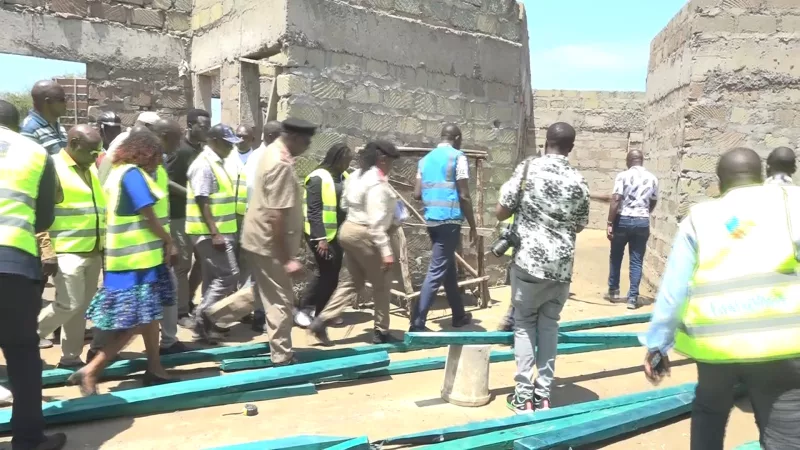
Years later, many of those projects remain abandoned behind rusting iron sheets, half-built walls or overgrown construction sites.
A new report by Parliament’s Budget Office suggests the problem is not always a lack of funding, but counties’ inability to turn approved budgets into completed projects.
The report shows that while county budget execution improved in the 2024-25 financial year, uneven implementation continues to leave critical development projects unfinished and residents without essential public services.
For ordinary wananchi, this explains why roads remain impassable years after groundbreaking ceremonies, markets stand incomplete, health facilities remain construction sites and promised classrooms never open.
The report found that more than 89 per cent of counties achieved satisfactory or better ratings in budget implementation in 2024-25, up from just over 70 per cent the previous year. However, several counties remained poor performers due to persistent weaknesses in executing approved development programmes.
“None of the counties were able to fully implement their budgets as approved, highlighting ongoing challenges in ensuring uniform and timely budget implementation across all counties,” the report states.
County governments are responsible for key services including healthcare, early childhood education, agriculture, local roads, water projects and trade infrastructure.
According to the report, project delays often begin long before construction starts.
Lengthy procurement processes, slow contract approvals, delayed payments to contractors, weak project management and poor planning mean many projects either start late or fail to commence before the financial year ends.
The consequences are felt directly by residents. Stalled rural roads raise transport costs for farmers and increase post-harvest losses.
Incomplete markets deny traders safer business premises while limiting county revenue collection.
Unfinished health centres force patients to travel longer distances for treatment, while delayed ECDE classrooms leave children learning in overcrowded facilities.
According to the controller of budget, an estimated Sh13.7 billion worth of county development projects have stalled across 32 counties, leaving hundreds of roads, markets, health centres and other public facilities unfinished despite billions of shillings already being spent.
Data from the Controller of Budget shows 237 projects have been classified as stalled, abandoned or underutilised as of June 2026, highlighting persistent weaknesses in project implementation by devolved governments.
The counties have already spent Sh8.5 billion on the projects but require an additional Sh5.3 billion to complete them, locking up scarce public resources while denying residents access to essential services.
Nairobi accounts for the largest value of stalled projects at Sh2.9 billion, followed by Isiolo with Sh1.47 billion.
Although counties recorded modest improvements in budget implementation during the 2024/25 financial year, project execution remains uneven across the country.
The Parliamentary Budget Office report notes that while more than 89 per cent of counties achieved satisfactory or better budget implementation, “the persistence of counties in ‘D’ and ‘E’ categories highlights ongoing challenges in ensuring uniform and timely budget implementation across all counties.”
According to the Controller of Budget, projects have stalled due to inadequate funding, contractor abandonment, contract disputes and missing project documentation, exposing taxpayers to losses while delaying delivery of critical infrastructure.
The PBO report also found that development spending remains below the legal threshold in many counties, warning that poor planning, procurement delays and weak budget absorption continue to undermine the delivery of infrastructure projects.
The stalled projects represent missed economic opportunities, denying communities improved healthcare, better transport networks, modern markets and water infrastructure while depriving local contractors, suppliers and workers of business and employment opportunities.
Although budget execution improved overall, the report notes that no county fully implemented its approved budget, underscoring the gap between planning and delivery.
The challenge is compounded by declining development spending. The report shows the average development expenditure score fell from 0.447 to 0.373 in 2024-25, with more than half of counties failing to meet the legal requirement of allocating at least 30 per cent of expenditure to development.
Instead, a growing share of budgets went towards recurrent spending such as salaries and operational costs.
The report also identifies poor management of pending bills as a major obstacle to project completion.
“These figures suggest widespread issues in cash flow and payment discipline, undermining trust with suppliers and affecting service delivery,” it says.
Delayed payments have become one of the biggest risks facing businesses that contract with county governments.
Many firms borrow from banks to finance projects, expecting payment after completion. When counties delay settlement, contractors continue servicing expensive loans, forcing some to cut jobs, suspend operations or avoid bidding for county tenders altogether.
According to the National Treasury, county pending bills reached Sh183 billion as of June 2025.
Nairobi accounted for the largest share at Sh86.8 billion, equivalent to nearly half of all county arrears and exceeding its annual budget. Kilifi followed with Sh9.3 billion, while Machakos owed Sh6.7 billion.
Treasury data shows Sh85.4 billion, or 45 per cent of pending bills, had remained unpaid for more than three years, highlighting chronic payment delays that continue to strain suppliers and contractors.
The report further notes that despite modest improvements in locally generated revenue, many counties remain heavily dependent on equitable share transfers from the National Treasury.
Revenue leakages, unrealistic revenue targets and weak collection systems continue to undermine financial independence, while delays in national disbursements frequently disrupt project implementation and contractor payments.
At the same time, rising wage bills continue to squeeze development spending. Many counties remain above the recommended ceiling on personnel costs, reducing fiscal space for infrastructure investment and other public services.
The Parliamentary Budget Office says its County Fiscal Performance Measurement Index is designed to provide an objective tool for assessing county performance across seven indicators, including budget execution, development expenditure, own-source revenue, wage management, pending bills, county assembly spending and audit outcomes.
It recommends institutionalising annual performance monitoring to strengthen accountability and improve the use of public resources.
Ultimately, the report argues that county budgets should be judged not by the size of allocations announced each year, but by whether those funds deliver completed roads, functioning hospitals, modern markets, water projects and classrooms.
For millions of Kenyans, the true measure of devolution is whether promised projects move beyond budget documents and become services that improve everyday lives.