


This has prompted the agency to scale up preparedness and emergency response efforts as the first impacts are already being felt on the frontlines of global hunger.
The warning comes as meteorological agencies, including Kenya’s own Meteorological Department (KMD), track the rapid intensification of the climate pattern in the tropical Pacific Ocean.
Forecasters are now assigning an 81 per cent probability that the 2026 El Niño will develop into a very strong event, and a 97 per cent chance that its effects will persist into the early months of 2027.
A Massive Threat to Millions Already on the Edge
“El Niño is a massive threat to the food security of millions who are already vulnerable,” said Carl Skau, WFP’s Acting Executive Director, in comments accompanying the analysis.
“The sooner we help families to prepare for these climate shocks, the greater our ability to save lives and protect livelihoods. Severe floods and droughts can quickly push communities from coping to crisis.”
Skau said WFP is not waiting for disaster to strike before mobilizing resources.
“WFP is already ramping up early response efforts in eight countries, and we stand ready to do even more,” he said.
He further pointed to the agency’s shift toward anticipatory action, getting cash, food stocks and logistical support into position before the worst of the rains or drought arrive, rather than responding only after communities have been pushed into crisis.
El Niño is not, in itself, a weather event. It is a naturally occurring climate pattern driven by warming sea surface temperatures in the tropical Pacific Ocean, which develops every two to seven years and reshapes rainfall and temperature patterns across much of the globe.
In East Africa, it typically brings a heightened risk of intense rainfall and flooding, while in other regions, including parts of southern Africa and Asia it might trigger prolonged drought.
The current event is expected to peak between September and December 2026, but its downstream effects on harvests, livestock, water supplies and infrastructure are expected to reverberate throughout 2027.
Kenya Maps Its Most Vulnerable Regions
In Kenya, the National Disaster Operations Centre (NDOC) has conducted its own risk assessment. The assessment identified counties across the Coast, Lake Basin, Rift Valley and North Eastern regions as facing varying levels of exposure to the anticipated conditions, in addition to major urban centers where poor drainage and strained infrastructure could turn heavy rainfall into a humanitarian emergency.
Nairobi, Mombasa and Kisumu have been flagged as high-risk urban centres. Officials say the expected weather conditions could overwhelm drainage systems, disrupt essential services and put pressure on infrastructure that is already stretched thin in Kenya’s fastest-growing cities.
Along the coast, the counties of Tana River, Kilifi, Lamu, Mombasa and Kwale are expected to face a combination of flooding, storm surges, coastal erosion and damage to infrastructure.
The government has warned that residents in some low-lying and coastal areas could be displaced if the anticipated conditions materialize as forecast.
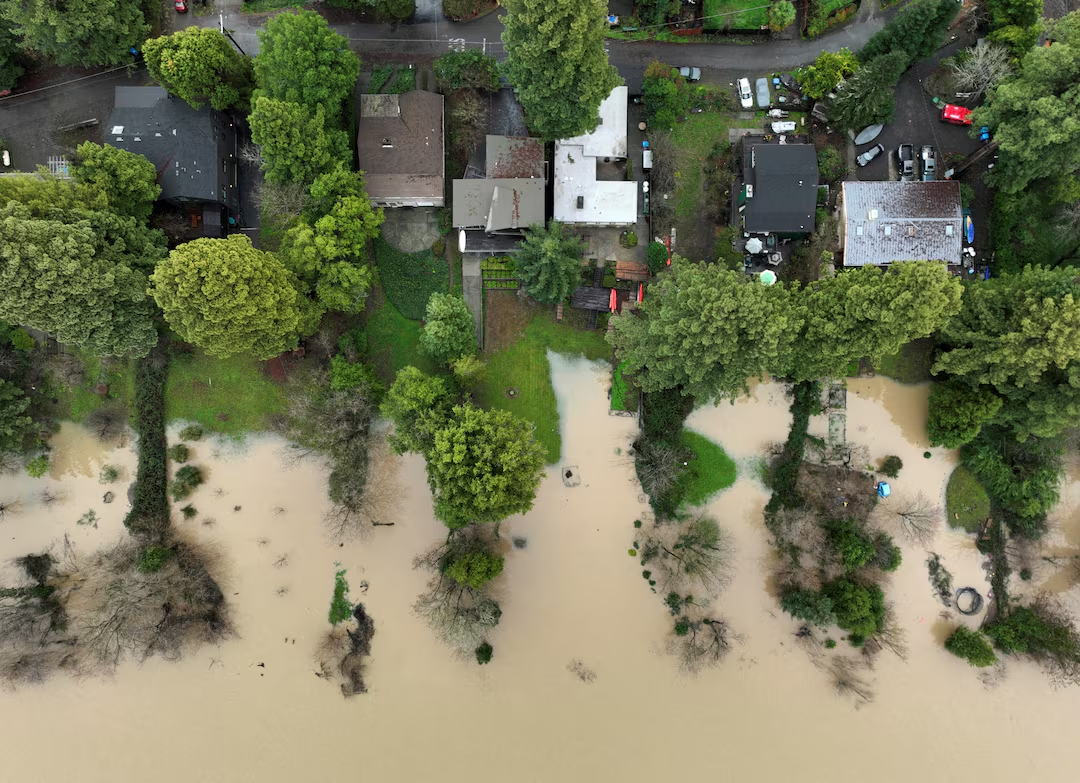
In the Lake Basin region, Kisumu, Busia, Siaya, Homa Bay and Migori have been identified as at risk of flooding, landslides, disease outbreaks and displacement, a combination of hazards that has historically strained health systems and humanitarian response capacity in the region during past El Niño events.
The Rift Valley presents a more complex picture. Turkana, Baringo, West Pokot and Narok are expected to face a mix of drought, flash floods and landslides, alongside livestock losses and food insecurity, illustrating how a single climate pattern can produce starkly different, sometimes contradictory, hazards within the same region depending on local terrain and existing vulnerabilities.
In the North Eastern region, Garissa, Wajir and Mandera, areas already grappling with chronic aridity and recurring drought cycles, are projected to face drought, water shortages, livestock losses, poor pasture and worsening food insecurity, compounding pressures on communities that depend heavily on pastoralism.
A Painful Precedent
Kenya’s history with El Niño offers a sobering reminder of what is at stake. The country experienced one of its most devastating episodes in 1997-1998, when widespread flooding claimed lives, displaced thousands of people and destroyed roads, bridges and homes across large parts of the country.
Since then, El Niño events in 2006-2007, 2015-2016 and 2023-2024 have each left their own mark, with the most recent event bringing heavy rains, flooding and landslides that killed hundreds of people and caused extensive damage to infrastructure, agriculture and livelihoods.
Kenya Meteorological Department has indicated that Kenya may see above-normal rainfall beginning in October as the current strong El Niño event develops, raising the risk that wetter-than-usual conditions could extend into early 2027.
Officials say the impacts are expected to be wide-ranging, affecting crops, livestock, roads, water systems, markets and health facilities alike.
Floods Disaster
Experts and officials have repeatedly pointed out that the scale of destruction linked to El Niño rains in Kenya is rarely just a function of the volume of rainfall itself.
Rather, it is the underlying vulnerabilities in the built environment and public systems that determine whether heavy rains remain a manageable weather event or escalate into a full-blown disaster.
Floods become disasters because of weak drainage, poor sanitation, substandard housing and fragile infrastructure, and lack of preparedness to direct and collect the runoff water; conditions that are widespread in many of Kenya’s rapidly urbanizing informal settlements as well as in rural areas with limited access to all-weather roads, flood barriers and early warning systems.
This distinction matters for how the country prepares. Unlike the El Niño event itself, which cannot be prevented, the conditions that turn flooding into a humanitarian emergency — collapsed drainage systems, informal settlements built on flood plains, roads that wash out annually, health facilities without contingency plans- are largely a product of long-term planning decisions, and are therefore within the government’s power to address.
The Preparedness Question
The scale of the forecast risk has renewed scrutiny of how well-prepared Kenya, and the region more broadly, are to mitigate the effects of a strong El Niño event.
Preparedness measures under discussion and, in some cases, already underway include pre-positioning emergency food and medical supplies in high-risk counties, clearing and reinforcing drainage infrastructure ahead of the rains.
Other measures include strengthening early warning systems that can give communities more lead time to move livestock and belongings to safety, and expanding cash-transfer and safety-net programs that allow vulnerable households to weather income shocks without resorting to negative coping strategies such as selling off productive assets or pulling children out of school.
WFP’s own approach reflects this shift toward anticipatory action. Rather than waiting for a flood or drought to unfold and then mounting a response, the agency is directing resources toward the eight countries it has identified as most immediately exposed, with the explicit goal of intervening before families are pushed from a position of coping into one of outright crisis.
Agency officials argue that early intervention, even modest support delivered in the weeks before a shock hits, is far more cost-effective and life-saving than emergency response mounted after the fact.
Looking Ahead
With El Niño’s peak still months away and its full effects expected to persist through 2027, humanitarian agencies and national governments across the affected regions face a narrowing window to shore up defenses.
For Kenya, that means moving quickly on infrastructure, drainage and early warning systems in the counties identified as most at risk, from the flood-prone coast to the drought-stricken counties of the north-east.
For WFP and its partners, the message from Skau and other officials is that the coming months represent a critical opportunity, not simply to respond to disaster once it strikes, but to blunt its impact before it does.
As the agency put it in its own assessment, the sooner families are helped to prepare, the greater the chance of saving lives and protecting livelihoods before the next wave of floods, drought and displacement arrives. The key point here is mitigation, rather than reaction after the event.