

Kenya hopes to get World Bank approval by October to spend $450 million (Sh58.2 billion) from undisbursed loans to cushion it from El Niño and Middle East conflict shocks.
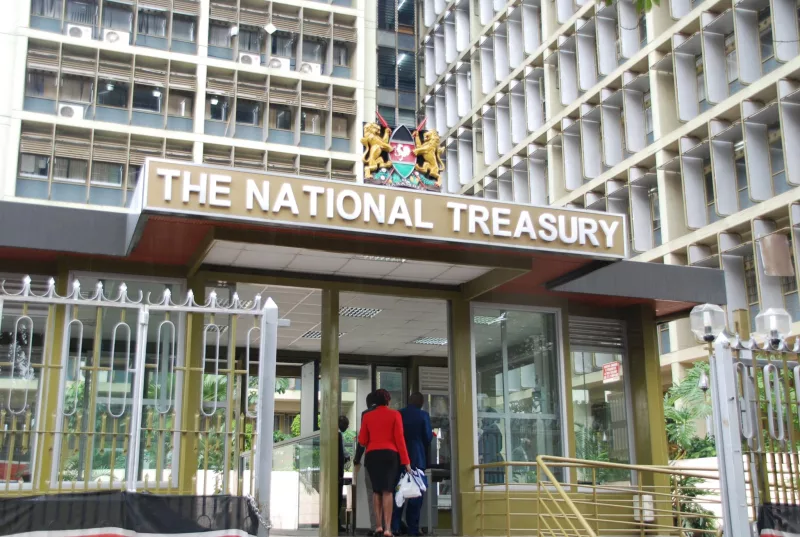
National Treasury sources confirmed that negotiations were concluded earlier this week.
“It is true that we finalised plans under an emergency financing arrangement on Monday. I cannot comment beyond this,’’ a source close to the matter told the Star.
On Tuesday, Bloomberg reported that the exchequer had finalised plans, paving the way for disbursement before the end of October.
Unlike conventional external borrowing, the funding will not increase Kenya’s debt stock.
Instead, it will be accessed through the World Bank’s Contingent Emergency Response Component (CERC), an instrument that allows countries to redirect up to 10 per cent of undisbursed funds from existing World Bank-financed projects toward emergency response during crises.
The arrangement remains available for six years, allowing countries to activate it multiple times, provided eligible funds remain available.
The move represents a rare attempt by the government to create fiscal space without taking on fresh debt at a time when public finances remain under pressure from high debt servicing costs and slowing economic growth.
The request comes as Kenya confronts mounting risks on two fronts.
The prolonged conflict involving Iran has unsettled global energy markets, driving up crude oil prices and increasing the cost of fuel imports, transport, electricity generation and manufacturing.
At the same time, climate experts are warning that a strengthening El Niño could bring severe weather disruptions across East Africa later this year.
The World Meteorological Organisation (WMO) has warned that El Niño is expected to strengthen rapidly between August and October, with an 80 per cent probability.
The UN weather agency says the phenomenon is likely to increase the frequency of extreme weather events, including floods, heavy rainfall, droughts and heat waves, depending on regional conditions.
For the Greater Horn of Africa, climate models indicate a heightened likelihood of above-normal rainfall during the coming months, raising concerns over flooding, infrastructure damage, disease outbreaks and disruption to agricultural production.
The warning comes after Kenya endured prolonged dry conditions that have damaged crops in key food-producing counties, including Trans Nzoia and parts of the North Rift, threatening maize yields ahead of the expected heavy rains.
The Central Bank of Kenya (CBK) has already flagged the worsening global outlook.
Speaking after the Monetary Policy Committee (MPC) meeting in June, CBK Governor Kamau Thugge said the conflict in the Middle East had significantly increased uncertainty over global inflation through higher energy prices.
He warned that escalating geopolitical tensions risked pushing domestic inflation higher through imported fuel costs, even as the economy continued to recover.
The MPC consequently kept the Central Bank Rate unchanged at 8.75 per cent, ending a streak of ten consecutive rate cuts that had begun in August 2024, citing heightened global risks and the need to preserve price stability.
The concerns are already filtering through to consumers.
Latest data from the Kenya National Bureau of Statistics (KNBS) shows annual inflation edged up to 6.5 per cent in July from 6.4 per cent in June, driven largely by higher prices of electricity, beef, potatoes and mangoes.
Although the prices of maize flour, tomatoes and cooking gas eased, the overall cost of living continued to climb.
“Annual consumer price inflation was 6.5 percent in July 2026, implying that the general price level was 6.5 per cent higher than it was in July 2025,” KNBS said.
The deteriorating external environment has also prompted leading international institutions to downgrade Kenya’s growth outlook.
In its latest Kenya Economic Update, the World Bank projects the economy will expand by 4.3 per cent in 2026, down from 4.6 per cent in 2025 and below its earlier forecast made before tensions in the Middle East escalated.
The lender cited higher oil prices, rising transport costs, more expensive imports and weaker remittance inflows as key factors weighing on growth.
Similarly, the International Monetary Fund (IMF) revised Kenya’s 2026 growth forecast downward to 4.5 per cent from 4.9 per cent, warning that global uncertainty and geopolitical tensions continue to pose significant downside risks.
The emergency facility would arrive barely two months after the World Bank approved a $750 million (Sh96.9 billion) Development Policy Operation (DPO).
It comprises a $340 million (Sh43.9 billion) International Bank for Reconstruction and Development loan and $410 million (Sh52.9 billion) in concessional International Development Association financing.
It is aimed at supporting fiscal reforms, strengthening resilience and reducing reliance on costly domestic borrowing.