


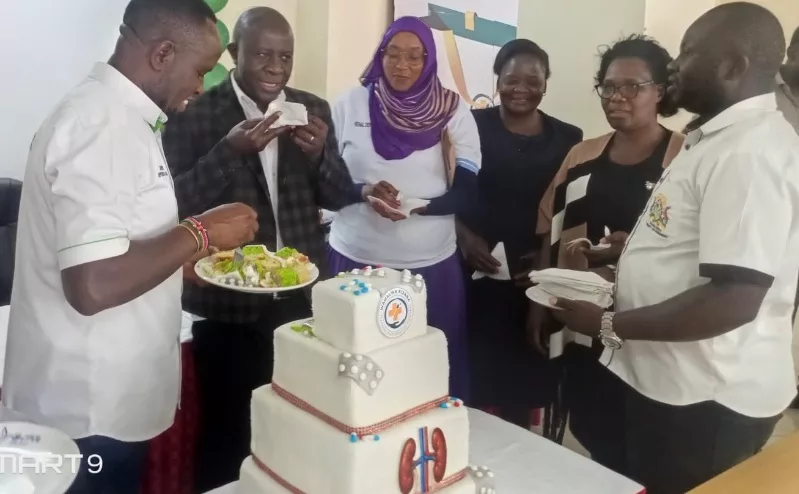
The Wamalwa Kijana Teaching and Referral Hospital in Kitale has unveiled a Sh100 million renal unit.
The major investment is expected to improve access to kidney treatment and spare patients the cost of travelling to Eldoret or Nairobi for dialysis services.
Trans Nzoia Governor George Natembeya commissioned the facility, which is equipped with modern dialysis machines sourced from Germany.
He said the renal unit is among the largest and most advanced in the region, with the capacity to serve 26 patients a day, translating into 156 dialysis sessions a week and more than 600 each month.
“Having this unit in our region is a major milestone and an achievement towards ensuring access to quality and affordable healthcare for our people,” Natembeya said.
The governor said the unit, fitted with 20 dialysis machines, will provide specialised treatment for patients suffering from both acute and chronic kidney disease.
He noted that patients with chronic conditions will benefit from reduced congestion previously experienced due to limited dialysis capacity, positioning Kitale as an emerging medical hub for the North Rift and Western regions.
Natembeya also announced plans to recruit renal specialists to strengthen service delivery, expand access to dialysis, lower treatment costs and reduce the need for patients to seek specialised care outside the county.
“This facility will save many residents from the high cost of seeking specialised treatment outside the county,” he said.
He praised the hospital staff for their contribution to improving healthcare outcomes and directed County Public Service Board chairperson Joyce Nakhanu to fast-track the recruitment of specialised nurses and technicians to manage complex haemodialysis procedures, monitor patients and minimise treatment-related complications.
“The new unit will significantly improve service delivery and we are determined to recruit specialised staff to support the hospital’s core mandate,” he added.
Natembeya also commended the specialised medical team at the hospital, saying its expertise had helped save many lives.
He noted that ongoing upgrades at the hospital had greatly reduced the need for patients to travel to Eldoret or Nairobi for specialised treatment.
The governor said the hospital now has a modern 10-bed Intensive Care Unit, while the expanded renal unit has been equipped with high-capacity dialysis machines to ease patient congestion.
At the same time, Natembeya warned public hospital medical personnel against conflicts of interest, absenteeism and referring patients to privately owned health facilities.
He challenged healthcare workers to choose between public service and private practice, expressing frustration over frequent strikes by health workers.
“Strikes are not part of any medical or nursing school curriculum; rather, they arise from labour grievances,” he said.
Natembeya further claimed that some union-backed work boycotts were influenced by external political or tribal interests rather than unresolved workplace concerns.
He also alleged that some medical officers assigned to public hospitals, including at Wamalwa Kijana, had neglected their official duties to operate private clinics and chemists, to the detriment of patients who depend on public healthcare services.
Finance and Economic Planning executive Wanjala Pepela was recognised for initiatives that enabled the county to receive a donation of 20 dialysis machines and other medical equipment.
Pepela thanked the governor for creating an environment that made the donation possible, saying his role had been to facilitate the delivery of the equipment.
WKTRH board chairman Prof Ferdinand Nang’ole was also commended for his efforts in transforming the referral hospital and promoting professionalism within the facility.
Nang’ole stressed the need to recruit specialised personnel to match the hospital’s expanding infrastructure, saying both the ICU and renal unit require highly trained professionals.
He said intensive care units need critical care physicians and specialised nurses capable of operating advanced life-support equipment and monitoring critically ill patients.
“Proper dialysis and management of acute or chronic kidney disease require trained nephrologists and renal-certified nurses to manage specialised equipment and purified water systems. I appeal to the County Public Service Board to recruit these specialists to reduce referrals to costly treatment centres such as Nairobi and Eldoret,” he said.
County Public Service board chairperson Joyce Nakhanu said the governor’s decision to appoint Nang’ole to chair the hospital board had borne fruit. She urged healthcare workers to remain committed to delivering quality services.
She also warned against the practice of referring patients from WKTRH to health facilities owned by members of staff.
Head of the County Public Service Truphosa Amere described the new renal unit as a milestone that would improve healthcare for more than 1.7 million residents.