



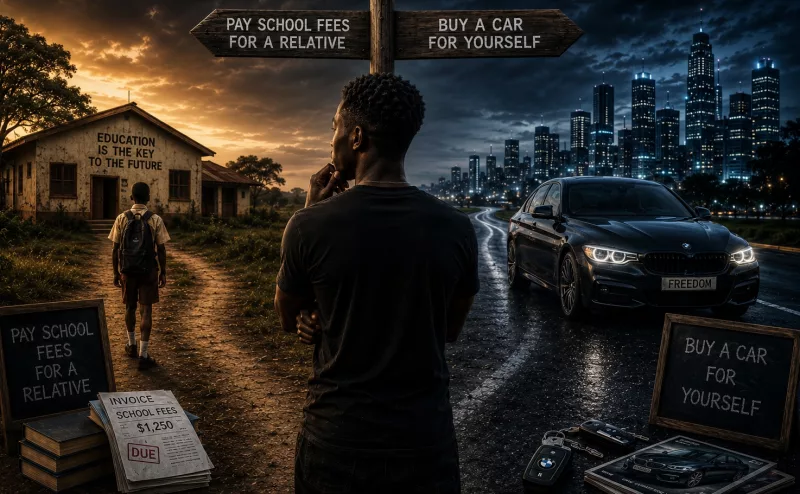
” Is it morally acceptable to buy a car at a time when some of your uncle’s children have been sent home for school fees and the family is unable to raise money for school fees? ” Ja Loka.
A social media post by Kenyan influencer Ja Loka has ignited a heated discussion online after he posed a question that touched on one of the country’s most sensitive topics: family responsibility versus personal ambition.
What appeared to be a simple question quickly evolved into a wider conversation about family obligations, financial independence, and the pressure often placed on successful relatives.

Kenyans Divided on the Issue
Many social media users argued that individuals should prioritize their own goals and financial stability before taking on additional family responsibilities.
Several commenters cited the popular saying, “Your brother’s poverty cannot deny you sleep,” suggesting that people should not be expected to sacrifice their personal progress to solve problems that may not be theirs to carry.
According to this group, buying a car or investing in personal development does not necessarily mean one does not care about family. Instead, they argued that financial boundaries are necessary, especially during difficult economic times.
Others pointed out that many young professionals and entrepreneurs are already struggling with high living costs, taxes, and increasing responsibilities, making it difficult to support extended family members indefinitely.
Calls for Family Support
On the other side of the debate were those who felt that helping a sibling educate their children should take priority over purchasing a vehicle.
These users argued that education is a long-term investment that can transform lives and create opportunities for future generations.
Some described the idea of choosing a car over a relative’s educational needs as selfish and contrary to African values, which traditionally emphasize collective responsibility and family support.
A Reflection of Changing Times
The debate also highlighted the growing conversation around “black tax” ; the expectation that financially successful individuals should support their extended families.
While some believe this support is a moral obligation, others argue that the pressure can become overwhelming and may prevent people from achieving their own financial goals.
One user, Leonard, offered a middle-ground perspective, saying that people should help only when they are genuinely able to do so and without resentment.
His view resonated with many who believe support should come from willingness rather than obligation.
As the discussion continues online, Ja Loka’s question has revealed a reality many Kenyans face daily: balancing family expectations with personal dreams in an increasingly challenging economic environment.