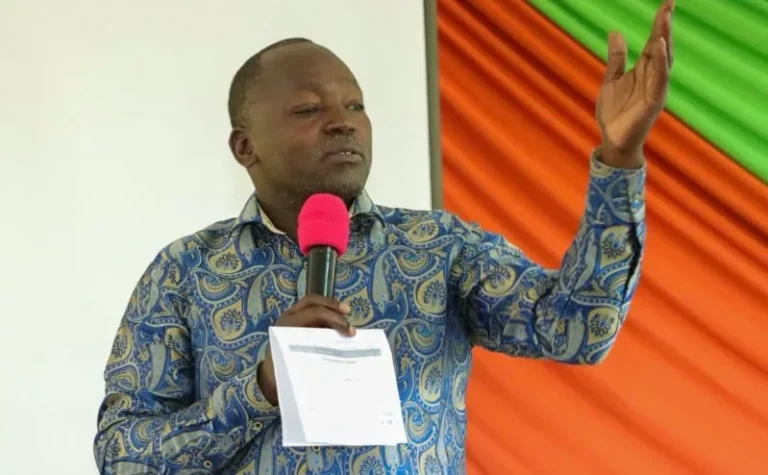



Nairobi County Assembly Majority Leader Peter Imwatok has called for thorough probe into the collapsed South C building.
Imwatok questioned why some the Office of the Director of Public Prosecutions did not charge some officials responsible for approval of buildings in the county.
The Director of Public Prosecutions on Friday approved the prosecution of dozens of individuals, including senior public officials, developers, engineers and architects, over the collapse of the Manzi Towers building in Nairobi’s South C area earlier this year.
In a statement issued on Friday, the office of the DPP said it had completed an independent review of an investigation file submitted by the Directorate of Criminal Investigations (DCI) concerning the January 2, 2026 tragedy and found sufficient evidence to support criminal charges against several suspects.
The ODPP said the decision was reached after a thorough analysis of the evidence and that there exists a realistic prospect of conviction against those implicated in the collapse.
“I am not a lawyer, but what I cannot understand is how the ODPP works. How can you charge everyone involved and omit the person at the center of the approval process? There are people responsible for approvals, and that is how the approvals committee is structured,” Imwatok said.
The majority leader praised the government’s efforts to restore accountability and good governance but urged the ODPP to remain independent and resist any influence from political interests.
“I urge the ODPP, in the same breath, to charge more officials,” he said. The charges stem from investigations into the approval, oversight, and regulatory processes surrounding the construction project before the building collapsed.
Nairobi Governor Johnson Sakaja last week suspended chief officer for urban planning Patrick Analo and appointed Dominic Mutegi, formerly Director of Development Management in acting capacity.
The governor also ordered the immediate reconstitution of the Urban Planning Technical Committee, the body responsible for processing development approvals, in what he described as a broader effort to strengthen accountability and transparency.
“Corruption has no place in public service. Every public officer is individually accountable for their actions and must be prepared to answer to the law where allegations of wrongdoing arise,” Sakaja said.