

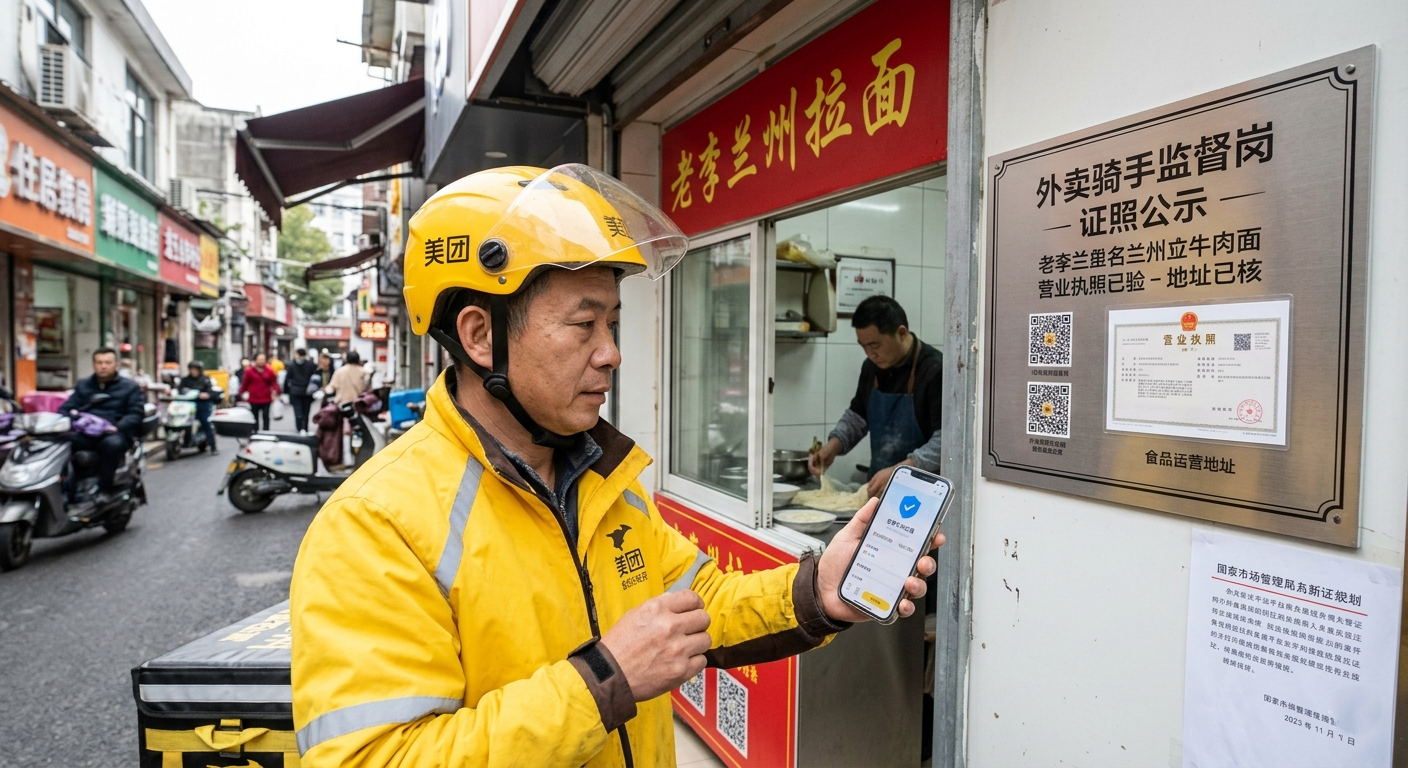
China’s food delivery apps will now have to verify restaurants’ licences and operating addresses, as authorities crack down on thousands of “ghost kitchens” that have raised food safety fears.
“Ghost kitchens” refer to takeaway merchants on food delivery platforms with no physical shop fronts. These have come under scrutiny recently for operating often without a licence.
According to new rules that took effect on Monday, shop listings on food delivery apps will need to match physical stores, and vendors have to indicate if they do not offer dine-in services.
This is the latest effort by Chinese authorities to regulate the country’s cut-throat food delivery industry.
The scrutiny of “ghost kitchens” came about last year, after a man in Beijing lodged a complaint to local authorities over an unsatisfactory cake – topped with inedible flowers – he had ordered from a food delivery app, state media reported.
Officials found that the cake chain he had ordered from listed nearly 380 locations on major e-commerce platforms but did not have a single physical store. Its online shops also used forged business licences.
Further investigation revealed that cakes ordered from the stores were outsourced to an order-transfer platform, where food orders were awarded to third-party vendors with the lowest bids.
Authorities found a total of 3.6 million cake orders across two order-transfer platforms, state news agency Xinhua reported.
They also recorded 67,000 “ghost shops” across seven major food delivery platforms, which together with the order-transfer sites “formed an illegal supply chain through mutual collusion”, Xinhua reported.
Food delivery platforms were complicit in these arrangements, the report added. “If we’re too strict in our review, the merchants would go to other platforms,” a staff member from one delivery app reportedly told officials.
China’s food delivery sector is characterised by competition so fierce that it has alarmed the authorities.
Last year, a price war among major delivery apps led the government to warn against such a race to the bottom. And bearing the brunt of ever-speedier takeouts are delivery riders scrambling to meet tight deadlines for a pittance.
In April, the State Administration for Market Regulation said that they have fined seven e-commerce platforms – including Taobao, JD.com, Meituan and Pinduoduo – a total of 3.6 billion yuan ($530m; £400m), mostly over ghost deliveries.
As the campaign against “ghost kitchens” continue, merchants themselves have taken steps to assure consumers of food safety.
According to a Xinhua report, more than 20 takeout stalls in the eastern city of Hangzhou have installed “transparent kitchens” with live broadcasting features, allowing consumers to view food preparation in real time.
And in the nearby Anhui province, authorities announced last week that they have signed a food safety agreement with Meituan, Taobao and JD.com, which includes using AI models to monitor kitchens and rewarding delivery riders for whistleblowing on illegal restaurants.