


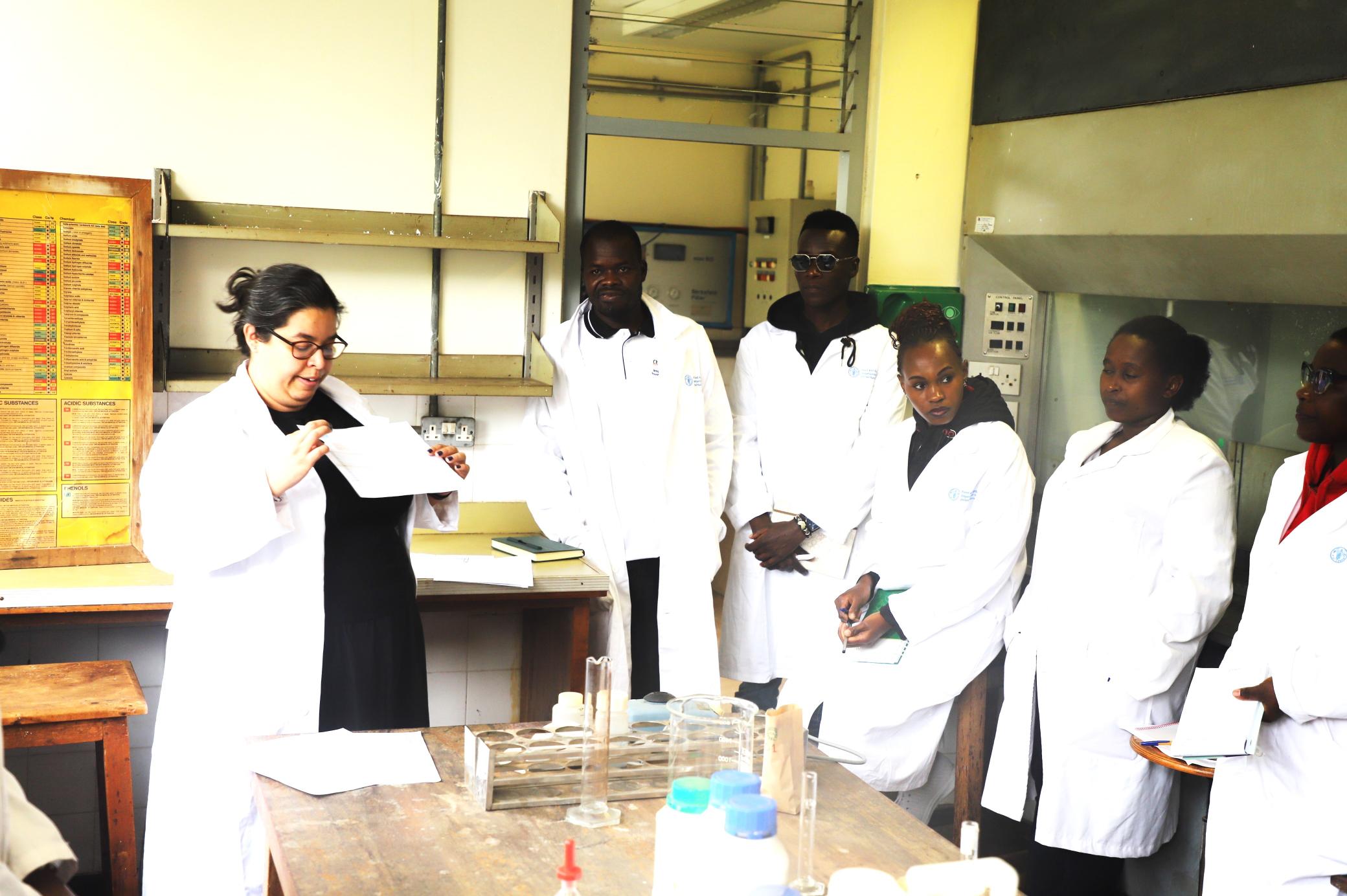
Thirty soil laboratory technicians from 11 research institutions have undergone training on soil mapping, analysis and data collection aimed at improving fertiliser recommendations and strengthening agricultural decision-making.
The technicians benefited from harmonised soil analysis training under the Global Soil Laboratory Network, an initiative designed to standardise laboratory practices across countries.
Noorunisha Abdool, a soil laboratory consultant with the Food and Agriculture Organization of the United Nations, said the training is expected to improve the generation of reliable soil data to guide both national policy and on-farm agricultural decisions.
The programme is focused on strengthening national laboratories by equipping technicians with both theoretical knowledge and practical skills.
“The soil analysis technical component of the programme focuses on sample preparation, analysis, quality control and quality assurance, analytical method validation and the implementation of standard operating procedures for the analytes selected under the framework of the programmes,” Abdool said.
The training is part of the SoilFER programme, jointly funded by the United States Department of State and the Ministry of Foreign Affairs of Japan.
Participants included professionals the Kenya Agricultural and Livestock Research Organisation, Kenya Plant Health Inspectorate Service (Kephis), Kenya Bureau of Standards (Kebs), Coffee Research Institute in Ruiru, Tea Research Institute in Kericho, Kenya Forestry Research Institute and other laboratory-based organisations.
For some participants, the training has opened new professional frontiers.
Evans Kurgat from Kebs said he had never handled soil samples in his eight years at the institution but now sees new opportunities in soil analysis.
“I look forward to doing so in the near future. This training provides an opportunity to learn soil analytical techniques that have just come at the right time,” he said.
Alex Njugi, a specialist with FAO Kenya Soil Laboratory, said the selection of participants was deliberate, focusing on geographical representation, laboratory specialisation and age.
“We considered geographical representation, laboratory specialisation and age. They are all young because we are investing in the future. They will use these skills for many years and help spark greater youth interest in agriculture,” he said.
Among the beneficiaries is 24-year-old Talaso Haro, a recent Analytical Chemistry graduate working at Kephis, who said the training has strengthened her technical capacity.
“I have re-learned soil pH and electrical conductivity analysis, soil texture, boron, calcium carbonate and gypsum analysis. These skills will be directly applicable in my daily work,” she said.
Another participant, agronomist and laboratory analyst Innocent Mugeni, 33, said the programme is bridging a key skills gap by introducing wet chemistry techniques in addition to the dry soil chemistry methods he previously used.
He also said the value of professional networking during the training.
Veteran technician Fred Kimathi, who has worked at Kalro’s soil chemistry laboratory for more than three decades, emphasised the importance of accuracy in early laboratory processes.
“Sample reception, labelling and equipment calibration may look simple, but they are critical stages that determine the quality of results,” he said.
He added that retooling technicians on such fundamentals is essential and timely.
Abdool expressed confidence that the training would significantly improve laboratory competence across participating institutions.
“They will be able to apply standardised procedures for soil sample handling and preparation, while integrating quality control and quality assurance systems in line with SoilFER protocols.”
She added that this will enhance soil analysis and mapping of nutrient distribution in Kenya and beyond.
National project coordinator Barrack Okoba underscored the importance of soil data in boosting agricultural productivity.
“Soils are the foundation of better production and better nutrition. Generating and documenting soil knowledge is essential,” he said.
The initiative brings together institutions across the agricultural research and regulatory ecosystem, reinforcing efforts to improve soil health management and support evidence-based fertiliser recommendations.