

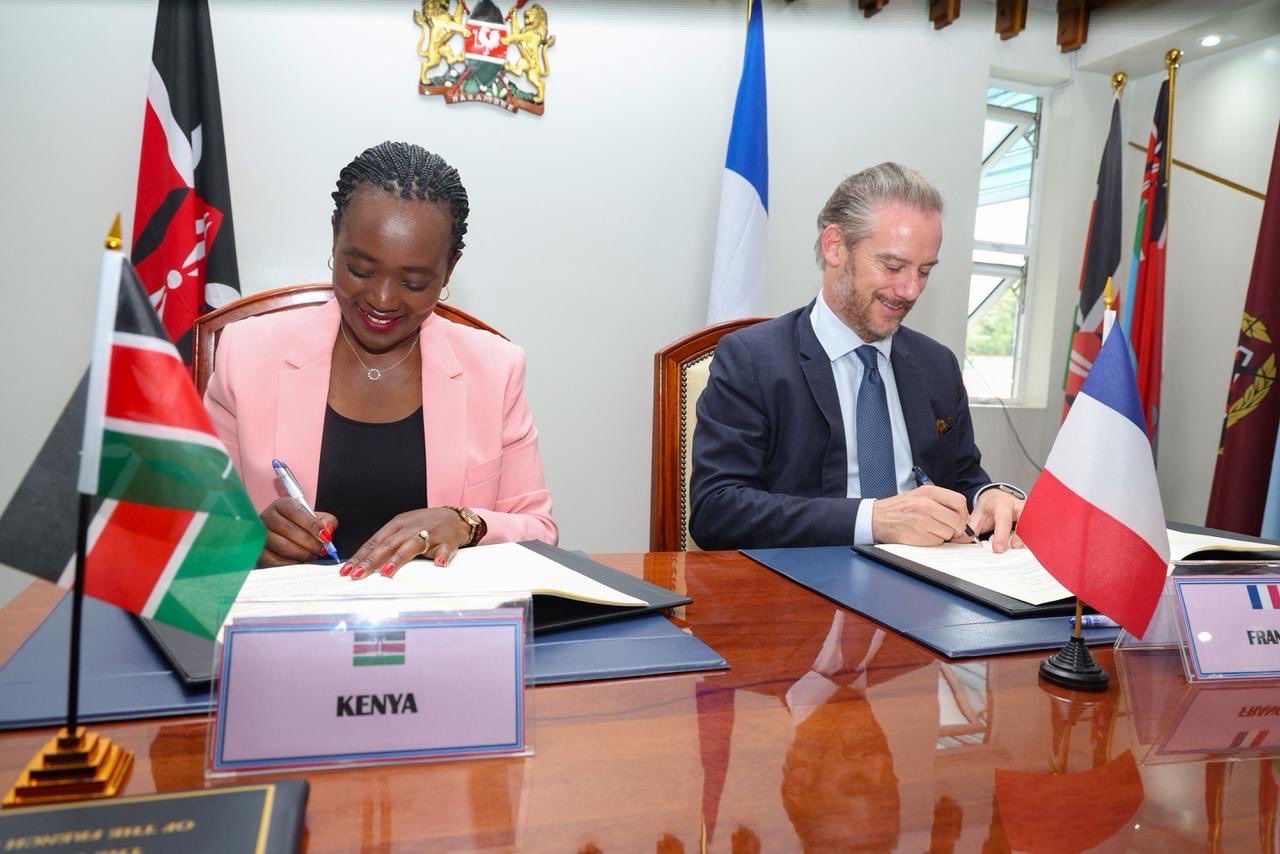
Kenya and France have formalised a far-reaching defence cooperation agreement that will deepen military ties, enable joint operations and allow reciprocal deployment of forces.
Ratified by the National Assembly, the five-year agreement — effective November 2025 and automatically renewable — establishes a comprehensive framework for defence collaboration between the two states.
It covers training, joint exercises, intelligence-sharing and strategic dialogue. It will be reviewed after 10 years, but can be terminated by either side with three months’ notice.
The agreement sets out the legal status, privileges and obligations of visiting forces, and creates a structured cooperation framework to facilitate strategic dialogue, officer exchanges, exercises, training, sharing of knowledge, conferences, seminars and visits.
Personnel from either country deployed in the other will be allowed to wear uniforms, carry service weapons and operate communication systems, subject to host nation approval.
The host country will also facilitate entry, movement and logistical support, including visa processing and access to necessary infrastructure.
The deal provides significant legal and financial protections for visiting forces. While host nation laws apply, sending states retain primary jurisdiction over offences committed in the course of official duty. Disciplinary matters remain exclusively under the sending country’s control.
In addition, both parties waive claims against each other for damage caused in the course of service, except in cases of serious or wilful misconduct. Where harm is caused to third parties, responsibility is borne by the party at fault, or shared equally where liability is unclear.
The agreement also includes wide-ranging tax and customs exemptions. Military equipment, personal effects, furniture and goods imported for official use will be exempt from duties, while salaries paid to visiting personnel will be taxed only in their home country.
Each side will largely shoulder its own costs of participation, with only mutually agreed-upon expenses shared. Emergency medical care provided by host nation military services will be free, although other treatment may attract charges.
A Joint Working Group comprising officials from both defence ministries will oversee implementation, meeting at least once a year to coordinate activities and resolve disputes. Any disagreements arising from the agreement will be settled through diplomatic channels rather than litigation.
The framework is designed to enhance collaboration between the Kenya Defence Forces and the French military, while strengthening capacity in areas such as maritime security, counterterrorism and regional stability.
The agreement comes against a backdrop of increasing geopolitical competition in the Horn of Africa and the Western Indian Ocean, regions that have attracted growing interest from global powers.
France has significantly reduced its military footprint in Africa following forced withdrawals from Mali, Burkina Faso and Niger. It, however, maintains a base in Djibouti.
By formalising defence ties with Paris, Nairobi seeks to diversify and strengthen its security partnerships, while gaining access to advanced training, technology and operational support.
However, provisions allowing visiting forces to operate with certain immunities, combined with tax exemptions and jurisdictional protections, could spark debate over the extent of oversight and the balance between cooperation and control.
There are also concerns about the potential impact on local communities, particularly in areas where military exercises or deployments may occur.
The agreement provides for compensation mechanisms in cases of damage or injury, but details on enforcement and transparency remain limited.
Despite these concerns, the government has indicated that the pact aligns with Kenya’s constitutional and legal framework, including the KDF Act, and has undergone stakeholder consultations involving key ministries and security agencies.
In her memorandum seeking the approval of the National Assembly for the ratification of the cooperation deal, Defence Cabinet Secretary Soipan Tuya said the agreement seeks to strengthen defence relations, enhance military cooperation, and promote mutual understanding between the armed forces of the two countries.
“The main object of the agreement is to strengthen the good and friendly relations between the parties through enhanced defence cooperation.
“The agreement provides the legal framework governing the presence and activities of visiting forces from either country and defines key terms and responsibilities,” Tuya said in the memo.
Following the signing of the deal, the CS added that the pact underscored the fact that the two sides shared a commitment to global peace and stability.
She said that it also reflected a mutual understanding that collaboration in defence and security is essential to addressing emerging and transnational threats.
“For Kenya, this partnership is both timely and strategic. It aligns with our national security priorities and strengthens our defence diplomacy agenda, anchored on peace, security and sustainable development,” she said.
Financially, the deal is expected to have minimal impact on the national budget, with most costs absorbed within existing allocations and shared with the French government where necessary.
For France, the agreement reinforces its strategic foothold in East Africa at a time when its influence in parts of West Africa has faced setbacks.
Following the signing, the Embassy of France in Nairobi said as allies and neighbours in the Indian Ocean, the two states have a common interest in ensuring regional security.
“Its purpose [the agreement] is to establish a legal framework for defence cooperation activities, making our cooperation more efficient, effective, and timely in addressing contemporary security threats,” the embassy said.