


The Mandera county government is stepping up efforts to strengthen foundational literacy among young learners, with a new language teaching programme expected to reach an additional 5,000 children across the county.
The initiative seeks to address learning gaps at the early childhood level by equipping teachers with structured teaching skills and practical approaches to help children develop essential language and communication abilities before transitioning to primary school.
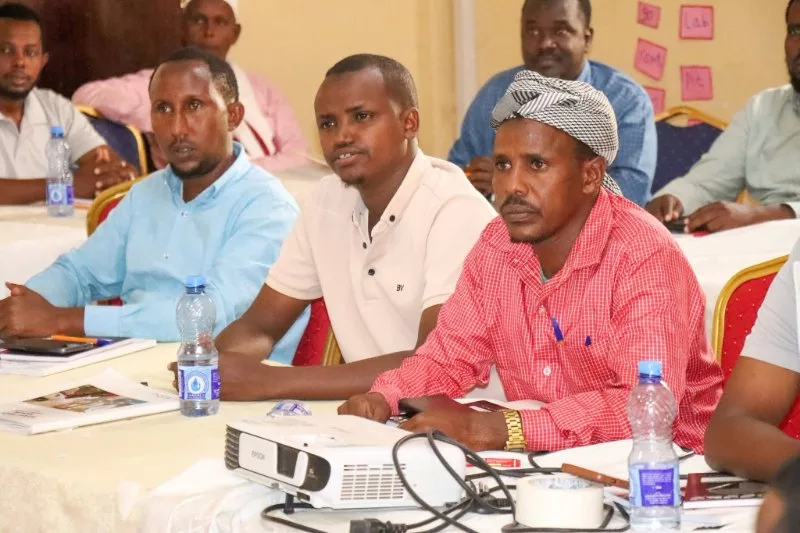
As part of the expansion, the county government has trained sub-county education coordinators in a seven-day Structured Pedagogy Training on Language Tayari, conducted in partnership with education technology organisation EIDU.
The coordinators are expected to cascade the training to 181 ECDE teachers across their respective sub-counties between November 19 and 22, 2026, paving the way for the programme’s wider implementation.
The latest intervention builds on the rollout of the Mathematics Tayari and Digital Personalised Learning (DPL) programmes in August 2026, which saw EIDU expand its reach in Mandera from 11,000 to 16,000 learners following the inclusion of 77 additional schools.
By introducing structured language instruction alongside mathematics and digital learning, the county hopes to strengthen children’s foundational competencies and improve their readiness for formal primary education.
County chief officer for education and ECDE, Abdikadir Adan Alio, who presided over the closure of the training, said the initiative was part of the county’s broader commitment to improving the quality of early childhood education through continuous investment in teachers’ professional capacity.
He said the programme was informed by the need to give children a strong educational foundation during their formative years, when the development of language, literacy and numeracy skills plays a critical role in shaping their subsequent learning experiences.
“Early childhood education is a critical foundation for a child’s educational journey. Weak foundational literacy and numeracy skills can make the transition to primary school difficult, with children often struggling to cope with increasingly complex learning demands,” he said.
“By expanding structured pedagogy programmes and investing in teacher capacity, we are is seeking to address these challenges at the earliest stage of education rather than waiting for learning gaps to widen.”
It said its long-term ambition was to ensure that no child transitions to Grade 1 without the basic ability to read, adding that strengthening teaching methodologies at the ECDE level was central to achieving the goal.
The partnership with EIDU has also provided an opportunity to integrate technology-supported learning with structured classroom instruction, allowing teachers to adopt approaches intended to make learning more effective and responsive to children’s needs.
The county government acknowledged EIDU’s financial and technical support, saying collaboration with education partners remained important in addressing existing gaps and improving learning outcomes across Mandera.