

For Sylvester Oluoch a smallholder farmer in Ugenya, this season failed short season rains mean more than a poor harvest, he is casting doubt over his ability fend for his family in the coming months.
The dejected Oluoch said that this means school fees might end up being unpaid, mounting debts, reduced meals at home and another season of uncertainty over whether the land will provide enough to sustain the family.
When the rains are unreliable, farmers like him growing vegetables and other crops that need regular watering face a difficult choice pay for irrigation or risk losing their investment in seeds, fertiliser and labour.
“The vegetables weathered and look at the maize they have folded like onions, I didn’t plant with the initial rains and thought it will continue for longer,” He told The Star.
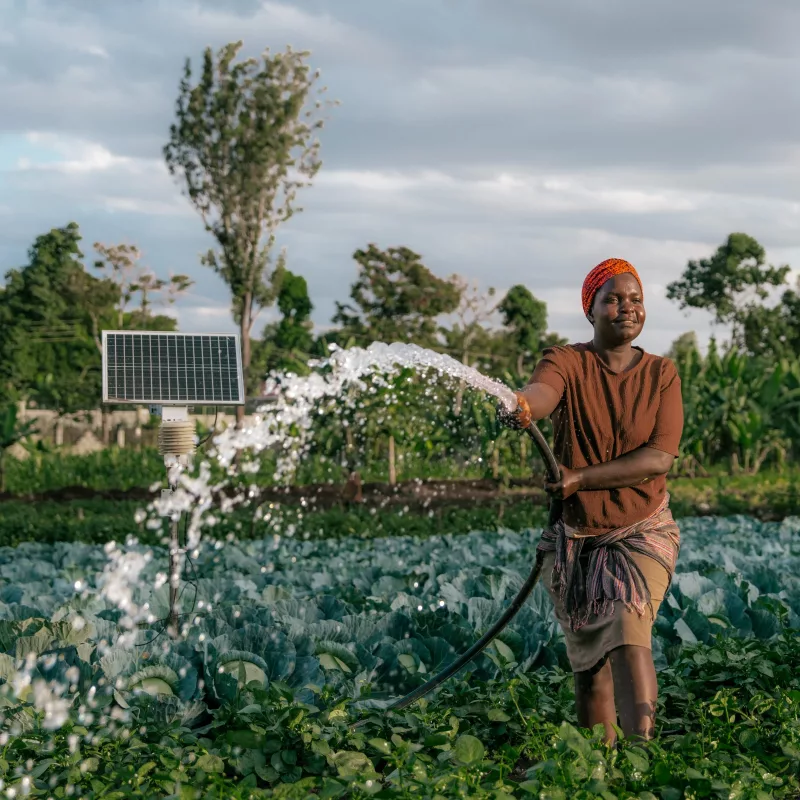
However, World Bank and Global Off-Grid Lighting Association (GOGLA) now say for him and many other farmers suffering in the hands of the changing climatic conditions solar-powered irrigation is emerging as one possible way out.
In the newly released Off-Grid Solar Market Trends Report 2026, World Bank jointly with GOGLA now say using sunlight to pump water from rivers, boreholes and other available sources, could help farmers maintain production during dry spells without relying entirely on expensive fuel or grid electricity.
But for farmers already struggling with the cost of farm inputs, the question has been whether they can afford the technology in the first place.
The Kenya National Bureau of Statistics (KNBS), in its Economic Survey 2026, reported that agricultural growth slowed to 2.8 per cent in 2025, down from 4.3 per cent in 2024.
It attributed the sector’s mixed performance to uneven weather conditions and other structural challenges, with below-average short rains constraining production from rain-fed crops.
GOGLA Executive Director Sarah Malm says solar irrigation offers a way to reduce that dependence.
A solar-powered pump can draw water during daylight hours, allowing farmers to irrigate crops when rainfall is insufficient. Where water is available and the equipment is properly sized, this can help farmers maintain more consistent growing conditions.
“Solar now irrigates farms, keeps clinics open, and powers the businesses that hold rural economies together, these are the functions of economic infrastructure. Yet financing has not kept pace with what off-grid solar is being asked to do,” said Malm.
The report found that for smallholders who depend on rainfall, the challenge is to protect their harvests when weather conditions become unfavourable.
It says that unlike diesel-powered pumps, solar pumps do not require regular fuel purchases, and can therefore reduce exposure to fluctuating fuel costs, although farmers must still account for equipment installation, maintenance, repairs and possible battery replacement.
The potential savings matter in a business where profit margins can be thin and a single failed harvest can wipe out months of work.
“Income levels for many smallholder farmers remain low, and industry experts highlight affordability as a significant barrier to greater uptake,” says the World Bank research on off-grid solar.
The government has been piloting the uptake of solar irrigation through the Financing Locally Led Climate Action (FLLoCA) Programme.
Jointly funded by the Kenyan government, the World Bank, Ministry of Foreign Affairs of Denmark (DANIDA), Swedish International Development Cooperation Agency (SIDA) and the German government, the initiative is helping communities build resilience and strengthen local capacity to address the impacts of climate change.
“Use of solar energy has lowered farming costs since farmers no longer rely on expensive fuel-powered generators. As a result, many farmers are now able to expand their farms, grow vegetables, maize and fruits in large quantities and harvest more produce,” says a beneficiary of the FLLoCA programe in Tana River Doyo Mwajuma.
The new world bank report, found that the number of people using off-grid solar products globally increased by 26 per cent between 2023 and 2025, reaching 149 million from 118 million.
The products covered include solar home systems, lanterns, water pumps and other equipment serving households and businesses outside conventional electricity networks.
The report identifies off-grid solar as the least-cost electricity solution for at least 398 million people worldwide who lack access to electricity.
It also highlights the technology’s growing role in supporting agriculture, small businesses and essential services.
An estimated 7.4 million people globally use off-grid solar to power microenterprises or support income-generating activities.
However, the study found that the biggest obstacle may be the initial cost. A farmer who struggles to purchase fertiliser or certified seeds may find it difficult to finance a solar pump, even if the equipment could reduce expenses over time.
The findings identify affordability constraints, particularly for customers buying higher-cost productive-use technologies, and reports that solar water pump sales have plateaued.
While earlier research found that low incomes among smallholder farmers were limiting uptake of solar water pumps.
A 2025 GOGLA study found that 40 per cent of customers in its analysed portfolios were struggling to pay instalments for pay-as-you-go solar systems.
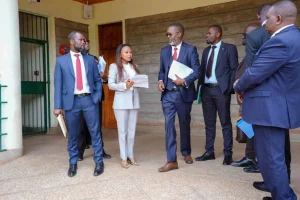
Irrigation Principal Secretary Ephantus Kimotho said access to credit remains one of the biggest barriers to irrigation adoption.
Smallholder farmers are often considered high-risk borrowers due to lack of collateral, while irrigation suppliers face high costs reaching rural customers.
To bridge this gap, he said, the government is working with development partners and the private sector to implement a results-based financing (RBF) model.
“Through this model, suppliers will receive rebates after verified installation of working irrigation equipment, this will help lower equipment costs for farmers, reduce market risks for suppliers and ensure quality installations,” he said.
The a 10-year blueprint (2025–2035) anchored on the Farmer-Led Irrigation Development (FLID) approach under the National Irrigation Sector Investment Plan (NISIP), is targeting more than five million farmers and about 350,000 acres by enabling individual farmers and small groups cultivating between half and two hectares to invest in irrigation systems suited to their needs.
Access to affordable credit, agricultural cooperatives and shared irrigation facilities could help reduce the burden. Under a shared arrangement, several farmers could contribute towards the cost of a pumping system rather than each purchasing one independently.
Through a partnership with the World Bank under the Kenya Off-Grid Solar Access Project (KOSAP), the government has established mini-grids and supported companies providing solar home systems in underserved areas.
Currently, Kenya has 210 megawatts of solar power connected to the national grid, while more than one million solar home systems have been installed across the country.
He said that these off-grid solutions have significantly increased electricity access levels nationwide.