


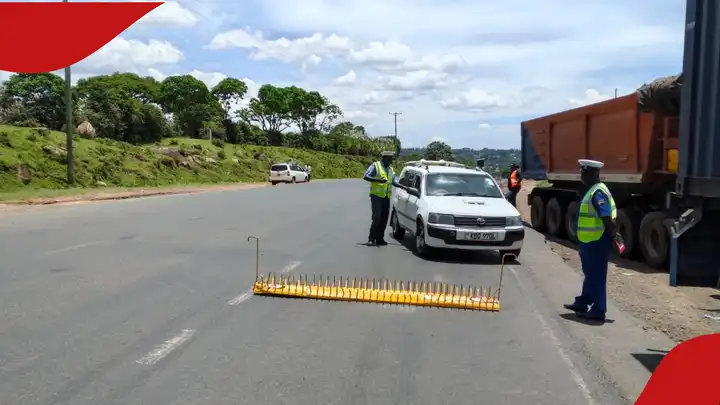
The National Transport and Safety Authority (NTSA) has launched a new road safety campaign involving both day and night checks along major transport corridors across Kenya, effective Monday, October 26, 2026. NTSA listed seven requirements that motorists must comply with. Photo: NTSA. Source: Facebook The campaign, named Msimu Bila Ajali, Usalama Barabarani, was introduced in partnership with law enforcement agencies and includes sensitisation of drivers and passengers at designated checkpoints. Why NTSA is prioritising night checks NTSA identified evening and late-night hours as statistically the deadliest periods on Kenyan roads, prompting the authority to direct additional resources toward those hours.
The campaign aims to disrupt critical risk factors that contribute to preventable road traffic crashes during those windows. Both day and night operations will be governed by strict protocols designed to safeguard motorists, manage traffic flow, and ensure the safety of officers at checkpoints. What requirements must motorists meet? Motorists and public transport operators will be assessed against seven compliance areas during the checks.
1. First, real-time speed monitoring equipment will be deployed to detect speeding violations. NTSA noted that speed violation notifications are issued exclusively via SMS from the sender ID “NTSA,” and urged motorists to report any suspicious messages from numbers claiming to represent the authority.
2. Second, officers will verify whether a vehicle’s speed limiter is functional and transmitting data continuously to the Intelligent Road Safety Management System (IRSMS). Vehicle owners can link their vehicles to a licensed speed limiter vendor through the IRSMS portal.
3. Third, long-distance public transport operators must produce a passenger manifest, a driver log to track driving hours, proof of licensed route compliance, a Road Service Licence, and valid inspection stickers, among other documents.
4. Fourth, vehicles will be checked for compliance with authorised passenger capacity or permitted load weight limits.
5. Fifth, drivers must present a valid Driving Licence and, where applicable, a valid PSV badge.
6. Sixth, all passengers are required to wear seatbelts throughout their journey. NTSA noted that seatbelts prevent ejection and significantly reduce fatal and serious injuries during a crash.
7. Seventh, breathalyser screening will be conducted to identify drink-driving cases. What other guidance was there for night travellers? The authority also advised all road users travelling at night to reduce their speed, increase following distances, and maintain full concentration on the road, noting that darkness significantly reduces visibility. NTSA called on motorists approaching checkpoints to slow down and cooperate fully with law enforcement officers. What should drivers check? In related news, NTSA reminded Kenyan drivers to inspect brakes, tyres, lights and side mirrors before every trip. The guidance followed a nationwide training programme for public service vehicle operators. The week-long programme covered journey planning, financial management and fleet operations.