



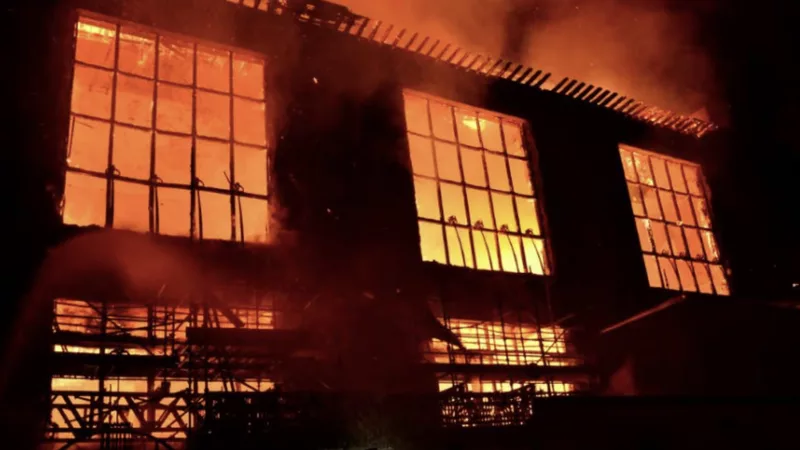
Scrapping boarding schools is among the measures suggested by Kenyans to end or reduce fire incidents that disrupted learning and led to the closure of dozens of institutions during the Second Term.
A new national survey by Tifa Research shows that eliminating boarding schools was among the interventions frequently suggested by Kenyans during a June survey on measures to reduce or prevent fires started by students.
Improving conflict resolution and dialogue between students, parents and teachers was the most popular suggestion, cited by 36 per cent of respondents, followed by harsher punishment for those held responsible for such acts at 23 per cent.
The next most frequently mentioned intervention was eliminating boarding schools altogether, at 13 per cent.
The findings are based on face-to-face household interviews with 2,048 randomly selected Kenyan adults aged 18 and above across all 47 counties.
The survey was conducted from June 13 to June 22, 2026, and had a margin of error of +/- 2.18 per cent.
“What is the main thing that you think should be done to reduce or even stop students from starting fires in their schools?” respondents were asked.
A wide variety of other measures received negligible support. Allocation of more money for food, activities and equipment was supported by 9 per cent of respondents.
Provision of counselling services, widely perceived as a key measure for addressing student misconduct, was supported by only 3 per cent.
Increasing school supervision and security and limiting student numbers per school, each received 2 per cent backing.
Reduction of academic workload, increased government oversight, allocation of more school breaks and provision of civic, moral and spiritual education each received 1 per cent support.
School fires have been a persistent problem in Kenyan schools over the years, with the most severe cases resulting in loss of lives and damage to property worth millions of shillings.
In 2026, the phenomenon was marked by at least 37 reported incidents by early June, with the major disaster at Utumishi Girls Academy claiming the lives of 16 pupils, while 79 others suffered injuries.
Eight students are facing murder charges for allegedly igniting mattresses in a packed dormitory. Investigators found the dormitory was overcrowded, with its doors locked and windows blocked, preventing most of the victims from escaping.
Following the wave of student unrest and devastating school fires in 2026, the Ministry of Education rolled out a series of immediate and long-term directives aimed at restoring safety and order in secondary schools.
Among the measures was an order for schools to deploy more teachers on duty during high-risk evening preparation hours and inside dormitories to strengthen supervision.
The ministry also enforced a ban on mock examinations, identifying exam anxiety as a key psychological trigger for the arson attacks.
While the government declined to change the 2026 mid-term schedules, it announced plans to restructure the 2027 academic calendar to create more balanced terms and minimise learner fatigue.
As a deterrent, the ministry maintained that parents would bear the full financial burden of rebuilding any classrooms or dormitories destroyed by student-led arson.