


Management of the troubled PCEA Milele Beach Hotel in Mombasa has explained how loans initially taken to acquire and expand the property grew into a financial burden that now threatens the facility with receivership.
The explanation comes amid public backlash over an appeal by the Presbyterian Church of East Africa (PCEA) for Sh700 million to rescue the hotel from its financial troubles.
A viral video showing church clergy asking members to contribute to the rescue effort triggered criticism online, with some viewers taking issue with remarks appearing to equate financial support for the hotel with giving to God.
Critics and some members have also questioned why church funds and members’ contributions should be directed towards a commercial venture facing financial difficulties instead of core religious and community programmes.
In response to the criticism, PCEA secretary general Robert Waihenya attributed the hotel’s financial problems to a combination of circumstances, including terrorism attacks, the Covid-19 pandemic, legal claims by buyers and accumulated interest on loans.
He also described the situation as a form of spiritual warfare.
Waihenya said the current church leadership inherited the problem after the property, which had previously belonged to one of the church’s elders, was acquired many years ago.
He said the then management decided in 2010 to expand the property and develop modern apartments to increase its revenue.
“They took a loan of Sh650 million and those apartments were to be sold off plan to enable the hotel establish itself better. And it was a good plan,” he said.
According to Waihenya, the loan was intended to finance the construction of 85 housing units, each expected to cost between Sh20 million and Sh25 million.
However, he said, the project was disrupted when Kenya, particularly the Coast region, experienced a series of terrorism attacks.
By then, about 20 buyers had paid deposits for the units. “So when terrorism happened, there was not enough funds. Those saying money was spent badly, I wasn’t there at that time. I was in school.”
Waihenya said the incomplete construction meant the loan continued to accrue interest. Despite the church paying about Sh13 million every month, he said, the outstanding amount did not reduce significantly because of interest and penalties.
By the time the security situation improved, construction had slowed considerably and the hotel’s business had also deteriorated.
“By that time, the hotel was operating just 10 rooms out of about 80 rooms. So the hotel was not self-sustaining.”
Attempts to find a contractor to complete the apartments proved expensive, with quotations ranging between Sh70 million and Sh80 million, he said.
The church instead opted to use local masons, completing the work at a cost of about Sh5 million, according to Waihenya.
The project was subsequently hit by another setback when the Covid-19 pandemic ravaged businesses, particularly in the hospitality and tourism sectors.
A committee was formed to assess the viability of the hotel in light of the new challenges. Waihenya said an audit found that the business was still viable.
The committee recommended that buyers who had pledged to purchase the housing units complete their payments.
The money combined with contributions by church members would then be used to finish two apartment blocks, sell the units and use the proceeds to repay the loan.
Waihenya said the church managed to raise Sh125 million of the Sh130 million required to complete the project.
“But we didn’t build, we started huggling over what we should do. Eventually we took the money to the bank and it said since we had shown commitment and seriousness to pay off the debt, we should be paying Sh5 million instead of the Sh13 million monthly deposit.”
He said the period of indecision coincided with a change in church leadership. By the time the new team assumed office, the loan had grown substantially.
The new leadership initially sought to complete the apartments, but faced another legal setback when buyers who had paid deposits for the off-plan units went to court and were awarded damages.
“They were given big awads, someone who had paid Sh3 million was awarded Sh7 million. The one who had paid the most was Sh8 million but because of loss of income the court awarded them a very hefty award.”
Waihenya said part of the Sh125 million raised by the church was subsequently used to settle the court awards.
He said that by the time the 24th General Assembly leadership settled into office, the loan had grown to more than Sh1 billion.
The church later resumed construction, but Waihenya said this triggered another dispute with the bank that had advanced the original loan.
According to him, some church members informed the bank that PCEA had taken another loan from a different lender to finance the construction.
The bank visited the property to verify the claims, he said, but the money being used for construction was not a new loan. It was part of the Sh125 million that had been raised by the church to address the hotel’s financial problems.
Waihenya said the dispute eventually contributed to the bank’s decision to pursue receivership of the hotel.
“The bank called me saying they are coming to assess the status of the hotel but all they wanted to see was whether construction was going on to prove that we had taken a loan, but that was not a loan.”
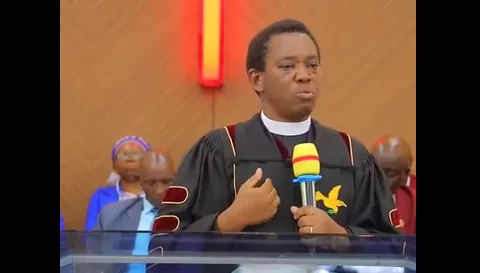
“The truth is there’s no loan we have taken for the six years we have been in office,” Waihenya told congregants at Kayole church during a Sunday service.
He said efforts by unnamed individuals to have the hotel sold had intensified, describing the situation as spiritual warfare.
“This is a spiritual problem and that is why I have stood and said we are not selling,” he said.
Waihenya said the church could not afford to lose the property, noting that PCEA had recently constructed a Sh300 million church on the site.
He added that the church had already paid more than Sh900 million towards the loan.
The church is now appealing to the public to raise Sh700 million to address the financial crisis and prevent the hotel from being lost through the receivership process.