


A Senate committee has proposed sweeping changes to the proposed livestock law to protect farmers and pastoralists from emerging climate shocks.
In a report tabled in the House, the Senate Agriculture, Livestock and Fisheries Committee has proposed changes to the Livestock Protection and Sustainability Bill, 2024, which it says has narrowly focused on drought.
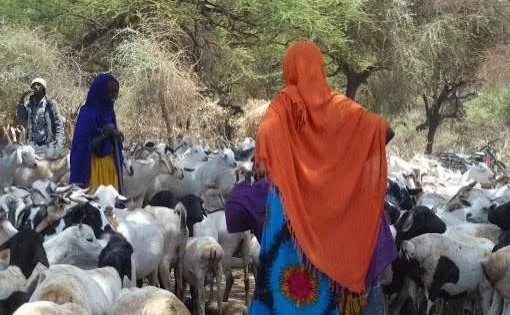
“The Bill defines ‘livestock’ broadly to include cattle, camels, donkeys, pigs, sheep, goats and poultry,” the committee said.
“However, despite this inclusive definition, the focus is almost exclusively on drought-related interventions such as feed reserves and fodder banks.”
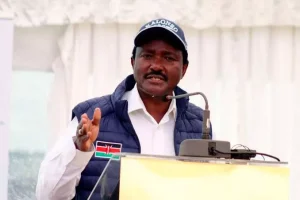
Consequently, the committee, chaired by Bungoma Senator Wafula Wakoli, wants the Bill expanded to protect farmers and pastoralists from floods, disease outbreaks, pest invasions, and other disasters.
The panel warned that a drought-only approach would leave the sector exposed to emerging climate shocks.
The Bill is sponsored by Samburu Senator Lelegwe Ltumbesi.
“The committee observed that the Bill places disproportionate emphasis on drought as the primary threat to livestock, while failing to adequately address other major risks,” the report says.
The committee wants the national government and counties to create early-warning alerts, emergency livestock offtake programmes and stronger systems for water and feed security.
It recommended amending the Bill to establish a comprehensive livestock disaster management framework covering multiple hazards.
It warns that farmers could remain vulnerable to “floods, pest invasions, and disease outbreaks” unless the legislation is substantially strengthened.
The committee wants the Agriculture CS to establish national livestock disaster policies and oversee the proposed National Livestock Feeds Reserve.
The CS would also coordinate early livestock offtake interventions, develop national standards on pasture management and water security, and integrate livestock risk information into national early-warning systems.
The committee has further proposed the creation of a Livestock Risk Data Management System to track feed availability, pasture conditions, water resources, disease outbreaks, pest invasions, floods, droughts and market volatility.
The system would also integrate meteorological and veterinary surveillance to provide evidence-based triggers for emergency action.
“This ensures livestock disaster management is comprehensive, predictable and responsive to multiple hazards,” the report says.
A major proposed change is the introduction of early-warning trigger alerts, where the CS would be required to issue alerts whenever the risk management system detects elevated threats.
The committee said the measure would address a major weakness in the Bill, which currently lacks “predictable and transparent mechanisms for activating interventions”.
“The Cabinet Secretary should be mandated to establish national livestock disaster policies, oversee the National Livestock Feeds Reserve, and coordinate early livestock offtake interventions,” the report states.
The lawmakers also want an Early Livestock Offtake Intervention programme.
“This fills the gap in the Bill where no measures existed to prevent distress sales, reduce pressure on pasture and water, and stabilise farmer incomes during shocks,” the committee said.
The initiative would allow the national government, in consultation with counties, to intervene before farmers are forced into distress sales of animals during crises.
According to the report, the intervention would “prevent distress sales, reduce pressure on pasture and water, and stabilise farmer incomes during shocks.”
The committee also wants the law to promote value addition and the marketing of livestock products.
A newly proposed clause provides for processing, preservation, aggregation centres, cold-chain infrastructure, and structured market linkages.
The lawmakers said the Bill currently ignores a major problem facing livestock farmers—the collapse of prices and wastage during periods of surplus production.
They further recommended a new clause on genetic improvement and breed resilience.
The provision would support selective breeding, the conservation of indigenous genetic resources, and stronger biosecurity to improve the ability of livestock to withstand climate and disease shocks.
“This fills the gap in the Bill where long-term resilience measures were absent, ensuring the adaptive capacity and productivity of livestock in the face of climate shocks and disease threats.”