



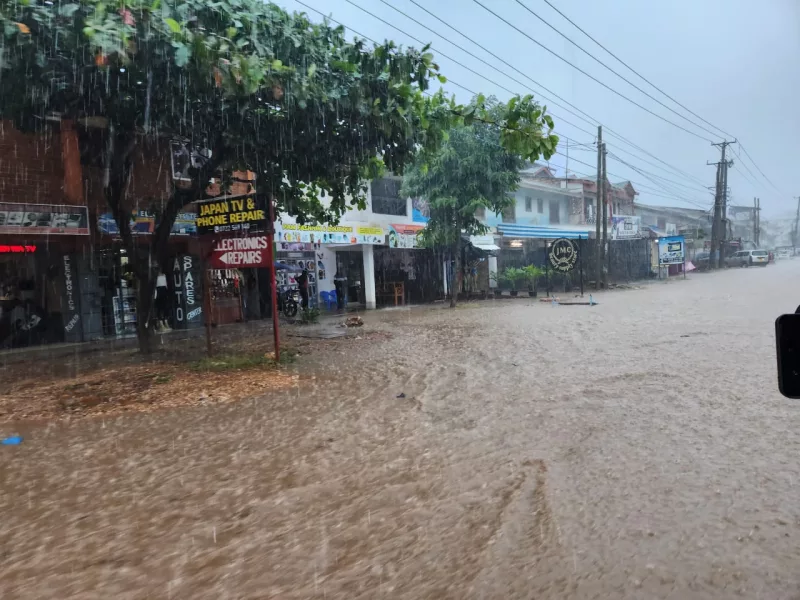
Hundreds of KCSE and KJSEA candidates may sit their national examinations away from their schools if the Ministry of Education closes exam centres that could become inaccessible during the expected El Niño rains.
The Kenya Meteorological Department said the country is set for heavy rainfall, with weather experts warning that 43 of the 47 counties are likely to receive above-normal rainfall from early October until January.
Officials said many schools, especially in northern Kenya, could become inaccessible once the rains intensify in October.
The forecast was released during the 13th National Climate Outlook Forum in Nairobi, where government officials, scientists and aid workers met to prepare for the October, November and December (OND) rainy season.
Weather officials said the rains will begin in early October across most parts of the country and continue until January.
This year’s El Niño rains will coincide with Kenya’s national examinations. The Ministry of Education said it has already put measures in place to keep candidates safe and ensure examination papers are delivered.
“We may be forced to close some exam centres,” said Dr Kanyi Gioko, Director of Administration at the Ministry of Education.
“However, exams will go on as planned, and we already have plans to deliver papers using helicopters and drones in many places.”
Term Three ends in late October, just as the Kenya Junior School Education Assessment (KJSEA) and the Kenya Primary School Education Assessment (KPSEA) begin, followed shortly by the Kenya Certificate of Secondary Education (KCSE). All three national examinations will be conducted during the same rainy period this year.
Gioko advised schools to stock enough food in advance so pupils and teachers do not go hungry if heavy rains cut off supply roads for several days.
“In Wajir, where flooding often cuts off roads by the afternoon, schools can consider having pupils report as early as 6am and end the school day early before the heaviest rain sets in,” he said.
Charles Mugah, Deputy Director at the Kenya Meteorological Department, said this year’s rainy season is being driven by the Indian Ocean Dipole (IOD) and El Niño.
He explained that the IOD refers to the difference in sea surface temperatures between the western and eastern Indian Ocean. When waters on the western side, near Kenya, become warmer than those in the east, a positive IOD develops, bringing heavier rainfall to Kenya and neighbouring countries.
Mugah said the IOD is currently neutral but is expected to turn positive from September, reaching levels close to those recorded in 2015, when Kenya experienced widespread flooding.
“The Climate Outlook for the October–December 2026 short rains season indicates that above-average rainfall is expected over Baringo, Bomet, Bungoma, Busia, Elgeyo Marakwet, Embu, Garissa, Homa Bay, Isiolo, Kajiado, Kakamega, Kericho, Kiambu, Kilifi, Kirinyaga, Kisii, Kisumu, Kitui, Kwale, Laikipia, Lamu, Machakos, Makueni, Mandera, Meru, Migori, Mombasa, Murang’a, Nairobi, Nakuru, Nandi, Narok, Nyamira, Nyandarua, Nyeri, Siaya, Taita/Taveta, Tana River, Tharaka-Nithi, Trans Nzoia, Uasin Gishu, Vihiga, Wajir, and much of West Pokot, Samburu and Marsabit counties,” Mugah said.
“Near-average to above-average rainfall is likely over Turkana and a few parts of West Pokot, Samburu and Marsabit counties.”
Mugah said rainfall has already begun in Nandi, Kakamega, Vihiga, Bungoma, Siaya, Busia, Baringo, Nakuru, Trans Nzoia, Uasin Gishu, Elgeyo Marakwet, West Pokot, Kisii, Nyamira, Kericho, Bomet, Kisumu, Homa Bay, Migori and Narok. It is expected to continue and intensify until January.
He said the rains will begin between the second and third weeks of October in Nyandarua, Laikipia, Nyeri, Kirinyaga, Murang’a, Kiambu, Meru, Embu, Tharaka-Nithi and Nairobi, and continue until January.
In Mombasa, Kwale, Lamu, Kilifi, Tana Delta, Marsabit, Mandera, Wajir, Garissa and Isiolo, the rains are expected to begin between the second and third weeks of October and end between the first and second weeks of December.
Machakos, Kitui, Makueni, Kajiado, Taita-Taveta and inland parts of Tana River county are expected to receive rainfall from the third to the fourth week of October, with the season continuing into January.
Turkana and parts of West Pokot, Samburu and Marsabit may receive less rainfall than the rest of the country. Mugah said there is a 15 to 20 per cent chance of a mild drought in Turkana, even as much of Kenya experiences above-normal rainfall.
“Updates on the onset, distribution and cessation of rainfall will be provided regularly through weekly and monthly forecasts as the season approaches. These updates will offer detailed insights into changes in rainfall patterns to keep stakeholders informed and support timely decision-making,” Mugah said.
Edward Muriuki, Acting Director at the Kenya Meteorological Service Authority, said the forecast would only be useful if people acted on it early.
“Climate information must be understandable, relevant and actionable,” Muriuki said.