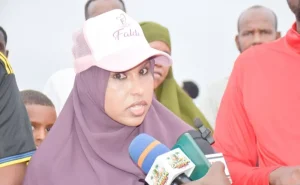


For more than nine years, Mwanatumu Mwakopo has made a living from the sea.
Every day, the fish vendor in Ramisi, Kwale county, relies on the catch brought in by fishermen to earn an income and support her family.
But while Mwakopo has spent nearly a decade in the fishing business, she believes she and other women involved in the trade have barely scratched the surface of what they can achieve.
Mwakopo is the secretary of Bidii Women Group, which has ventured into fishing. She is also the secretary of the Mwaembe Beach Management Unit (BMU).
The group buys fish from fishermen and stores the catch before selling it to customers. However, its ambitions is being held back by a small freezer that can only accommodate a day’s stock.
“This freezer is small and can only store a day’s stock. This means we cannot buy a lot of fish from the fishers for fear of it going bad. We face challenges when the fish season gets dry and there are no fish,” Mwakopo said.
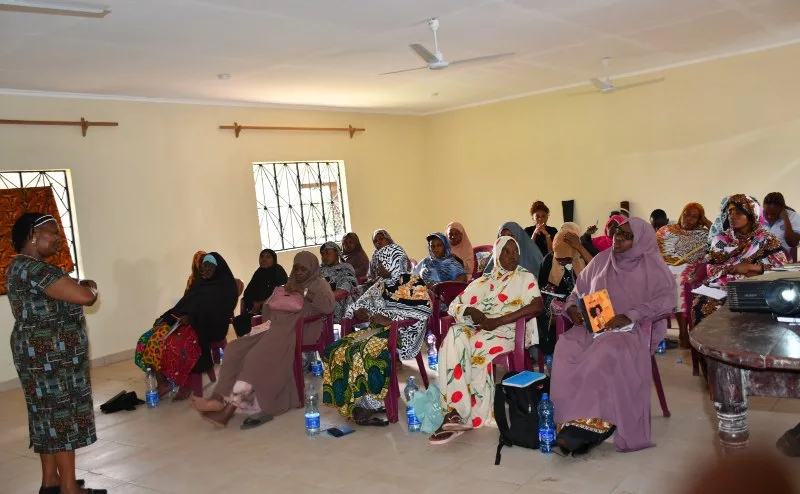
Speaking during a women empowerment through cooperatives programme in Kwale on Friday, she said the group needed a bigger cold room to store fish for several days.
Such a facility, she said, would allow them to buy more fish when it is available and keep it for periods when the catch from the sea declines.
“We have not even reached 50 per cent of the potential of this business because of lack of funds,” Mwakopo said.
The challenges, she added, extend beyond fishing.
Mwakopo said the women needed to explore alternative businesses but lacked the knowledge and resources required to venture into them.
“Our BMU does not attract donors because we have very little capital to build ourselves or even market ourselves into something that can attract donors or even investors,” she said.
Unlike some other BMUs, Mwakopo said Mwaembe relies almost entirely on fishing as its source of income, leaving the group vulnerable when catches decline.
Her experience reflects a wider challenge facing women involved in small businesses along the Coast, where many operate through self-help groups, community-based organisations or as individuals.
Anna Mutinda, senior deputy commissioner for cooperative development in charge of policy, standards and capacity building at the Ministry of Cooperatives, Micro, Small and Medium Enterprises Development, said women should consider forming cooperatives to unlock greater opportunities.
She said cooperatives offered a more stable and sustainable way for members to grow their businesses.
“They can own property anywhere in the country where they are mandated or authorised to operate, and have perpetual succession. They can borrow from even other financial institutions more easily,” Mutinda said.
Many women at the Coast are currently organised in self-help groups, community-based organisations and sole proprietorships. These structures can limit how far their businesses grow.
“So if they transition from self-help groups into cooperatives, they can do so much more,” Mutinda said.
She said the process was relatively simple and encouraged women interested in making the transition to seek guidance from cooperative officers at subcounty level.
“To transition is easy. Just invite a cooperative officer from the subcounty level to advise on the requirements and you pay Sh3,700,” Mutinda said.
Of this amount, Sh200 is for a name search, Sh3,000 for registration and Sh500 for the registration certificate.
Mutinda said the growth potential was one of the biggest advantages of cooperatives. However, she warned that members needed to understand that building a successful cooperative required patience and sacrifice.
“Some members join with high expectations of immediate success without thinking of the sacrifice and time needed to be invested. If that expectation is not well managed, groups disintegrate,” she said.
She described this as the “storming stage”, which she said was necessary as members worked through challenges and built the cooperative.
Mutinda also highlighted the role of savings and credit cooperatives in helping members access finance.
“The beauty of Sacco loans is that members guarantee each other. There is no need for collateral,” she said.
Community Action for Nature Conservation (Canco) project officer Joyce Keingati said many women along the Coast continued to run businesses individually, denying them the opportunity to achieve their full potential.
Keingati said collective action could help women move from small-scale ventures to larger businesses.
“We invited the ministry so that these women can learn of the different forms of collective action in business because we see them eager to do business but sometimes they do not get the results they yearn for and end up frustrated and abandoning their ventures altogether,” she said.
She said women in the fisheries sector, in particular, needed to think beyond small individual businesses.
“Most small-scale women in fisheries have been conducting their businesses individually and so they may sell 2kg or 4kg of fish a day.
“But we need to take these women to the next level. They cannot be selling 4kg of fish a day every day yet they can sell 8kg a day if they combine forces,” Keingati said.
She said giving women the right information would help them understand the benefits of working together and encourage them to pursue bigger opportunities.
However, Keingati noted that the sustainability of community-based and self-help groups remained a challenge because there were limited legal mechanisms to enforce discipline among members.
For Mwakopo and other women in Mwaembe, the hope is that stronger organisation, better access to finance and collective action can help turn their small fishing venture into a bigger and more sustainable business.