



KENYAN households continue battling high living cost despite latest official data indicating an ease in inflation for June compared to May.
Kenya National Bureau of Statistics (KNBS) data released on Tuesday evening shows annual inflation slowed to 6.4 per cent in June, down from 6.7 per cent in May.
This is supposed to have offered consumers a modest relief after a sharp rise in May.
However, stubborn increases in food prices, transport costs and other essential household expenses continued to squeeze family budgets, painting a different picture on the ground.
This is both on progressive months and in comparison to same period in 2025, which shows Kenyans are worse off compared to a year ago.
Out of the 13 key indices used to measure inflation, nine recorded an upward trigger, three remained unchanged with only housing, water, electricity, gas and other fuels recording a drop.
Compared to last year, all indices show an increase in commodity and service costs led by transport which has since increased by 16 per cent.
Inflation climbed steadily over recent months, driven largely by higher fuel prices and rising food costs.
According to KNBS, prices in food and non-alcoholic beverages, transport, and housing, water, electricity, gas and other fuels remained the biggest contributors to inflation.
Together, the three categories account for more than 57 per cent of household expenditure, meaning changes in these costs have the greatest impact on consumers.
Food inflation stood at 8.6 per cent in June compared to the same month last year, while transport recorded the sharpest annual increase at 16.1 per cent. housing, water, electricity and other fuel costs rose 3.4 per cent over the period.
On a monthly basis, the Consumer Price Index (CPI) increased by 0.2 per cent, with the overall index rising from 154.56 in May to 154.91 in June, indicating that although inflation slowed, prices continued to edge upwards.
Households continued to grapple with rising prices of several staple commodities despite declines in some food items.
KNBS data shows the price of kale (sukuma wiki) increased with a kilo going for Sh114.44 last month, up from Sh110 in May.
The common food commodity in many households was costing Sh90 per kilo in June last year.
Cabbage prices have also gone up from Sh54 per kilo last year to Sh73, having slightly increased from Sh72 in May.
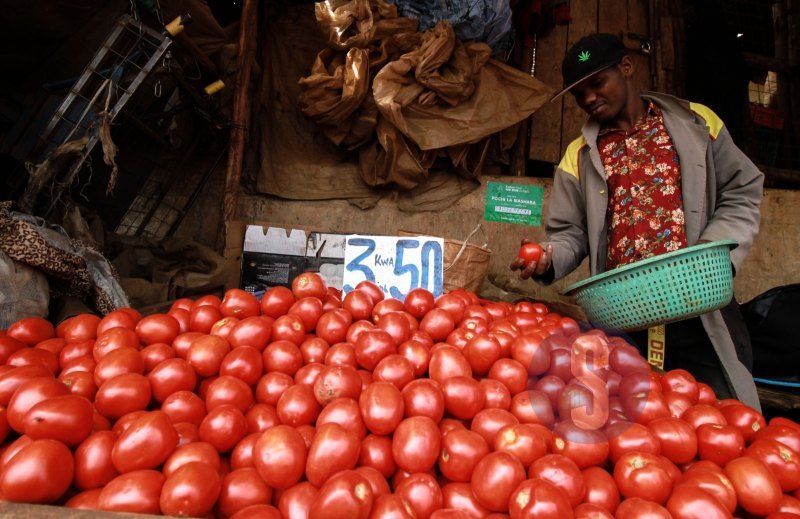
Tomatoes are currently retailing at Sh118 per kilo up from Sh84 same period last year, green grams are at Sh206.45 per kilo compared to Sh191 last year.
Beef (with bones) has increased to Sh760.75 per kilo from Sh690.15 last year, despite a meagre drop from Sh761.20 in May.
While official data indicates a 2kg packet of sifted maize flour has reduced to Sh159 on average, from Sh160 in June last year, a market spot check by the Star yesterday noted common brands are retailing by up to Sh167 per packet.
A litre of cooking oil (salad) is going for up to Sh360 up from Sh355 in May and Sh347.17 same period last year.
A kilo of sugar has however reduced from Sh184.13 to an average Sh166.62.
“Over the twelve months until June 2026, the food and non-alcoholic beverages division index rose by 8.6,” KNBS director general, Macdonald Obudho, notes in the report.
Transport costs remained elevated despite a reduction in fuel prices during the June review and higher than last year. Electricity charges however dropped.
The statistics agency noted that inflation pressures extended beyond food and transport, with households also paying more for health services, restaurants and accommodation, clothing, household goods and personal care products.