


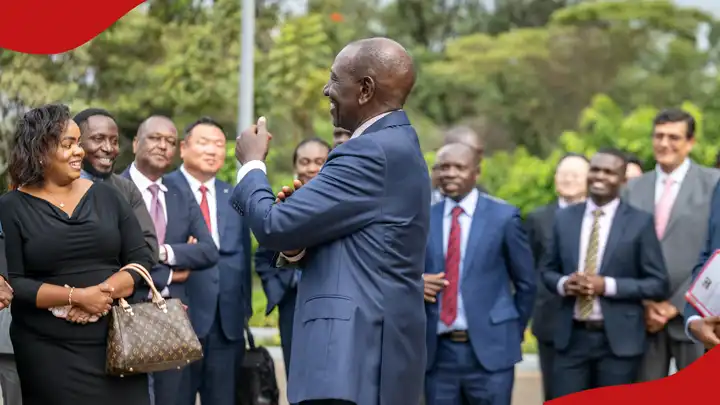
President William Ruto has hailed the signing of a KSh 22.1 billion financial facility with Japan’s Nippon Export and Investment Insurance (NEXI) as a game-changer for Kenya’s automotive industry, with the potential to create over 200,000 jobs across the value chain. William Rutospeaking to visitors at State House during the signing of the financial facility. The agreement, signed at State House Nairobi, represents the culmination of diplomatic engagements that began with President Ruto’s State Visit to Japan in 2024 and Kenya’s participation in the Tokyo International Conference on African Development (TICAD) in 2025. The facility is structured as a Samurai bond (Yen-denominated loans), with interest rates ranging between 0.5 and 3%. What is the government’s vision for Kenya’s automotive sector? President Ruto, in his address, framed the agreement as part of a broader strategy to transform Kenya from a consumer nation to a producer nation. “For too long, Africa has imported what it could build and exported the jobs that come with it. We are changing that. We will not simply import finished vehicles. We will assemble them here and progressively manufacture them here in Kenya by Kenyan workers,” he declared. How will the automotive industry benefit from the Samurai facility? The borrowed money will be allocated into three spending segments: the primary one is KSh 13.1 billion to drive Kenya’s national automotive policy, supporting local vehicle assembly, parts manufacturing, skills development, and technology transfer.
Another KSh 5 billion will be used to fund the reduction of technical and commercial energy losses in Kenya’s transmission and distribution network, while approximately KSh 4 billion will support Kenya’s reform and development agenda. Speaking during the signing ceremony, Cabinet Secretary for Investments, Trade and Industry Lee Kinyanjui outlined the transformative potential of the facility. “This fund will support production of CKD passenger vehicles while driving greater uptake both locally and regionally. Concessional loans could be extended to local content suppliers in Kenya to enable them scale up production and increase local content to at least 40%,” he said. Kinyanjui emphasised that achieving 40% local production is “critical in strengthening Kenya’s competitiveness within the East Africa and the African continent of free trade area by enhancing domestic value addition, reducing reliance on imports and supporting sustainable industry growth.” What did Japanese partners say about the agreement?
NEXI Chairman and CEO Atsuo Kuroda described the facility as a symbol of the strong commitment and mutual trust between the two countries. Kuroda noted that the facility would support Kenya’s national automotive policy and the electricity loss reduction programme, adding: “I believe this initiative will contribute to the industrialisation and job creation in Kenya by leveraging the technology of Japanese companies. It is also expected to support decarbonisation efforts in Kenya through energy efficiency.” Japan’s Chargé d’Affaires to Kenya, Tonobu Hori, framed the agreement as part of a long shared history between the two nations. “At approximately KSh 20 billion, this is a huge commitment. At the same time, this is a clear sign of Japanese strong confidence in Kenya’s future,” he said. “Japan has a lot of experience in this field and we are happy to share it with Kenya. Making cars locally means creating new jobs, new skills and deep pride for the country. I looked forward to the day when the cars on the streets on Kenya truly show the spirit of ‘Buy Kenya, Build Kenya.’ I hope the children of this country will look on those cars and say these were made by Kenyan hands,” Hori added. Subscribe to watch new videos What is the wider significance of this agreement for Kenya’s economy? Ruto emphasised that the Samurai bond represents a diversification of Kenya’s funding sources.
“Traditional sources of financing cannot suffice for us to move this country to the next level. That is why we are combining domestic mobilization of resources with alternative sources of foreign financing. With the signing of this Samurai facility today, we have opened a new chapter of financing from the Japanese market in a very significant way,” he said. Commenting on the move, Daniel Kathali, an economist, told TUKO.co.ke that the Samurai bond facility represents a strategic shift in Kenya’s external financing architecture, which has its benefits and risks. “Diversifiying mitigates concentration risk from the US-denominated loans, which reduces Kenya’s vulnerability to US monetary policy shocks. Looking at the numbers, the Samurai bond offers substantially cheaper borrowing costs, with rates between 0.5 and 3% compared to commercial rates that have revolved around 10 in recent years, translating into billions of shillings in interest savings, which reduces debt repayment pressures on taxpayers. This diversification can also strengthen Kenya’s negotiating position with traditional lenders and enhances its sovereign credit profile by demonstrating access to multiple capital markets,” Kathali explained. However, he warned that Kenya must now manage the Kenya shilling–Japanese Yen exchange rate with unprecedented vigilance because while the KSh has remained relatively stable against the dollar, the yen can be volatile, particularly given Japan’s unique monetary policy dynamics and its status as a global safe-haven currency. He explained that if the Kenya shilling depreciates against the yen, whether due to domestic inflationary pressures, current account deterioration, or a flight to safety that strengthens the yen globally, the cost of servicing and repaying this Samurai facility will rise in shilling terms, potentially eroding the very benefits the cheaper interest rates were meant to deliver.