

Kenya can eliminate cervical cancer within 25 years if it scales up vaccination and annual screening, Dr James Nyikal has said.
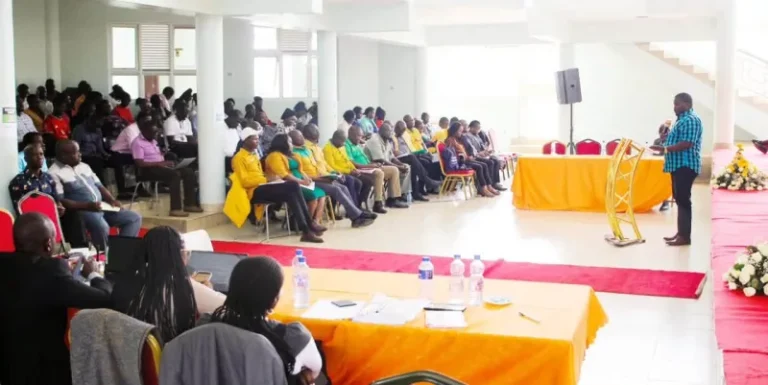
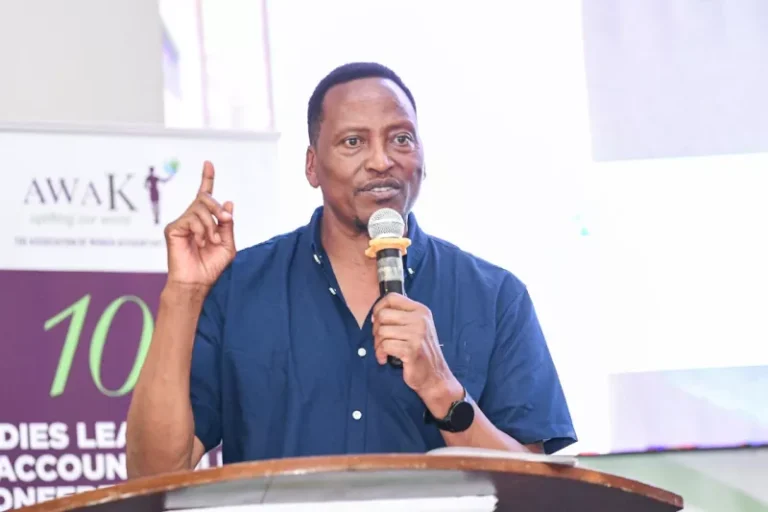
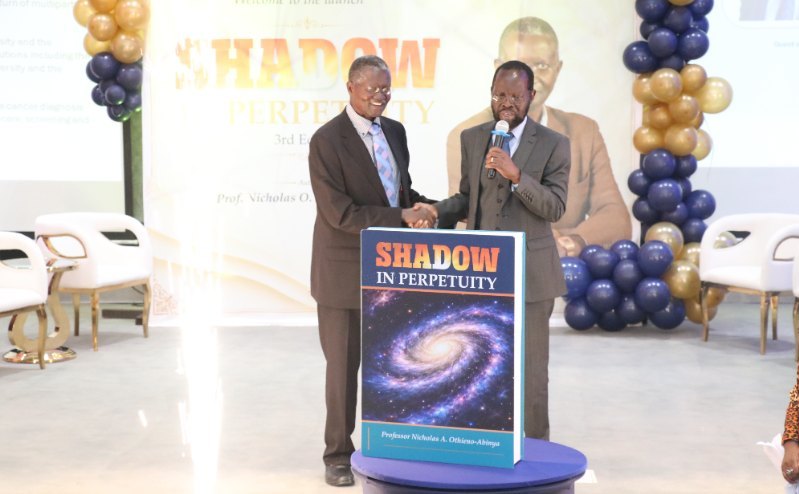
Speaking at the launch of the third edition of Shadow in Perpetuity by Prof Nicholas Abinya, the MP for Seme and former Director of Medical Services challenged families to break the stigma surrounding cancer.
“We have a vaccine and early screening is just a visual inspection of the cervix. If you detect it early, treatment costs very little. By the third or fourth stage, treatment is expensive and survival rates are much lower,” Nyikal said.
“I ask my wife and children, ‘How often do you get screened?’ I do not know why it is so difficult.”
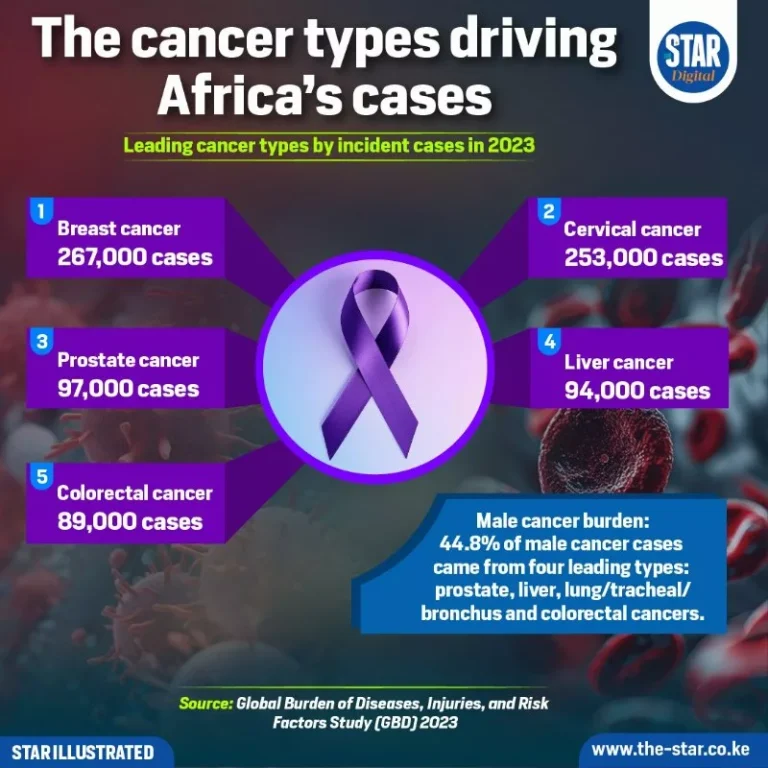
The country records 47,000 new cancer cases each year, with 32,000 deaths. Breast, cervical, prostate, oesophageal and colorectal cancers — the “big five” — account for more than half of annual diagnoses.
Nyikal noted that survival depends less on medicine alone than on governance. “Whether screening services are available, whether medicines are procured efficiently and whether public resources are used transparently — that is what we mean by governance.”
Abinya, a consultant oncologist who chaired the team that wrote Kenya’s first national cancer treatment guidelines in 2013, said he penned Shadow in Perpetuity to counter dangerous myths and mistrust of local facilities.
“People will tell you, ‘I have a lump in my breast, yes, and they wanted to do a biopsy, but I have refused.’ You are delaying that biopsy,” he warned.
He recalled patients who insisted on travelling abroad despite there being no evidence of better outcomes. “Do not say that kind of treatment does not exist in this country. That is wrong.” Referrals abroad are needed only for advanced proton therapy, complex bone marrow transplants or access to clinical trials, which are underfunded in Kenya.
Nairobi Hospital medical director Dr Reuben Okioma said 85–90 per cent of common cancers can be treated locally. “We are forming a research group to push this agenda,” he said.
PET scans, once a major reason for overseas travel, are now available at several local centres. Funding for cancer has risen sharply.
According to Nyikal, the national budget for cancer-related activities grew from Sh750 million in the 2024-25 financial year to an estimated Sh1.9 billion this year.
The Social Health Authority has registered more than 31 million Kenyans, with Sh147 billion paid in claims from October 2024 to date. However, only five million of the 31 million registered are actively contributing to the Social Health Insurance Fund (SHIF) for inpatient cover.
“The other 25 million are entitled to outpatient services, which in the past we have not funded very well,” Nyikal said.
Annual cancer treatment costs range from Sh120,000 in public facilities to more than Sh800,000 in private hospitals. SHIF’s annual cover for cancer was recently increased from Sh250,000 to Sh800,000.
Interior PS Raymond Omollo who previously worked with Abinya on a breast cancer registry at Kenyatta National Hospital, stressed that citizens are active participants.
“Patients who presented early consistently had better outcomes,” he said. “Trust remains one of the most important foundations of effective healthcare delivery.” He urged Kenyans to register for SHA, attend routine screenings and adhere to treatment.
Kisumu Governor Prof Anyang’ Nyong’o, the chief guest, revealed his own prostate cancer diagnosis. He said his doctor initially hid the truth, forcing him to seek treatment abroad.
Contrasting that experience with a passage from Abinya’s book, in which a physician tells a mother that further overseas treatment is futile because the cancer has become resistant, Nyong’o said the local landscape has since improved.
“We are lucky. We have highly qualified, honest and straightforward doctors like Abinya who can do it properly,” he said.
He urged open discussion about cancer. “That shadow of cancer must be awakened. Let us speak frankly as patients and seek advice that has stood the test of time.”
He announced that the Africa Cancer Foundation, established by his family 15 years ago to support cancer patients, will mark its anniversary on July 10.
Survivors shared their lived experiences, challenges and views on the way forward. Marion Indiazi, diagnosed with an abdominal mass in 2020 and chronic myeloid leukaemia in 2023, receives free medication through a foundation that Abinya connected her with.
“He reminded me to focus not only on surviving but also on living,” she said.
Fellow survivor Livingstone Simiyu, a lawyer who has been on CML treatment for 13 years without paying a penny through a programme Abinya initiated at Nairobi Hospital, said his monthly medication costs about Sh300,000. “I have lived a life of success,” he said.
However, he also highlighted gaps. Many young women on the programme face reproductive challenges, while post-cancer mental wellness remains neglected.
“After treating cancer, what’s next? There is a field we need to work on.”
During a panel discussion, Dr Catherine Nyongesa, Director of Medical Services at Kenyatta National Hospital and head of the Texas Cancer Centre, called for stronger regional referral networks.
Panellists emphasised the importance of containing the disease through early diagnosis, ignoring fatalistic myths, recognising that lung cancer remains underdiagnosed due to low suspicion, and nurturing medical talent to retain specialists.
Despite gains such as more PET scanners, increased funding and expanded SHA cover, challenges remain. Access is unequal and only a fraction of SHIF contributors can afford inpatient cancer packages.
Stigma and delayed screening continue to deny many people the benefits of early intervention. The book, now in its third edition, seeks to replace fear with facts.
“When dealing with cancer, we must humble ourselves. Take the right treatment, but remember that God is there,” Abinya said.