


ISUZU East Africa is strengthening its role in technical skills development as the government accelerates reforms aimed at embedding industry directly into vocational training, senior officials said during the company’s annual Grand Prix technical competition.
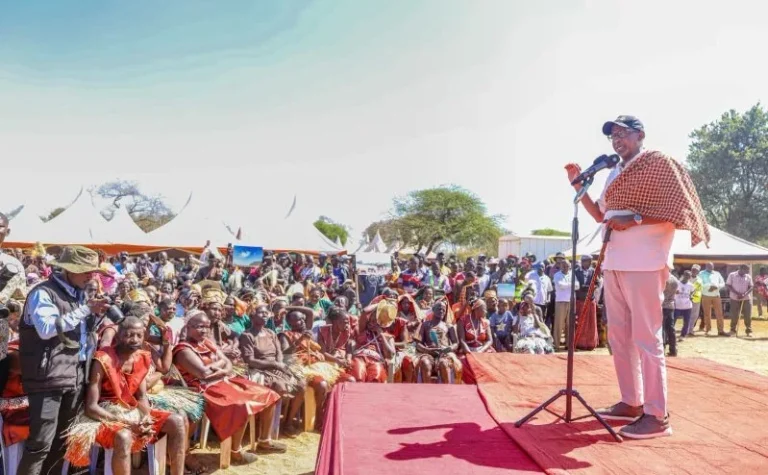
Speaking at the event, Principal Secretary for Technical and Vocational Education and Training (TVET) Dr. Esther Thaara Muoria’s representative, Geoffrey Kamau, said Kenya is shifting decisively toward a competency-based training model that places workplace experience at the centre of learning.
“The future of TVET lies in industry,” Kamau said, describing the ISUZU Grand Prix as a practical demonstration of how technical competence can be tested and validated in real-world working environments.
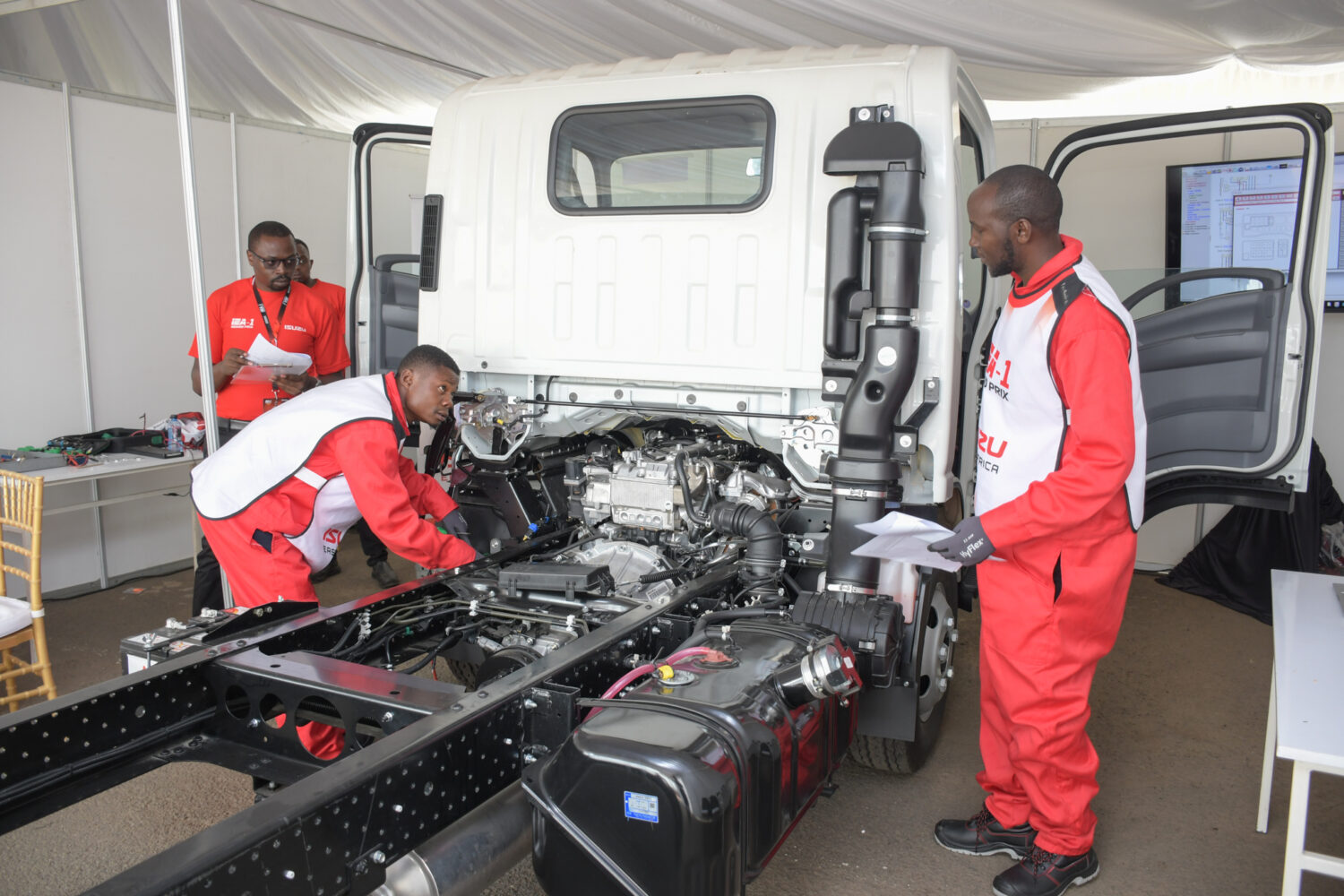
The competition, which evaluates technicians through diagnostics, fault resolution and team-based operational tasks, mirrors Kenya’s Competency-Based Education and Training (CBET) framework, which replaced largely theory-driven approaches beginning in 2023.
The remarks come as the government rolls out a dual-training model requiring trainees to spend half their learning period in institutions and the other half in industry placements, a move designed to address persistent concerns over graduate employability.
“We want industry involvement from curriculum development to training and assessment so that graduates leaving our TVET institutions are acceptable across the board,” Kamau said.
The government says the approach is intended to close the gap between classroom instruction and workplace expectations, an issue employers have frequently raised across multiple sectors.
ISUZU East Africa Managing Director Rita Kavashe said the company’s investment in technical capability is increasingly tied to its long-term business strategy.
The automaker recently completed its Vision 2030 strategy, which identifies customer retention, after-sales growth and technical competence as key pillars for future expansion.
“Our after-sales business is critical for customer uptime,” Kavashe said. “We cannot achieve uptime and customer retention if we don’t build the capability and competence of our teams.”
Kavashe revealed that the company has invested approximately Sh3.1 billion in a regional parts distribution centre along Mombasa Road, positioning Kenya as a technical and logistics hub serving East Africa.
The facility supports ISUZU’s growing regional footprint and is expected to improve spare parts availability, technician support and customer service across multiple markets.
The Grand Prix competition has also expanded beyond Kenya, attracting participants from Tanzania and Zanzibar as the company seeks to standardise technical excellence across the region.
Kenyan teams have emerged among the continent’s strongest performers in global ISUZU technical competitions, a trend both government and industry leaders attribute to closer collaboration between training institutions and employers.
For policymakers, the partnership offers a blueprint for the future of technical education.
The State Department for TVET is now pursuing policies that would institutionalise industry-managed workshops, structured apprenticeship programmes and formal mentorship pipelines within vocational institutions nationwide.
“Skills development is most effective when it is co-owned,” Kamau said. “Government provides the framework, institutions provide the learning environment, and industry provides the living laboratory.”
As Kenya races to equip young people with market-ready skills, the growing partnership between TVET institutions and industry players such as ISUZU East Africa is emerging as a central pillar of the country’s employability and industrialisation agenda.