


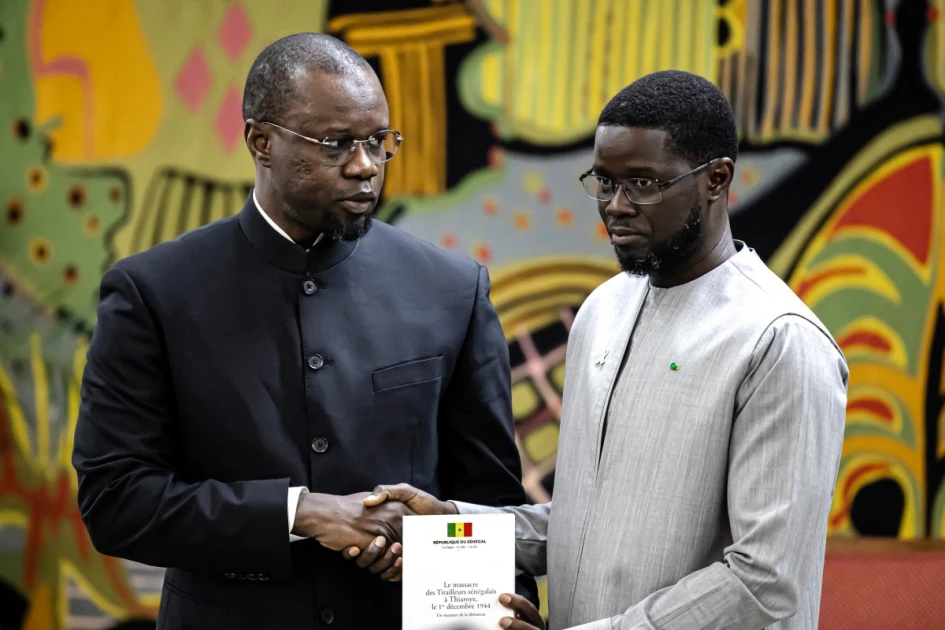
Senegal is mired in a deep political crisis after President Bassirou Diomaye Faye on Friday sacked the popular Ousmane Sonko and dissolved the government after months of tensions.
Former central banker Ahmadou Al Aminou Lo, who worked at the Central Bank of West African States, knows “the inner workings of the economy and finance”, a decree on Monday announcing his appointment said.
Senegal is labouring under a huge debt burden amounting to 132 percent of GDP. When Faye and Sonko came to power in 2024, they accused former president Macky Sall’s government of hiding a part of the debt, leading to the suspension of a $1.8 billion IMF aid programme it had agreed in 2023.
“Senegal is a safe and viable country and intends to remain so,” Lo said, referring to the country’s “difficult financial situation” in his first statement after his appointment.
“This is not a change of direction but of method,” he said, citing integrity and transparency and “economic and cultural sovereignty” — all of which Sonko had espoused.
Senegal’s parliament is due to decide Tuesday whether to appoint Sonko as speaker — a move that enraged the opposition which likened it to a coup.
Faye essentially owes his position to Sonko, his one time mentor who would almost certainly have taken the top job had he not been barred from running in the last presidential election due to a defamation conviction.
The two men have fallen out in recent months as Senegal battles public debt. Faye wants to discuss a new aid programme with the IMF, while Sonko prefers a domestic, sovereigntist approach.
Their Pastef party won outright in the first round of 2024 elections promising political reform with both men vowing to fight corruption and revive a floundering economy.
Sonko generated a passionate following among Senegal’s disaffected youth ahead of the 2024 poll but it is Faye who wields the real power as president, meaning he could fire his head of government by simple decree.
Having been elected as a lawmaker in the November 2024 legislative elections, Sonko had, a month later, according to his party, requested his mandate be suspended after Faye made him prime minister days after his poll triumph the previous April.
Sunday saw speaker and close Sonko ally El Malick Ndiaye resign, clearing the way for the former to become head of parliament where Pastef holds a strong majority with 130 deputies out of 165 and from where he could challenge the authority of Faye.
Parliamentarians are called to vote at 9:00 am Tuesday (0900 GMT) on the “reinstatement of the deputy Ousmane Sonko” and to elect the next president of the National Assembly, according to an official document published late Sunday.
– ‘Institutional coup’ –
The opposition reacted angrily, with Aissata Tall Sall, who heads the main opposition coalition, denouncing an “institutional coup” prepared under “pressure that the majority wants to impose.”
Sall said she believed Sonko, in order to become a lawmaker again, should first have resigned as prime minister to sit even temporarily in parliament before returning to government.
She urged Faye to refer the matter to the Constitutional Council to avoid what she termed “an illegal diktat of the majority” and to protect the country’s institutions.
Parliament must approve Faye’s choice of successor to Sonko as premier within three months of his nomination. The president cannot dissolve parliament until November — two years after the last parliamentary election.
A reform of the electoral code just approved by parliament means Sonko is now eligible to run for the presidency.
That raises the possibility that the two former political allies might at some point run against each other for the top job.