

Imagine a transformed Dandora dumpsite, no longer a sprawling, toxic wasteland but a rehabilitated landfill blanketed in green, where the air is clean and the stench that once defined the area has disappeared, along with the constant swarms of flies that once hovered over heaps of waste.
Children run freely across open fields, laughing as they play football on safe, level ground, where garbage once lay, while youth gather without fear of contamination, no longer exposed to hazardous waste that has defined life in the area for decades.
Families sit outside their homes and eat comfortably, no longer forced to wave away insects or endure the suffocating smell that once made even the simplest moments unbearable.
In this transformed space, what was once a symbol of neglect slowly becomes a place of life, dignity, community and hope.
It may sound idealistic, even far-fetched, but it is not impossible, and more importantly, it is not unprecedented. That vision is already taking shape elsewhere on the continent. In Ghana, the transformation is not theoretical, it is already happening, offering Kenya a working model of how waste can be turned from a public health crisis into an economic and environmental opportunity.
As we manoeuvre through the busy streets of Accra, our police escort cuts through traffic with theatrical urgency, sirens occasionally piercing the thick midday air, but beyond the spectacle and movement, something far more striking begins to emerge.
It is not just the orderliness of the roads but also the absence of overflowing waste, plastic bag-clogged drainage systems and unmanaged dumping, all things that many African cities have come to normalise. Instead, the streets present a different reality, one where waste appears to be not just managed but controlled.
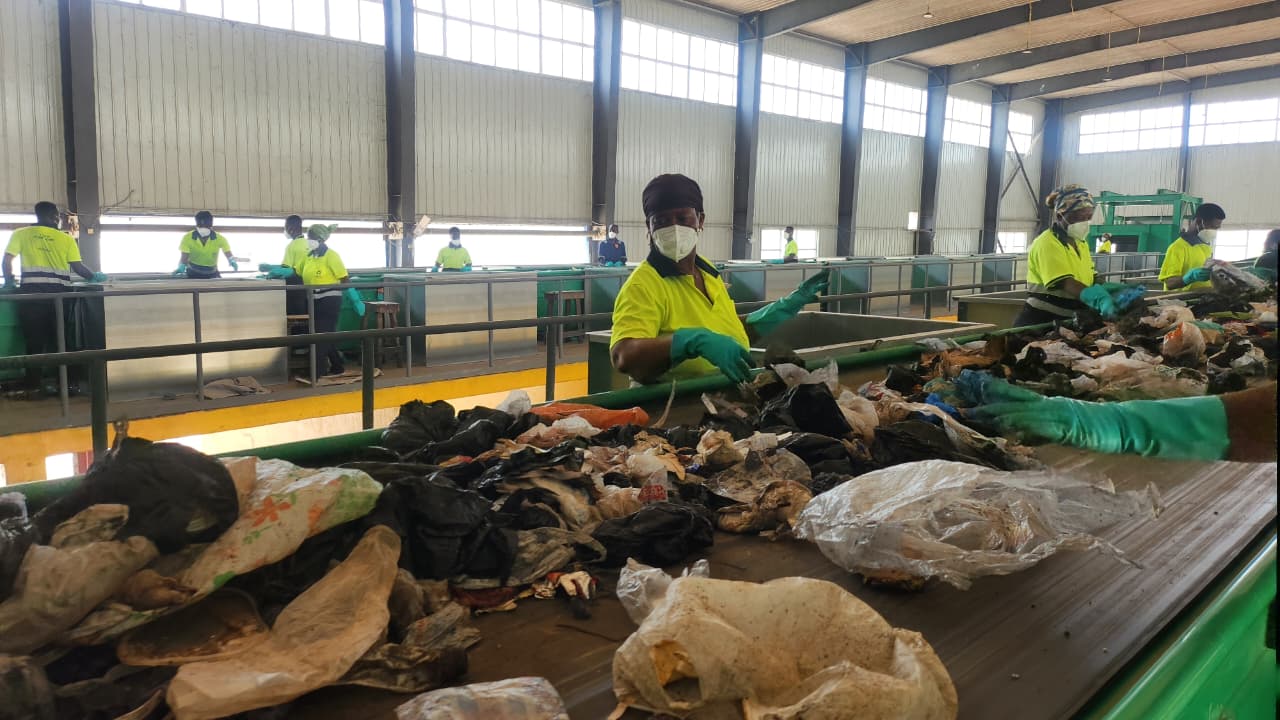
At the Accra Compost and Recycling Plant, that sense of order becomes even more deliberate and visible as workers arrive steadily on blue tricycles loaded with waste collected from different parts of the city. They move in a coordinated rhythm as they pass through the gates and offload their collections into designated sections, where each category of waste is handled with a level of precision that transforms what could easily descend into chaos into a structured and efficient system.
Inside the facility, men and women work with quiet focus, sorting through plastics, bottles, textiles and organic materials, carefully separating what can be recycled from what cannot in a process that is both labour-intensive and deeply intentional.
COMFORT BESIDE DUMPSITE
Head of quality control Barnabas Ampaw explains that organic waste makes up 61 per cent of what the plant receives, followed by plastics at 14 per cent, e-waste at 6 per cent and paper at 5 per cent. These figures not only reflect consumption patterns but also highlight the potential value embedded in what is often discarded.
Each day, more than 2,400 tonnes of waste are processed at the facility, resulting in more than 240,000 tonnes of compost annually, while a portion of plastics is converted into pelletised materials that re-enter the production cycle. This reinforces the idea that waste, when properly managed, is not an endpoint but a resource.
“With all this processed and sorted by our team, we are guaranteed a clean city,” he says as he walks us through the different stages of the operation.
Despite the intensity of the work and the scorching sun overhead, life in the plant continues in ways that feel unexpectedly normal. Groups of men and women sit together under shaded areas sharing meals, from fufu to jollof rice and stew. They laugh, rest and reconnect before returning to their tasks. It shows that even within a waste management site, community and livelihood are deeply intertwined.
“This is what we do to make a living,” one waste picker tells us.
Since he started working at the plant, he says, his family has not slept hungry, a statement that quietly reframes the narrative around waste work from one of survival to one of dignity and opportunity.
“It’s not about the smell, not about the waste,” he adds, pausing briefly. “It’s about the environment and how we ensure that our children will one day have a beautiful place to live in.”
His words linger, particularly because of what surrounds us. Just beyond the facility stand well-built homes, structures that sharply contrast with what one would expect near a dumpsite, especially when viewed through the lens of Kenya’s Dandora, where proximity to waste is often synonymous with risk, neglect and systemic failure.
Back home, the idea of families living comfortably near a dumpsite would seem almost unthinkable.
“But you see, Nancy,” a Nairobi City County official tells me in a quieter moment, “the problem we have back home is that dumpsites are run by cartels that would not allow systems like this to take root,” pointing to a deeper structural challenge that goes beyond infrastructure and into governance.
VALUING WASTE
At the centre of this transformation is managing director Michael Padi-Tuwor, who frames waste not as a burden to be disposed of but as a resource to be recovered, processed and reintegrated into the economy.
“We receive the waste, and our responsibility is to recover it, add value and send it back into the system for reuse,” he explains, emphasising that the success of such a model depends not only on infrastructure but also on a broader shift in public mindset.
“Just like in Ghana, waste management requires constant awareness, because when people begin to see the value in waste, they are more likely to change their behaviour and participate in the system.”
Once a person understands that what they are throwing away is money, he says, their attitude automatically changes.
Our journey then takes us to the Kpone Landfill, located on the outskirts of the city, where the transformation of waste takes on an even more visible and symbolic form. The site appears almost surreal from a distance, a vast stretch of green that could easily be mistaken for recreational land rather than a landfill.
In reality, it is a former dumpsite that has been stabilised and rehabilitated using modern closure technology, demonstrating what is possible when waste management is approached as a long-term environmental and social investment.
Unlike the sprawling and often unmanaged dumpsites seen across many parts of Africa, Kpone is structured and engineered, with waste deposited in designated cells, compacted systematically and covered with layers of soil to reduce odour, control pests and minimise environmental contamination, while heavy trucks move in and out in an organised flow that reinforces a system where control replaces chaos.
Just outside this controlled environment, a familiar scene unfolds. Vendors weave through traffic, selling drinking water packaged in small plastic sachets. “Buy water, pure water!” they call out to motorists as they navigate between vehicles, their voices rising above the hum of engines.
Where do all those plastics go? I find myself scanning the ground, almost expecting to see discarded sachets scattered along the roadside, but there are none; at least not in the areas we pass through.
“The people here have learnt the value of plastics,” our driver, Nana Aku, explains, a simple statement that carries profound implications for how behaviour, systems and incentives intersect.
Back in Kenya, the contrast is difficult to ignore. Nairobi generates between 3,000 and 4,000 tonnes of waste daily, with about 80 per cent of it being organic, yet less than half of this waste is currently recycled or repurposed. That leaves the majority to end up in dumpsites like Dandora, which remain overburdened and deeply entangled in informal and often unregulated systems.
However, change is beginning to take shape. The Sustainable Waste Management Act of 2022 signals a shift away from a linear model of waste disposal towards a circular economy, where materials are continuously reused and reintegrated into production systems.
LESSONS LEARNED
During a joint forum between Ghanaian and Kenyan stakeholders, Dandora Dumpsite chairman James Kamau reflects on what he has witnessed, his tone measured but hopeful as he acknowledges both the risks and opportunities ahead.
“We have about 3,000 workers at the dumpsite,” he says. While some may fear losing their jobs, he believes the system could create even more opportunities if implemented effectively.
“Dandora is just one dumpsite. We also have many smaller sites. If such a system came to Kenya, I believe it would create more jobs,” he says, adding that the scale of Kenya’s waste problem presents an opportunity for expansion, not contraction.
Kamau is also careful to highlight the layered nature of labour within the dumpsite economy.
“Some waste pickers are formally employed, but many others operate informally,” he explains, describing a fragile but essential system where thousands depend on waste for survival without guarantees of income, safety or dignity.
His remarks capture a central tension: How to modernise waste systems without displacing the very people who rely on them.
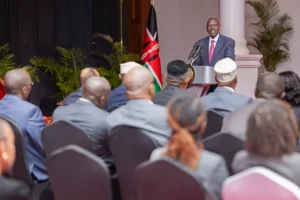
That concern is one that Jospong Group chairman Joseph Siaw Agyepong addressed directly, drawing from his experience managing Ghana’s waste systems.
“I understand how the streets work. Those working at the dumpsite should not be frightened,” he says reassuringly.
“You will earn even more than some of the contractors you see.”
Rather than proposing a direct replication of Ghana’s model, Agyepong emphasises the need for adaptation.
“We are not coming to Kenya to replicate Ghana exactly; we want to sit with stakeholders and develop solutions that work for Kenyans,” he says, reinforcing the idea that transformation must be locally grounded.
“No one will be left behind,” he adds. “We are here to customise, not copy.”
He says properly managed waste systems can significantly increase earnings in the sector.
“All the plastics will return value to Dandora, and the income people currently earn will increase,” Agyepong says.
“What people depend on for survival must not be taken away from them.”
The statement draws quiet approval from members of the Nairobi delegation not because it promises an easy transition but because it acknowledges what is at stake.
“Dandora can be restored,” he adds, “and the revenue it generates should go back to the people.”
Experts say achieving that transformation will require more than just infrastructure.
Environmentalist Alphonse Muia argues that Kenya’s approach must combine science, policy and social change.
“A realistic transformation will require a phased strategy closing the site, creating a modern landfill and adopting scientific processes that accelerate decomposition,” he says, adding that decentralised waste management infrastructure will be key.
Muia cautions against copying Ghana wholesale, calling instead for adaptation.
“Ghana’s model offers important lessons, particularly the public-private partnership framework, but Kenya must localise it to its governance structure, where counties are responsible for waste management,” he says.
He also points to Kenya’s agricultural strength as a strategic advantage.
“Given Kenya’s reliance on agriculture, we should prioritise converting organic waste into fertiliser, turning a major waste stream into an economic opportunity,” he says.
I think back to that imagined version of Dandora, the clean air, the children playing, the absence of waste. And I realise it is no longer just a dream. I have seen what it looks like. The question is no longer whether it is possible. It is whether we are ready to make it happen.