


Kenyans are grappling with uncertainty due to the fuel shortage crisis caused by the conflict between the United States of America and Israel’s war against Iran, triggering panic buying.
The Middle East war has largely affected global fuel supplies, and its effects have trickled down to Kenya, with motorists struggling to find fuel and fears of fuel hoarding gripping the nation.
Samuel Njoroge, a bodaboda rider exasperated by the diminishing supply, fears that petrol stations and petroleum service providers take advantage of the fuel plight to deliberately stockpile fuel and profit from future inflated prices.
“It seems fuel is being hidden because when you go to some petrol stations, only V-Power is being sold. The regular fuel is not available,” he told a local media.
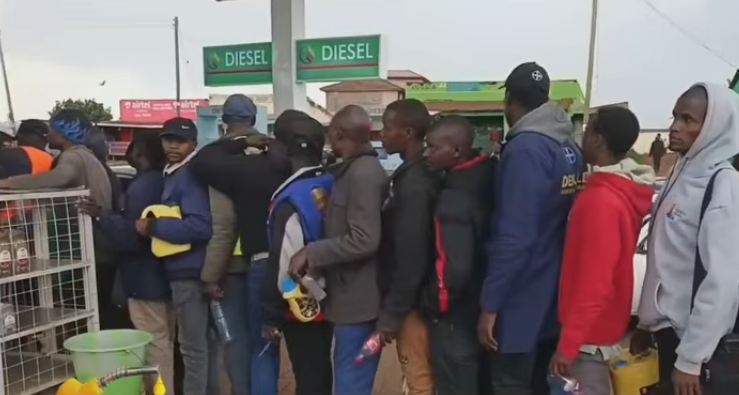
The fuel shortage is clear from long queues in filling stations, while others run out of supply, fueling frustration and desperation among motorists.
The shortage anxiety sharply contrasts with government remarks that assure citizens of an adequate fuel supply.
“We wish to reassure the public that there are sufficient stocks of petroleum products to meet current demand,” Energy CS Opiyo Wandayi stated on Sunday.
Motorists are seen flocking to petrol stations, panic-buying as much fuel as they can while prices are still low.
Long queues have also been witnessed in Eldoret as motorists struggle to fill up during the nationwide shortage. Reports also indicate that Machakos Town has been hit with long queues at the only two stations remaining with supply by Tuesday evening.
Other motorists are forced to travel across regions or even counties to access fuel, incurring extra costs.
Speaking to local media, James Gitonga said he traveled from his residence in Mwea, Kirinyaga, through Nyeri, to Nakuru.
“Many petrol stations in Karatina and Nyeri do not have fuel. I have been forced to buy V-Power because the regular petrol is not available, and V-Power is expensive,” he said.
Prices at some fuel stations and in some regions have already started to increase, prompting fears of fare hikes for public transport.
“Fare prices will eventually go up, and it will not be the matatu operators’ fault,” Geoffrey Cheruiyot, a Kericho resident, told a local media outlet.
While some filling stations shut down due to a lack of supply or empty fuel reserves, other owners face uncertainty over how much they will still have left as the conflict remains fully unaddressed.
The remaining operational fuel stations face tremendous pressure from overwhelming demands, coupled with inadequate personnel in service delivery.
The fuel crisis has extended its grip beyond transport enterprises to other businesses, as owners and clients wait in lines at petrol stations, stalling progress in their enterprises.
Kenyans may cut back on non-essential spending due to transportation costs as the shortage looms, causing sales drops in retailer enterprises.