


South Sudan’s latest move to use Tanzanian ports puts Kenya on check as efficiency, freight costs and infrastructure play out.
The Port of Mombasa and Dar es Salaam are key transit routes for neighbouring landlocked states.
In the latest developments, South Sudan has expressed its intention to increase the use of Dar es Salaam and Tanga ports, a step it says is aimed at easing trade and strengthening economic cooperation with Tanzania.
This is under an agreement signed between the South Sudan Revenue Authority (SSRA) and the Tanzania Revenue Authority (TRA).
TRA commissioner general, Yusuph Mwenda, in media reports, said South Sudan has requested the integration of revenue systems to facilitate the tracking and management of cargo in the two ports.
“But since they are also expected to have a lot of cargo, they have requested we allocate them space for customs activities,” Mwenda said.
South Sudan Revenue Authority Commissioner General, William Anyuon, said the country wants to use Dar es Salaam as the main facility.
This comes barely five months after South Sudan’s Ambassador to Kenya, Anthony Kon, affirmed his country’s commitment to use the Port of Mombasa as the main entry and exit point for her cargo.
During a courtesy call to KPA managing director William Ruto, Kon said his country remains “firmly anchored” in the Port of Mombasa and is seeking closer cooperation with the Kenya Ports Authority to cut trade costs for importers.
“South Sudan is here to stay. We are committed to working with our neighbours until the very end,” he said.
The envoy explained that his visit was aimed at finding practical ways to reduce costs for South Sudanese traders through efficient transit services at Kenyan ports.
“We want to work hand in hand with KPA to ensure goods reach our country more affordably by cutting down on transit costs,” Kon added, describing Mombasa as a lifeline for the developmental aspirations of his country.
South Sudan is the second-largest transit destination for cargo through Mombasa, after Uganda.
Dar serves the region’s hinterland through the 1,300-kilometre-long Central Corridor, while Mombasa serves the region via the 1,700-kilometre-long Northern Corridor, which runs from Mombasa into Uganda, Rwanda, Burundi, South Sudan and Eastern DRC.
The distance from Dar es Salaam to Juba is about 1,948 kilometres compared to the 1,600 kilometres between Mombasa and Juba, which industry players say still makes Mombasa a more preferred harbour.
This is in addition to port efficiency and good road infrastructure.
There are, however, concerns over the high cost of doing business through Mombasa, among them being last year’s push to introduce a $5,000 (Sh645, 000) security levy per container destined for Juba.
The move was criticised by South Sudanese officials who termed it as an “unfair burden”, especially compared to Uganda’s fee of $1,500 (Sh193, 500).
Clearing agents in Mombasa also suspended handling South Sudan-bound cargo in late 2025 following the SSRA’s imposition of a mandatory $3,580 (Sh461, 820) per-container “maritime release fee”.
These developments, in addition to duplication of roles and levies by state agencies at Mombasa, are said to push South Sudan to alternative routes.
According to the South Sudan business community in Mombasa chairman Emmanuel Kachuol, Dar es Salaam will be the country’s second alternative due to its incentives, but there are still a number of issues that need to be resolved to secure cargo to Juba.
“Mombasa port is preferential South Sudan port at the moment, where 80 per cent of the cargo passes through, but with low tariffs and reduced freight costs, many traders are being enticed to use Dar es Salaam port,” Kachuol said.
The Shippers Council of Eastern Africa has urged Kenyan state agencies to move away from relying on continuous increases in levies to fund operations and instead push for sustainable alternative and private-sector funding models.
“We cannot compare our port with the best performing ports while we have so many government agencies’ interventions impacting the clearance process and place all the blame on KPA,” CEO Agayo Ogambi said.
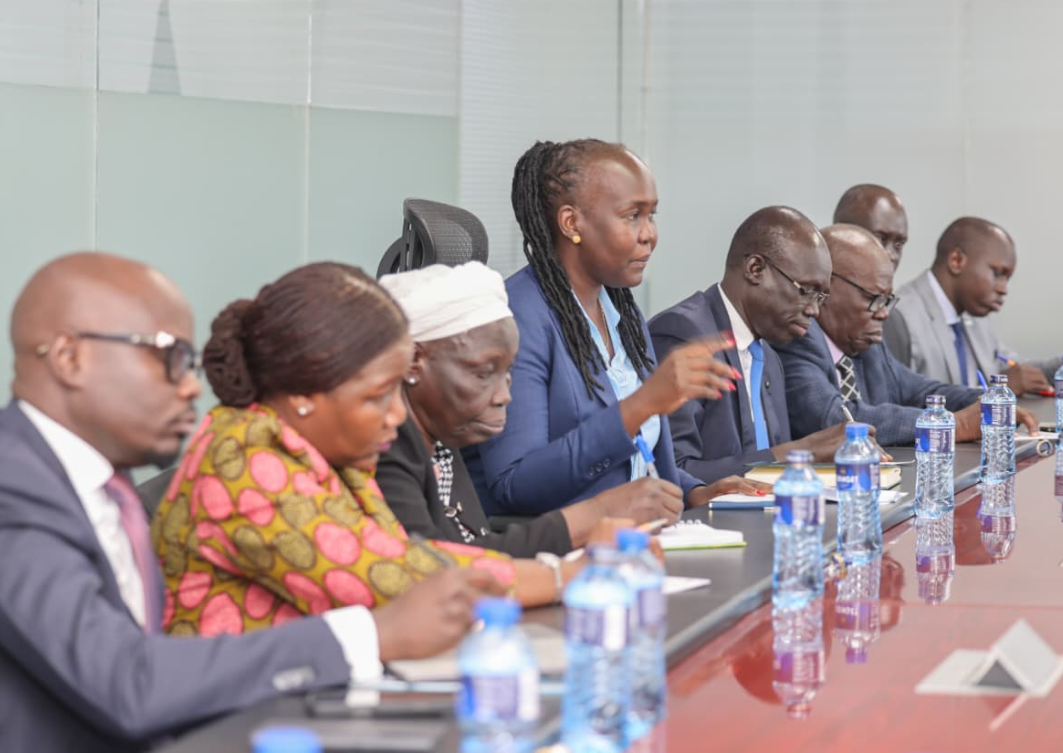
Last week, Trade CS Lee Kinyanjui, during a meeting with his South Sudanese counterpart Atong Kuol, underscored the importance of strengthening bilateral trade and enhancing economic cooperation between the two countries.
The two ministers discussed the formation of a Joint Trade Commission to address existing bottlenecks that hinder trade, including insecurity.
South Sudan also remains a strategic partner in the Lamu Port–South Sudan–Ethiopia Transport (Lapsset) Corridor, with the port now operational.