



In a move that has sparked widespread debate across Kenya, the Kenya Revenue Authority (KRA) has stepped up efforts to boost tax compliance, turning its focus to employed individuals with side hustles and unexplained bank deposits.
Recent public notices and court rulings have placed these income streams under renewed scrutiny, reinforcing the requirement that all earnings must be declared.
The end of “off-the-books” earnings as the taxman leverages bank data and eTIMS validation.
The developments come at a time of growing economic pressure, with many Kenyans relying on multiple income sources to stay afloat amid a high cost of living.
Salaried Kenyans Ordered to Declare Side Hustles
On February 3, 2026, KRA issued a public notice clarifying that salaried employees earning additional income must declare all their earnings in a single annual tax return.
The authority emphasised that filing returns based solely on employment income deducted through Pay As You Earn (PAYE) does not present a complete or accurate tax position where extra income exists.
According to KRA, additional income includes freelancing, consultancy, online services, farming, rental income, and other side businesses.
Taxpayers are expected to use their P9 form as a starting point and then add any supplementary or irregular income earned during the year.

The 2026 tax return filing window runs from January 1 to June 30. KRA also reminded Kenyans that anyone with a KRA PIN — even those with no taxable income — is required to file a Nil Return.
The clarification quickly gained traction online. A post by finance-focused account @moneyacademyKE on X (formerly Twitter) highlighted the directive and attracted hundreds of reactions.
The post reiterated that employed Kenyans with side hustles must consolidate all income sources into one annual return.
Public Outcry Over Tax Pressure
The response from the public was swift and largely critical. Many Kenyans expressed frustration, arguing that the measures unfairly target ordinary citizens while larger corruption issues remain unresolved.
One user lamented that authorities were turning ordinary bank deposits into a “crime scene,” describing the move as state-sanctioned extortion disguised as compliance.
Others questioned the lack of visible public benefits despite increased taxation, while some warned that the requirement could overwhelm small-scale hustlers who lack proper record-keeping systems.
These reactions reflect a broader sense of discontent, with critics arguing that efforts to widen the tax net risk worsening the financial strain already faced by households.
Court Ruling Backs Taxation of Unexplained Deposits
In a related development, a recent Tax Appeals Tribunal ruling has affirmed KRA’s authority to treat unexplained bank deposits as taxable income unless proven otherwise. The ruling places the burden of proof squarely on the taxpayer.
Under the decision, verbal explanations are not sufficient. Taxpayers must provide documentary evidence, such as loan agreements, gift acknowledgements, or capital injection records, to demonstrate that deposits are non-taxable.
The ruling, which draws from cases such as Kirin Pipes Limited vs Commissioner (August 2025), sparked even more backlash online.
Kenyans raised concerns that in a country with high unemployment and an expansive informal economy, many people rely on support from family, chamas, loans, or casual hustles that may not always be formally documented.
Some users questioned whether personal support, maintenance payments, or even funeral contributions could now be subjected to taxation.
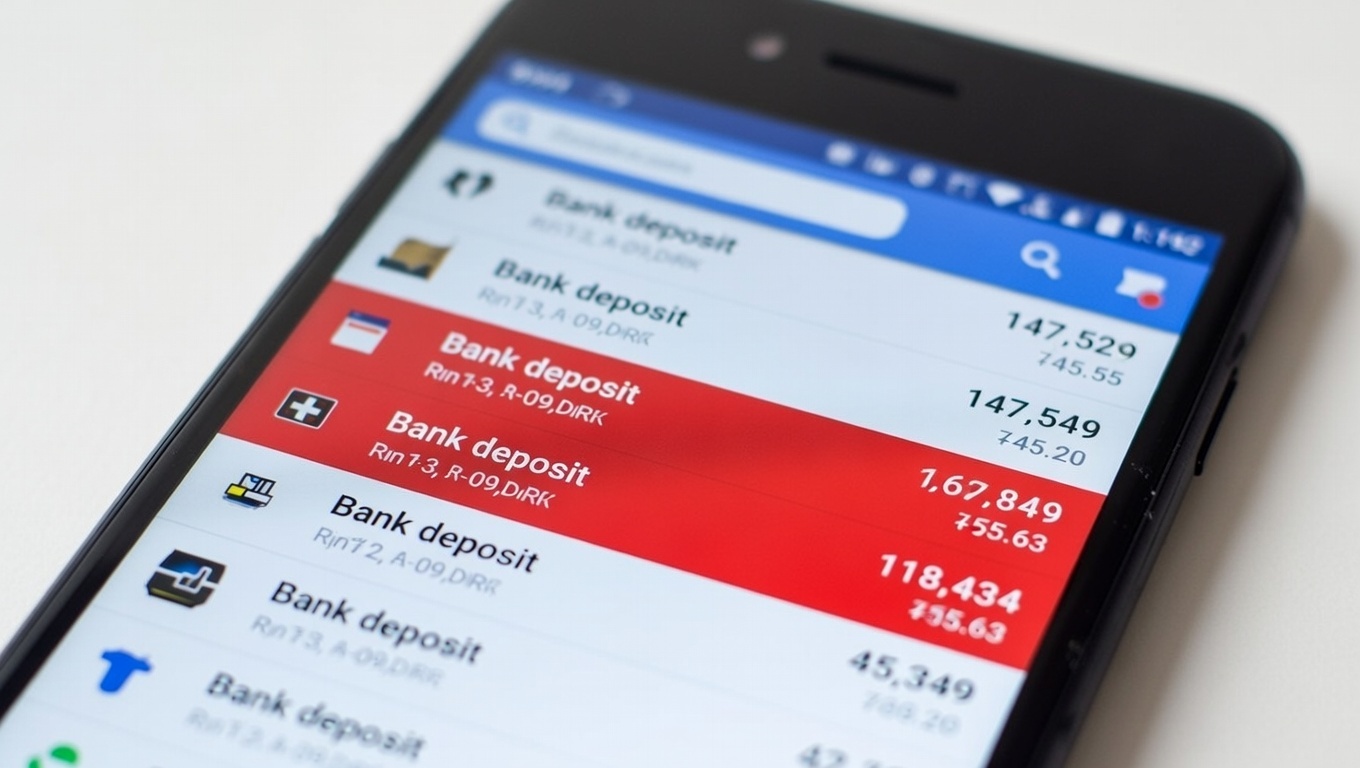
KRA has since clarified that not all deposits are automatically taxable. Only deposits that lack sufficient proof showing they are non-taxable fall under assessment.
The approach, known as bank deposit analysis, is supported by Section 3 of the Income Tax Act and has been upheld in multiple court decisions.
Wider Economic Implications
While KRA maintains that these measures are necessary to curb tax evasion and strengthen revenue collection, critics warn of unintended consequences.
Concerns have been raised that stricter enforcement could discourage formal banking, push more economic activity underground, and further strain low-income earners.
Some observers have described the policy direction as a potential backfire, arguing that shrinking trust in the system could ultimately reduce compliance rather than improve it.
Others have renewed calls for transparency, demanding clearer accountability on how collected taxes are utilised.
BY Geoffrey mbuthia