
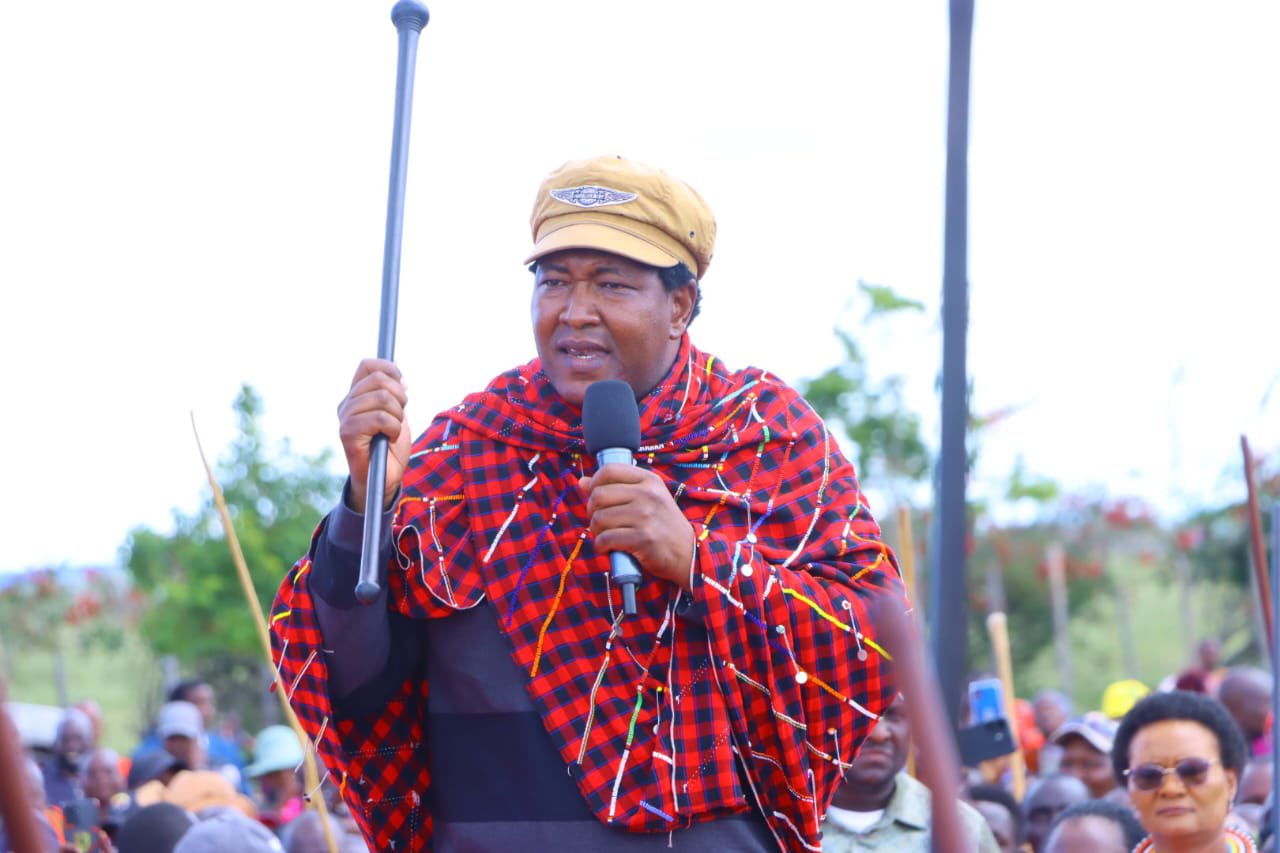
Narok Senator Ledama Olekina has urged voters in Kisumu to convert political enthusiasm into actual votes, cautioning that large crowds and voter registration alone will not determine the outcome of the 2027 General Election.
In a social media post addressed to Kisumu residents, the senator emphasised that electoral success is decided at the ballot box rather than through public displays of support, rallies or celebratory gatherings.
“A huge crowd without voting is just a game,” Ledama wrote.
“In 2027, vote and finish this job—game over. Registration is not voting.”
His remarks come amid increased political mobilisation across the country as leaders position themselves ahead of the next general election, with regions previously viewed as opposition strongholds experiencing renewed calls for unity and voter participation.
Referring to a recent visit by President William Ruto to the lakeside region, Ledama said that while public engagement and celebrations were significant, they did not necessarily translate into electoral outcomes.
“When Ruto came the other day, we celebrated and decided to walk together. Now casting the vote is where the real sweetness is,” he stated.
The senator’s message appeared to focus on voter turnout, which in previous elections has affected the electoral impact of some regions despite high population numbers and visible political activity.
He stressed that voter registration, although important, should not be confused with meaningful political participation unless it results in voting on election day.
“Registration is not voting,” he reiterated, drawing a distinction between being listed on the voters’ roll and casting a ballot.
Ledama concluded his message with a rallying call to Kisumu residents, writing “Kisumu Donge!”, a phrase commonly used to express unity and collective action in the region.
His remarks come a month after he stated at a rally in the Maasai region that the community had resolved to support President William Samoei Ruto in the next election.
“Know that starting today, all Maasai votes are for William Samoei Ruto. Raila left us here, and that’s where we are,” Ledama said in December 2025.
In recent months, the senator has publicly rallied support for President Ruto, expressing his intention to mobilise up to 1.4 million votes from the Maasai community in support of the President.
Ledama has previously framed his political messaging around unity and voter numbers, arguing that divided voting patterns reduce a community’s influence in national decision-making.
He has maintained that cohesive political alignment, supported by voter turnout, is key to securing benefits such as infrastructure development, economic inclusion and equitable distribution of public resources.
Citing the Maasai community as an example, Ledama said numerical strength could influence political outcomes if effectively mobilised.
According to him, the community’s voting power has often been weakened by internal divisions and low turnout, despite its population being spread across several counties.
“I have seen a pathway where all Maasais should pass so that we get an equitable allocation of resources. If we stand here as the Maasai community across the country, our votes would not be less than 1.4 million,” he said.
The senator has linked this approach to broader national politics, arguing that communities that consistently turn out to vote are more likely to gain attention from leaders seeking national office.
In his view, organised voting blocs that demonstrate discipline at the ballot box gain leverage in discussions over policy priorities and government appointments.
by JAMES GICHIGI