
The Kenya Space Agency (KSA) has launched Project Centinela, a satellite-based conservation initiative supporting advanced habitat monitoring and restoration to protect critical Mountain Bongo habitats across the country.
Project Centinela applies high-resolution earth observation data that will strengthen conservation planning in key ecosystems, including Mount Kenya, the Aberdare Range and Kakamega Forest.
The project is being carried out in partnership with Mount Kenya Wildlife Conservancy (MKWC) and Planet Labs, an American earth-imaging company.
The initiative uses archived satellite imagery to establish historical forest and habitat baselines, current imagery to assess present land cover conditions, and predictive analysis to guide long-term restoration and biodiversity protection efforts.
The implementation is under a Memorandum of Understanding between KSA and MKWC, providing a framework for collaboration in applying space-based technologies to environmental conservation and sustainable development.
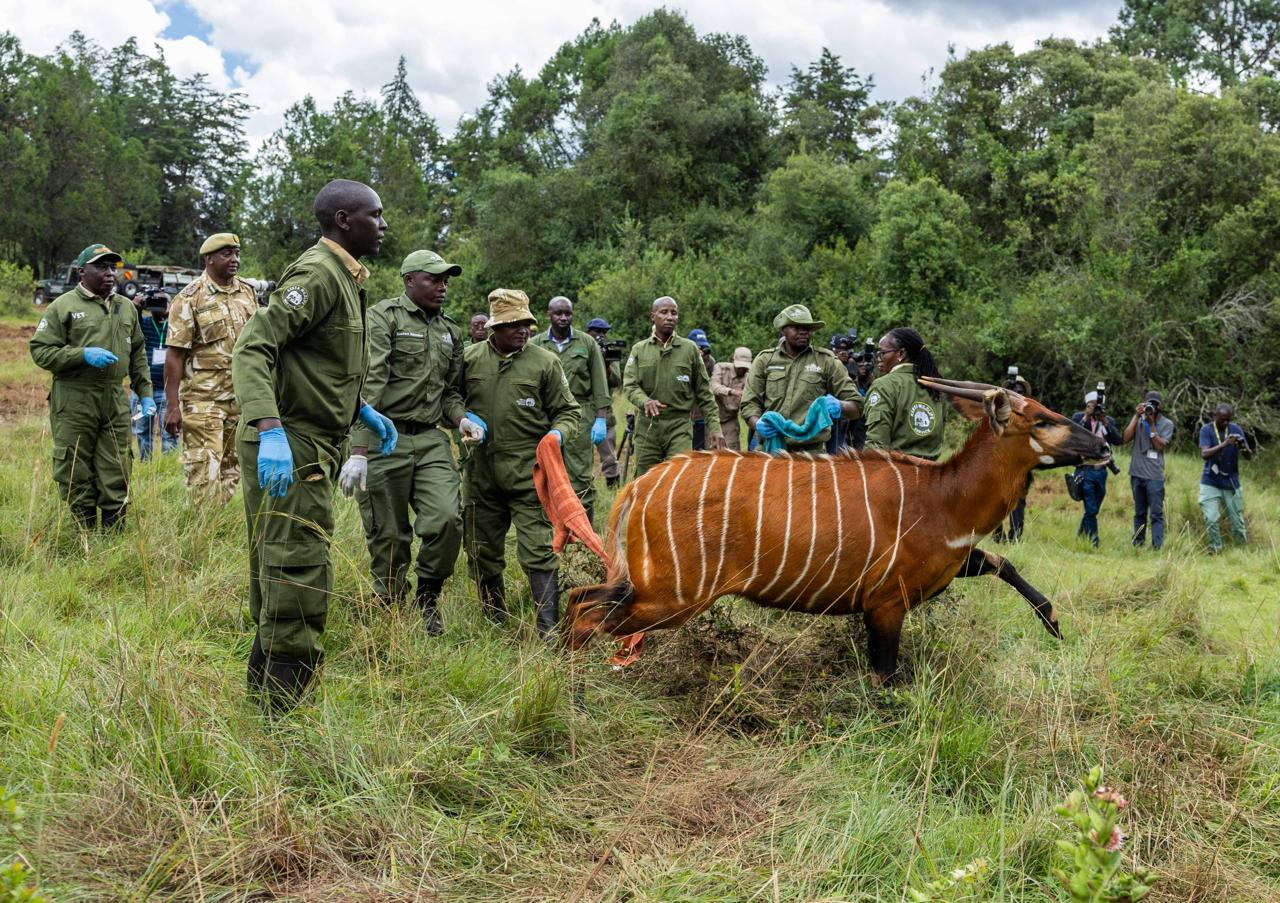
The initiative supports the protection of the Mountain Bongo, a critically endangered antelope that is endemic to Kenya’s montane forests.
The population of Mountain Bongos has declined sharply due to habitat loss, forest degradation and human pressure.
MKWC has been leading breeding, habitat restoration and rewilding programmes aimed at securing the species’ long-term survival.
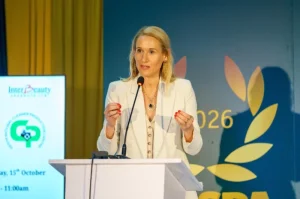
Speaking during the engagement, Charles Mwangi, the acting director of KSA, highlighted the role of space science in national conservation efforts.
“Project Centinela reflects the Kenya Space Agency’s mandate to apply space-based technologies to address real-world challenges. Through earth observation data, we are supporting evidence-based environmental management and strengthening institutional capacity for biodiversity conservation”.
Mwangi said the initiative also demonstrates the value of public–private partnerships in advancing sustainable development.
From the conservation perspective, MKWC emphasized the importance of satellite data in supporting Mountain Bongo recovery programmes.
Dr. Robert Aruho who is the head of conservancy at MKWC said Project Centinela enables precise monitoring of bongo habitats using satellite imagery.
“This allows us to measure restoration progress and better understand historical environmental changes, which directly informs our breeding, rewilding and long-term conservation strategies,” he said.
KSA’s partnership with Planet Labs, enables early detection of habitat change and more targeted conservation interventions.
Andrew Zolli, Chief Impact Officer at Planet Labs, underscored the value of timely satellite data saying it helps conservation partners respond to environmental change with greater accuracy.
“Through Project Centinela, satellite imagery is translating data into practical action for habitat protection and ecosystem restoration,” Zolli said.
Project Centinela enhances MKWC’s Mountain Bongo breeding and rewilding programme by improving habitat suitability assessments, identifying priority restoration areas and supporting long-term ecosystem monitoring.
It complements MKWC’s broader use of technology, including the deployment of AI-enabled camera systems.
The initiative highlights how collaboration between government agencies, conservation institutions and technology partners can advance the use of satellite-based data to support biodiversity conservation and ecosystem restoration in Kenya.
Mountain Bongos are a critically endangered subspecies of the bongo antelope that is only found in Kenya, especially in Aberdares, Mau , Eburru and Mt. Kenya forests.
They have a rich reddish-brown coat with distinct white vertical stripes and long, spiraled horns on both sexes, and feed on leaves, shoots, barks and vines.
Their population has dwindled over the years due to habitat loss and forest degradation, poaching and diseases outbreaks, with the population reportedly at about 100.
The country has however been engaging in conservation efforts, with 17 additional animals being repatriated from a breeding programme in Florida, US, to local sanctuaries to strengthen their genetic diversity and support reintroduction.
by ALICE WAITHERA