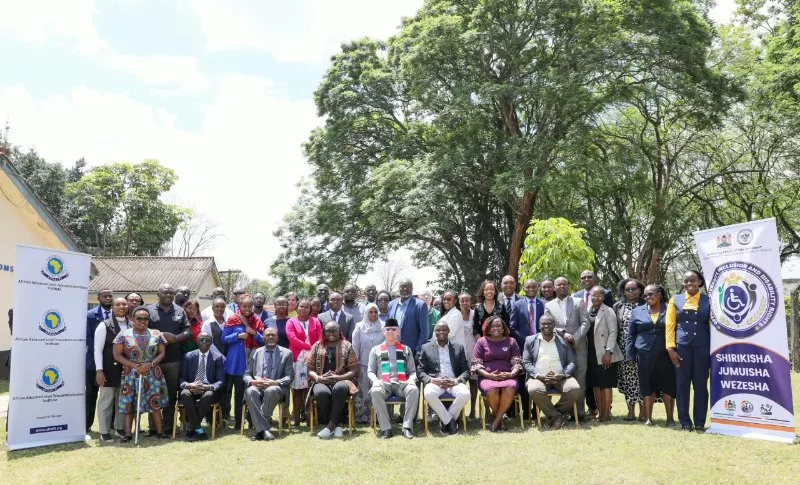



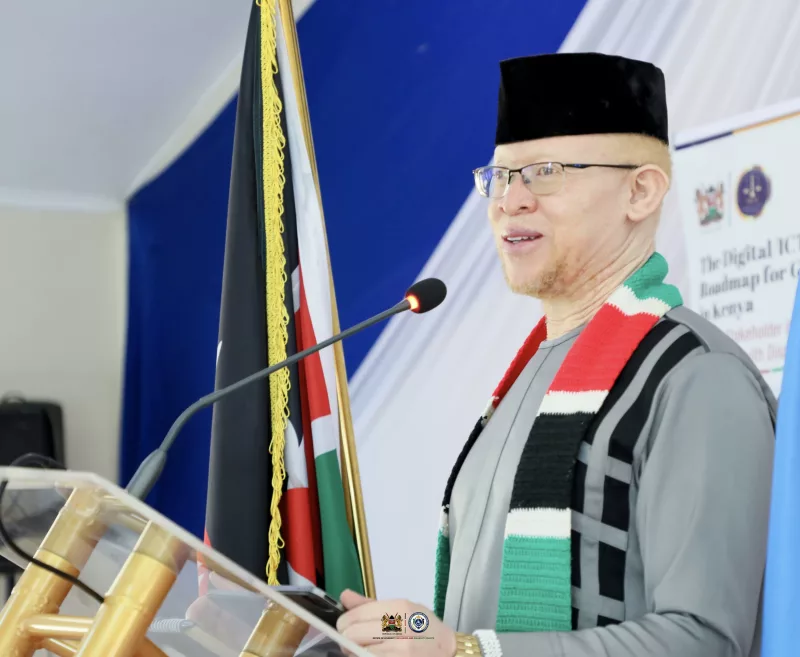
The government plans to introduce a disability rights charter to strengthen the protection of persons with disabilities and promote their inclusion in public and private institutions.
Head of the Office of Diversity, Inclusion and Disability Rights (ODIDR) Isaac Mwaura said the proposed charter would provide fresh impetus to the disability rights agenda and guide efforts to promote equality and accessibility.
“We will launch a disability charter and set the pace for disability rights,” Mwaura said during a Diversity Benchmarking Focus Group Session at the African Advanced Level Telecommunications Institute (AFRALTI) in Nairobi on Thursday.
He said the initiative would align with the government’s Usawa ni Sawa agenda, which seeks to advance equality, equity and inclusion.
Mwaura said the government was also working to strengthen coordination among institutions to ensure women, young people, ethnic minorities and persons with disabilities were included in national development programmes and decision-making.
He said the Office of Diversity, Inclusion and Disability Rights was established to coordinate efforts across government rather than duplicate the work of ministries and agencies responsible for implementing inclusion programmes.
“When we were campaigning to get this government, the President was very keen on focusing on women, youth, ethnic minorities and persons with disabilities,” he said.
Participants called for institutions to treat disability inclusion as a shared responsibility rather than an issue affecting only persons with disabilities.
Deputy Director of Finance and Administration at the Kenya Institute of Special Education, Anthony Mwangi described disability as an “open club” that anyone could join through changing circumstances. He urged organisations to create environments that accommodate people with different abilities.
Charles Juma of the British High Commission said digital accessibility should be an organisation-wide responsibility rather than being left exclusively to information and communication technology departments.
“If we want to create opportunities for persons with disabilities in our organisations, our societies, government and business, then let’s think about it as an entire organisational issue,” he said.
Kenya Airways Diversity Initiative Lead Linda Okolo called for greater workplace awareness to address stigma and misconceptions surrounding disability.
She said organisations needed to move beyond treating inclusion as a regulatory requirement and embed it in workplace culture, including recognising neurodiversity and the different needs of employees.
Women’s rights adviser at the Executive Office of the President Anthony Akoto said women must be actively involved in diversity and inclusion initiatives.
“We cannot talk about inclusivity. You cannot talk about diversity when we leave out women,” he said.
Gerald Alwanga of the State Department for Culture, the Arts and Heritage called for cultural differences, including languages, beliefs and traditions, to be recognised in institutional policies.
The discussions at AFRALTI also focused on the National Diversity Management Framework and Diversity Index initiative, which seeks to establish benchmarks for assessing how institutions manage diversity and inclusion.
The exercise brought together representatives from government, business and academia, including the Public Service Commission, the National Youth Council and the Kenya Institute of Special Education, among others.
The government says the benchmarking initiative will help institutions assess their progress, identify gaps and develop action plans to improve representation and accessibility.
The proposed disability rights charter is expected to form part of wider efforts to ensure inclusion commitments translate into practical changes in employment, education, public services and access to information.