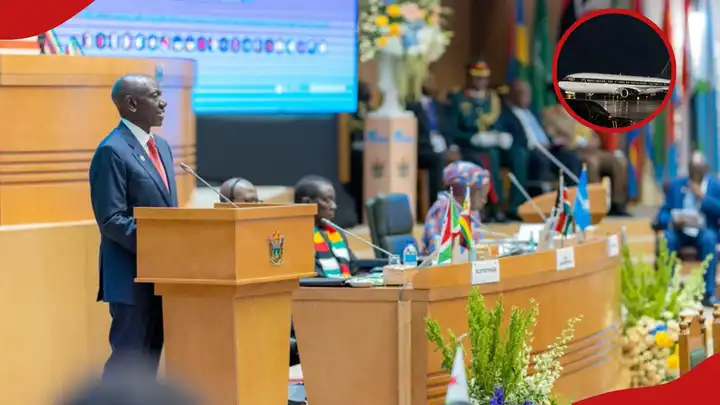

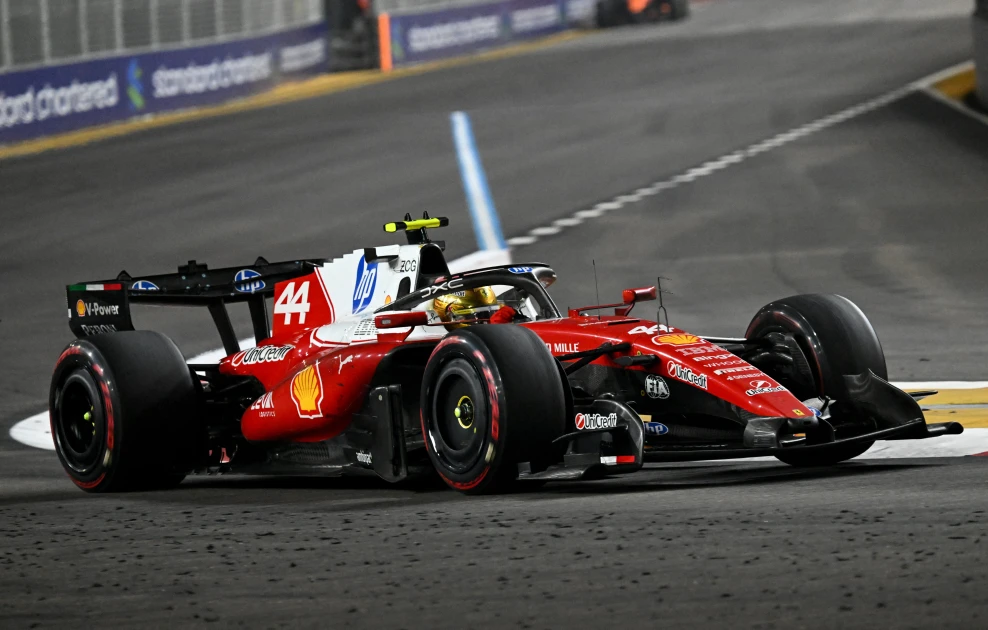
Formula 1 has signed a 10-year deal with the central-east African country starting in the early 2030s.
Hamilton, who has campaigned for a race in Africa for many years, said: “I don’t get to choose where we go. Naturally, there are problems all over the world today, so I’ve seen many of the stories. But I think we really have to approach it with humility.
“There’s a lot that we don’t know. Growing up in England, they never taught us anything about Africa. It needs to be on the curriculum. A lot of the problems they have there are still results of colonialism and the West intervening.”
Rwanda’s neighbour, the Democratic Republic of Congo, has filed a case against the country at the International Court of Justice, accusing it of breaching multiple international treaties covering genocide prevention, racial discrimination, women’s rights and torture.
And the DRC’s Minister for Foreign Affairs Therese Kayikwamba Wagner said in a statement last week that “giving (Rwanda President) Paul Kagame this platform would help polish the image of an authoritarian leader whose government has helped fuel a devastating war in our country”.
She pointed out that the US had sanctioned the Rwandan army and four senior officers for their role in destabilising the region, conducting military operations inside the DRC and supporting, training and fighting alongside the M23 rebel group.
She added that F1 “should require credible, independent guarantees that no money used to host the race comes from conflict-linked minerals or the exploitation of Congolese resources”.
But the seven-time world champion Hamilton said: “Africa is a place that deserves to have a grand prix. It’s about more than just one country. It’s about the continent itself, and there are so many beautiful countries within it.
“The people are so lovely. The culture is so rich, and I think it’s important that we get to show that to the world. We get to do that with our sport. We get to go to all these different countries, and people see some of these countries they didn’t really know too much about.
“All of a sudden, it becomes something that’s on the screen, and kids are talking about it. They go to school talking about it. So, I’m really, really hopeful for that grand prix.”
However, the Ferrari driver added: “Going there doesn’t mean that you neglect the things that are happening there.
“So hopefully many people start to educate themselves a little bit more about what is happening there and what has happened there for hundreds of years. I hope that does spark the conversation.
“And then I guess I’ll finish it off with this: I think we need to make sure we’re pushing to free Congo, free Sudan, free Syria, free Palestine. I think there’s a lot of peace that I’m hoping we get to at some stage.”
The African Grand Prix will be held at a newly planned, purpose-built circuit in Bugesera, located approximately 40 kilometers south of the capital city of Kigali. Backed by the government of Rwanda and the Rwanda Development Board, the project aims to establish a permanent hub for international motorsport while driving regional tourism, infrastructure investment, and economic growth.
The announcement marked a major milestone for Formula 1, securing its long-awaited return to the African continent for the first time since the 1993 South African Grand Prix at Kyalami.
While driver Lewis Hamilton praises the decision as a momentous step for expanding motorsport’s global footprint, the move has also drawn political scrutiny.
Despite the geopolitical debates, F1 leadership has emphasized that the multi-year partnership with Rwanda creates a strong, sustainable foundation to reunite the world championship with Africa.