



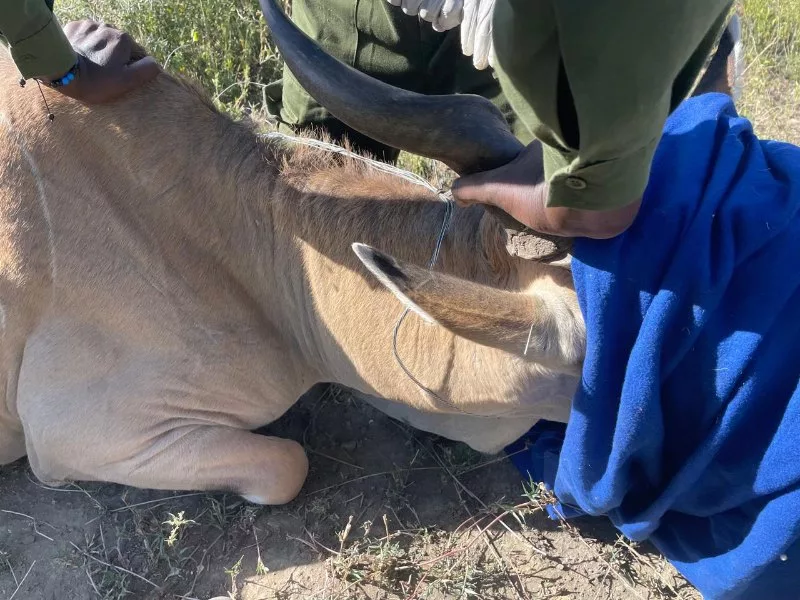
The Kenya Wildlife Service (KWS) has rescued a male Eland that had a wire snare tightly caught around its neck, removing the wire and treating the affected area.
The rescue was carried out by the Rift Valley Mobile Veterinary Unit after the animal was found with the snare constricting its neck.
KWS said the team safely removed the wire and treated the injured area, adding that the eland was expected to recover well.
The incident highlights the threats wildlife face from snares, which can cause serious injuries or death.
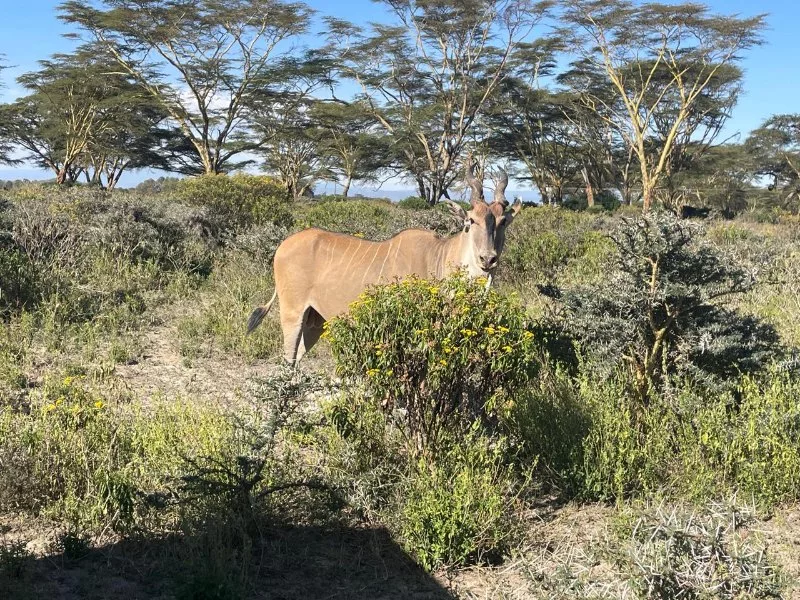
“The Eland is Africa’s largest antelope and is recognised by its large body and distinctive spiral-shaped horns,” KWS said.
In Kenya, the species occurs in various landscapes, including Nairobi National Park, Aberdare National Park, Lake Elementaita Wildlife Sanctuary, Chyulu Hills National Park and the Tsavo ecosystem.
KWS has urged the public to support wildlife conservation and report wildlife crime through its 24-hour toll-free line, 0800 597 000, or WhatsApp number 0726 610 509.
The rescue follows a similar operation on August 23, when KWS rescued a female elephant that had been trapped in a drying mud pit in Muchuro, Isiolo county, for nearly 24 hours.
The elephant was discovered by local residents, who alerted wildlife authorities after finding her stuck in the hardening mud and struggling to free herself.
A KWS Rapid Response Team rushed to the scene and spent the night monitoring and protecting the elephant as arrangements were made for a specialised veterinary rescue.
The KWS ECA Mobile Veterinary Unit, was dispatched to the remote location. The team cleared hardened mud around the elephant before placing heavy-duty straps beneath her body and coordinating a controlled pull using two mobile veterinary unit vehicles.
After hours of work, the elephant was freed.
The two incidents highlight the role of wildlife officers, veterinary teams and local communities in responding to emergencies involving wild animals.
While the Eland was caught in a wire snare, the elephant was trapped in a drying mud pit, requiring different rescue techniques.
KWS continues to urge members of the public to report wildlife emergencies and suspected wildlife crime to help protect animals and reduce threats to their survival.