
Civil society groups, the electoral agency and religious leaders in Garissa have formed an early-warning forum to tackle electoral malpractice and ensure peaceful, inclusive polls in 2027.
The Electoral Preparedness and Inclusive Governance Forum, spearheaded by the Garissa County Civil Society Network, seeks to bring together state and non-state actors to identify potential electoral challenges, enhance public awareness of electoral laws and establish a coordinated mechanism for responding to issues that could undermine peaceful and credible elections.
The initiative brings together key institutions, including the Independent Electoral and Boundaries Commission (IEBC), civil society organisations, religious leaders and human rights groups.
There are plans to incorporate other agencies such as the National Gender and Equality Commission (NGEC), the National Cohesion and Integration Commission (NCIC) and the Office of the Registrar of Political Parties (ORPP).
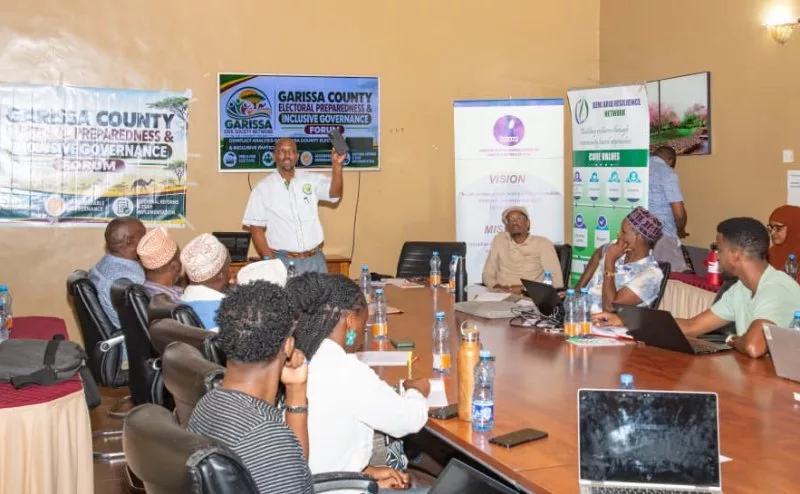
Speaking during the launch at a Garissa hotel, Garissa County Civil Society Network convener Abdishukri Jelle said the forum would provide a common platform for stakeholders to address electoral concerns collectively rather than leaving the responsibility to the electoral commission or individual institutions.
“Our objective is to establish a platform where different actors can work together to address concerns relating to electoral preparedness and other issues affecting the electoral process,” Jelle said.
He said an initial assessment of Garissa’s electoral environment had identified gaps in public awareness of electoral laws, the mandate of the IEBC and offences associated with elections.
Jelle said some activities constituting electoral offences were often treated as normal practices because community members lacked sufficient knowledge of the law and its implications.
He said the forum would help bridge the information gap while strengthening accountability and encouraging communities to resolve electoral concerns through established legal and institutional channels.
The initiative will also serve as an early-warning and response mechanism, enabling stakeholders to identify emerging tensions, raise concerns and determine the appropriate institutions to intervene before problems escalate.
Jelle said lessons from previous electoral cycles had demonstrated the need for a structured approach to preparedness, monitoring and response, particularly given the unique dynamics of Garissa’s political environment.
“We want to provide a platform where the community and other stakeholders can raise their concerns and contribute to solutions. Our approach is not to place the responsibility solely on the IEBC or any other institution, but to encourage collective action,” he said.
He said more needed to be done to ensure women, young people and persons with disabilities were not merely recognised in policy documents but had meaningful opportunities to participate in elections and compete for elective positions.
He said the IEBC should consider deploying personnel with the necessary skills to assist voters with disabilities, warning that physical or communication barriers should not prevent eligible citizens from exercising their democratic rights.
Garissa county elections manager Abdi Mohamed, who attended the forum, said the meeting provided an opportunity for stakeholders to discuss electoral preparedness and understand the roadmap towards the election.
“We had fruitful deliberations and agreed we are partners in progress. We have no choice but to uphold the law, comply with electoral regulations and work together to ensure the successful management of the forthcoming general election,” he said.
Mohamed urged young people and persons with disabilities to take an active role in the electoral process, saying their participation was protected by the constitution and should be reflected in electoral activities at all levels.
He said the commission seeks to involve different sections of society in public engagements and provide opportunities for special interest groups during the recruitment of temporary election staff.
The forum also heard calls for political leaders to avoid utterances that could heighten tensions, fuel clan animosity, and undermine peaceful coexistence as the country approaches the next election.
Abdifatah Omar of the Council of Imams and Preachers of Kenya (CIPK), Garissa, said the electoral process must be conducted in a manner that allows voters to choose their leaders freely, without intimidation or violence.
“What we are all praying for and looking forward to is a free, fair, transparent and credible election. Kenyans should be allowed to elect their leaders without any form of violence,” he said.
Omar said public confidence in the electoral process depended partly on the conduct of institutions responsible for managing elections, warning that disputed outcomes and a lack of trust could undermine the credibility of the polls.
Mukhtar Osman, chairman of the Garissa Human Rights Network, echoed these concerns, accusing some politicians of encouraging divisions among women and young people.
He said such conduct could weaken community cohesion and create an environment in which political competition becomes a source of conflict.
“As stakeholders, we want to call upon politicians to stop inciting members of our community. This is an issue we have noted with great concern,” Osman said.
He urged aspirants and their supporters to respect the law, adding that civil society organisations would continue working with security agencies, political leaders, and other stakeholders to address electoral malpractice, including incitement.
“Peace is paramount, and we must all work together to ensure that the electoral process is peaceful, orderly, and credible,” Osman said.
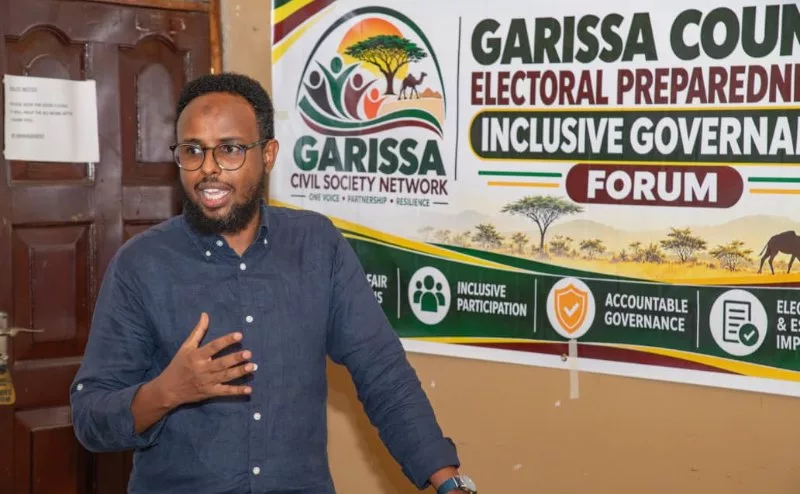
Garissa County Civil Society Network convener Abdishukri Jelle speaking./STEPHEN ASTARIKO
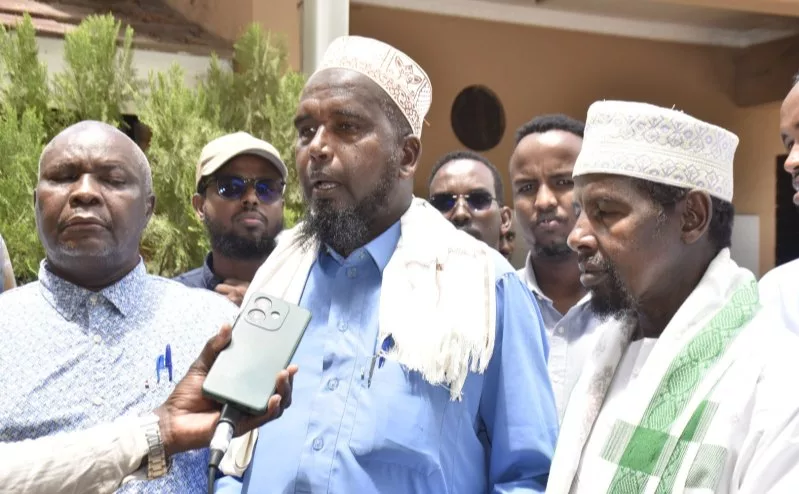
Abdifatah Abdi Omar of the Council of Imams and Preachers of Kenya (CIPK), Garissa, speaking to the press. /STEPHEN ASTARIKO
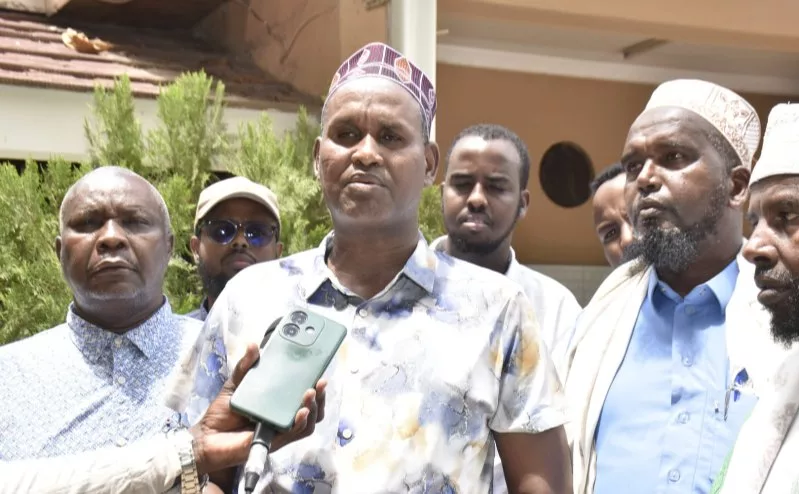
Mukhtar Dahir Osman, the chairman Garissa Human Rights Network. /STEPHEN ASTARIKO
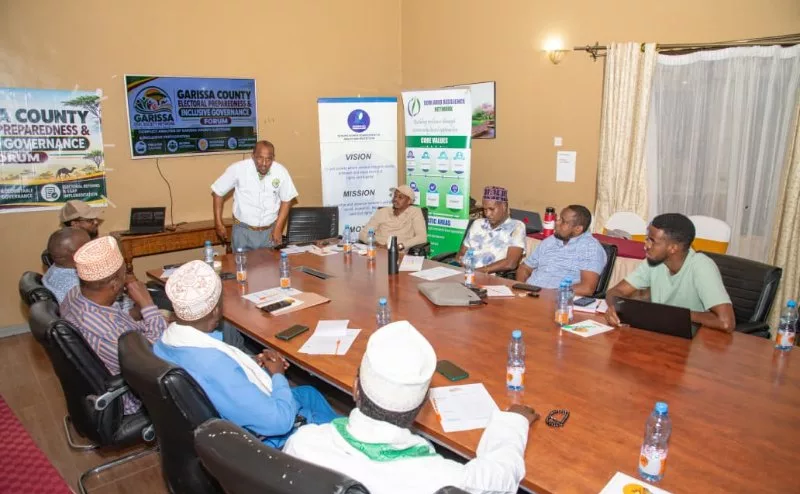
Stakeholders at the forum./STEPHEN ASTARIKO