



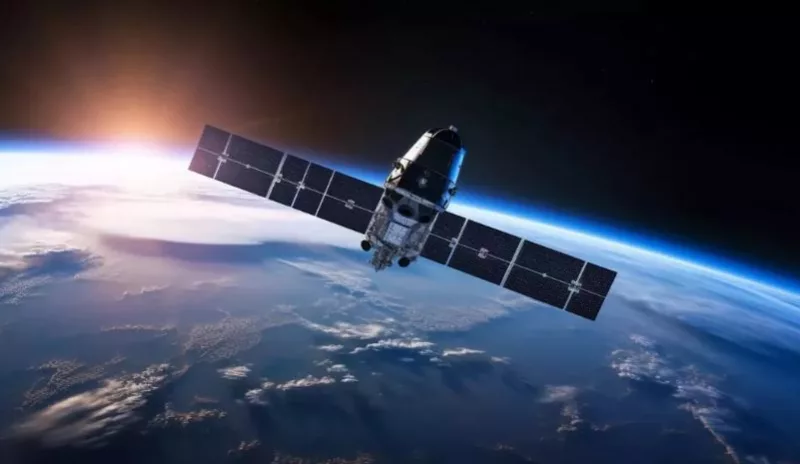
Kenya’s telecommunications industry could face a new source of competition as SpaceX moves closer to offering satellite-to-phone services that could bypass conventional mobile networks and reach customers directly from space.
The development follows approval by the US Federal Communications Commission (FCC) for SpaceX to deploy and operate up to 15,000 satellites for its Starlink Mobile direct-to-device system.
The satellites are designed to connect ordinary mobile phones directly to satellites, potentially supporting voice calls, browsing, streaming and other data services.
“If the 15,000 figure sounds familiar, there’s a good reason. In January, the FCC approved another 7,500 Gen2 Starlink satellites, doubling that system’s authorised size to 15,000. That decision focused on expanding Starlink’s broadband capacity, although it also included direct-to-cell and other mobile capabilities,” read a post by Techspot.
The approval is significant for operators such as Safaricom and Airtel Kenya, whose businesses increasingly depend on mobile data as consumers shift from traditional voice calls to internet-based services.
Safaricom’s mobile data business generated Sh83.4 billion in the financial year ended March 2026, overtaking voice revenue of Sh81.8 billion for the first time; its fixed data business contributed a further Sh20.2 billion. Airtel Kenya is also exposed to the potential disruption.
The operator’s 2025 figures show voice revenue of about Sh27.7 billion, while data contributed between Sh25.4 billion and Sh26.7 billion.
The satellite technology could become particularly disruptive in parts of Kenya where operators face the high cost of extending terrestrial infrastructure. Instead of relying on mobile towers and fibre links, direct-to-device technology allows compatible phones to communicate with satellites.
This could give consumers in remote and sparsely populated areas access to services without waiting for a conventional mobile network to be built.
Safaricom accounted for 65.3 per cent of mobile subscriptions and 62.7 per cent of mobile broadband subscriptions in the CA’s first-quarter 2025/26 market-share data, underlining the scale of the revenue base potentially exposed to new forms of connectivity.
The FCC approval does not mean Starlink Mobile is about to replace Kenyan mobile networks. The authorisation allows SpaceX to deploy the satellites, but the company still has to launch the constellation, establish commercial services and secure regulatory approvals in individual markets outside the US.
The FCC has authorised the new constellation to provide mobile satellite services and direct-to-cell connectivity outside the United States. SpaceX has also been granted a waiver that removes a requirement to lease spectrum from a terrestrial mobile operator for some of its US operations, strengthening its ability to operate as a standalone wireless provider.
That is potentially more significant for traditional telcos than the number of satellites itself. For years, satellite companies have largely operated alongside mobile operators, with partnerships allowing carriers to extend coverage into areas where building towers is uneconomical.
The new model creates the possibility of a satellite company moving further up the value chain and selling connectivity directly to consumers.
For Kenyan operators, the biggest risk could therefore be in rural coverage, enterprise connectivity, emergency communications and customers who travel through areas without terrestrial network coverage. The technology could also put pressure on mobile data prices if satellite operators eventually offer sufficiently high speeds and competitive packages.
Airtel Africa has already signed an agreement with SpaceX to introduce Starlink Direct-to-Cell connectivity across its markets, showing that the satellite industry and traditional telecom operators can also operate through partnerships.
The group said its data revenue rose 40.3 per cent to $2.53 billion in the year ended March 2026, reflecting the increasing importance of data to its business.