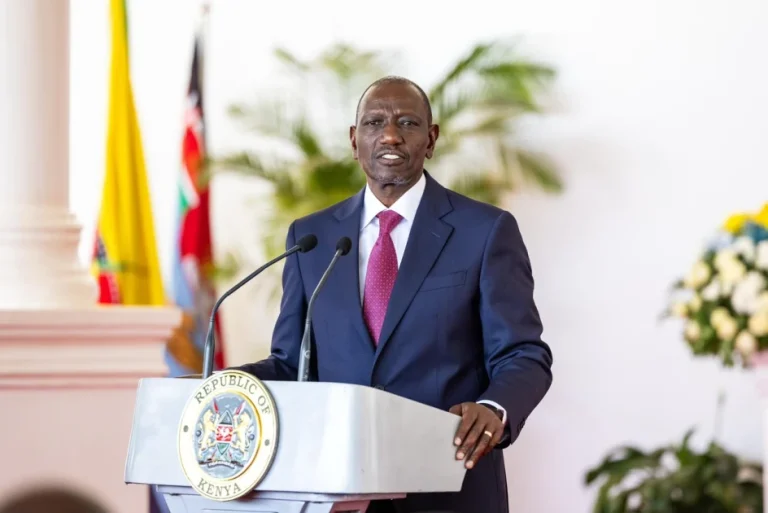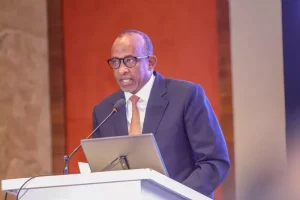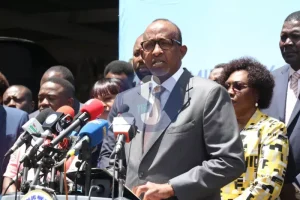
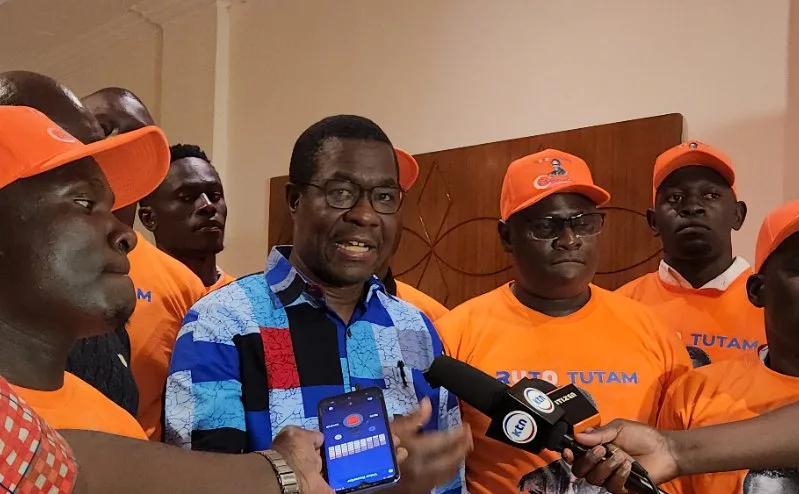
Energy CS Opiyo Wandayi has told critics questioning the proposed Lamu oil refinery to direct their concerns to him, saying the Energy and Petroleum Ministry is responsible for the project.
Wandayi said he would respond to questions surrounding the project, including concerns over agreements associated with the refinery.
Speaking in Kisumu on Tuesday evening, he accused some critics, including former government officials, of asking questions whose answers they already knew.
“I am the current Cabinet Secretary responsible for Energy and Petroleum. The East African oil refinery in Lamu falls squarely under my docket, and therefore, if you have any questions, including those of all the agreements you are talking about, direct them to me. You will be addressed appropriately,” Wandayi said.
He said critics should stop using President William Ruto as a shield when questioning decisions falling under his ministry.
“President William Ruto has delegated to me as his Cabinet Secretary the functions of the Ministry of Energy and Petroleum,” he said.
Wandayi challenged those questioning the Lamu project to engage the ministry directly rather than directing their concerns at the President.
“Anybody in their right senses who has got questions about the Lamu oil refinery should address the questions to me as the Cabinet Secretary in charge of the docket of Energy and Petroleum, and I will answer your appropriate question,” he said.
He noted that they should not hide under Article 35 of the Constitution because they all know what it means.
Kenya’s President William Ruto and Nigerian industrialist Aliko Dangote broke ground on September 30, 2026, for the $16 billion Dangote East Africa Petroleum Refinery and Petrochemicals Special Economic Zone in Mokowe, Lamu County
Recently, People’s Party of Kenya (PPK) leader Ndindi Nyoro had given President William Ruto 14 days to release the agreement between the government and Dangote over the planned Sh2 trillion-plus refinery in Lamu, saying Kenyans should be allowed to scrutinise the agreement, arguing that some provisions in such deals could affect the public interest.
On October 2, Thirdway Alliance leader Ekuru Aukot separately formally requested disclosure of the government’s agreement with Dangote East Africa Refinery and Petrochemicals SEZ.
Aukot asked for the full contract, including execution copies, schedules, side letters and amendments, as well as information on the project’s shareholders and beneficial owners.