


Murang’a residents have been urged to properly dispose of waste and avoid dumping plastics in drainage systems as the county prepares for the expected El Niño rains.
The county government warned that indiscriminate disposal of plastics could worsen flooding in urban areas by blocking drainage channels and waterways when heavy rains set in.
Murang’a County Executive Committee Member for Water Mary Magochi said the county generates about 300 tonnes of waste every day, with plastics accounting for about 20 per cent and organic waste making up between 40 and 50 per cent.
She said the county was working to improve waste management and recycling while expanding disposal capacity following the continued reduction of space at the Karii dumpsite.
“We have been doing that in Kenol in Maragua to ensure that our drains are clear and there’s no flooding of water within our towns,” Magochi said, referring to efforts to unclog drainage systems in Murang’a and other urban centres.
Magochi said the county had opened another disposal facility at Kimorori, where organic waste is being recovered and processed into fertiliser as part of efforts to reduce the amount of waste ending up at the Gikono landfill.
She said the county had also established a materials recovery facility at the Gikono landfill to facilitate the recovery of waste that can be reused or recycled.
Magochi urged residents to make use of designated waste disposal points while also harvesting rainwater through storage tanks and water pans to reduce pressure on drainage systems and provide water for irrigation.
“We have already come up with areas where we should dispose our waste that is effectively collected so that our towns don’t become clogged,” she said.
The county government has also encouraged residents in rural areas to harvest rainwater through water pans and storage tanks, which can provide water for irrigation while helping communities manage runoff during heavy rains.
Magochi said partnerships with organisations such as the Upper Tana-Nairobi Water Fund Trust have also supported the development of water pans for irrigation, particularly in agricultural areas.
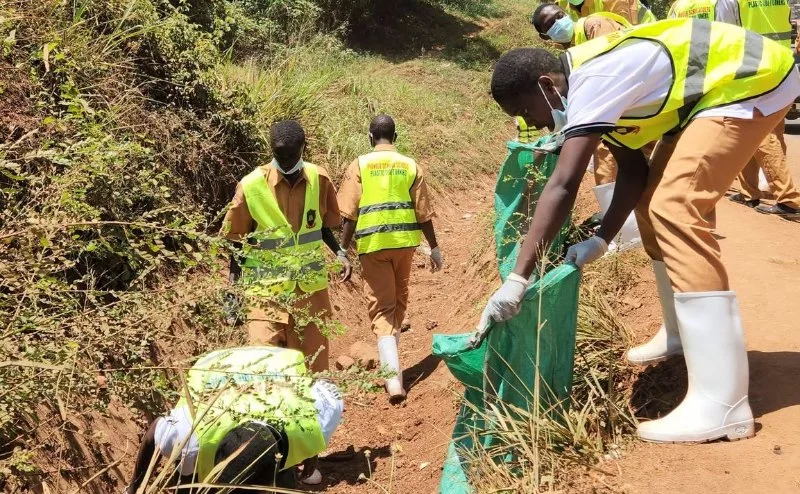
The remarks came during a clean-up exercise conducted by the Murang’a County Government in partnership with Pioneer School Maragwa and the Murang’a Water and Sewerage Company (MUWASCO) in Mukuyu and Murang’a town.
Students from the school’s Scouts Club, including members of the Plastic Tide Turners Scouts Club, took part in collecting plastic and other waste for proper disposal and recycling.
Pioneer School teacher Muriithi Kamau said the initiative was aimed at instilling environmental conservation values among young people, who would play a key role in protecting the environment in future.
“We are inculcating these new ideas into our young people so that they can also learn to conserve the environment,” Kamau said.
He noted that plastics were increasingly becoming a challenge in towns because they are swept into drainage systems during rainfall, blocking waterways and contributing to flooding.
The expected El Niño rains have heightened the need for residents and institutions to keep drainage channels clear, particularly in urban centres where large volumes of surface runoff can quickly overwhelm blocked waterways.
The clean-up also sought to encourage residents to reduce reliance on single-use plastics and adopt practices such as using reusable containers and bottles.
MUWASCO communications officer Joe Caleb said improper disposal of plastics also affected water and sanitation services, particularly when waste found its way into drainage channels and water sources.
He urged households to take responsibility for waste management by using bins and other facilities provided for proper disposal.
“Improper disposal of waste, especially plastics, affects our services by clogging drainage systems and making our efforts to maintain sanitation difficult”.
“Waste disposal is a collective responsibility. It’s not the responsibility of the service provider. It starts with the basic household and that’s the only way to ensure that the environment is clean,” he added.