
President William Ruto will on Wednesday ground-break the East African Oil Refinery at Lamu port, launching Kenya’s bid to become a regional petroleum processing hub.
The refinery, estimated to cost $16 billion (about Sh2 trillion), is expected to be one of the largest industrial investments in the country’s history.
The project will be jointly developed by the Kenyan government and Nigerian billionaire industrialist Aliko Dangote, whose Dangote Group operates Africa’s largest oil refinery in Lagos, Nigeria.
The refinery will be constructed at Lamu Port under the Lamu Port-South Sudan-Ethiopia Transport (Lapsset) Corridor and is expected to process crude oil from the Lokichar oil fields in Turkana, as well as crude sourced from other parts of East Africa, before supplying refined petroleum products to markets in the region.
The groundbreaking ceremony forms one of the flagship events of President Ruto’s eight-day development tour of the Coast, which began on Saturday in Taita Taveta and will cover all six coastal counties through October 3.
The government says the East African Oil Refinery is designed to strengthen Kenya’s energy security by reducing dependence on imported refined petroleum products while positioning the country as a major exporter of fuel to neighbouring countries.
Officials say the facility will significantly expand industrial activity around Lamu port, stimulate manufacturing and logistics and create thousands of direct and indirect employment opportunities during construction and operation.
According to the government, the project is expected to generate more than 500,000 jobs across the value chain once fully operational.
President Ruto has indicated the refinery itself will create about 60,000 direct jobs, with additional employment emerging through supporting industries.
Beyond fuel production, the refinery is expected to spur investments in petrochemicals, fertiliser manufacturing, packaging industries and other downstream petroleum products.
The project is also expected to complement billions of shillings already invested in the Lapsset Corridor, which is envisioned as East Africa’s largest infrastructure and trade gateway linking Kenya, Ethiopia and South Sudan through roads, railways, pipelines and port infrastructure.
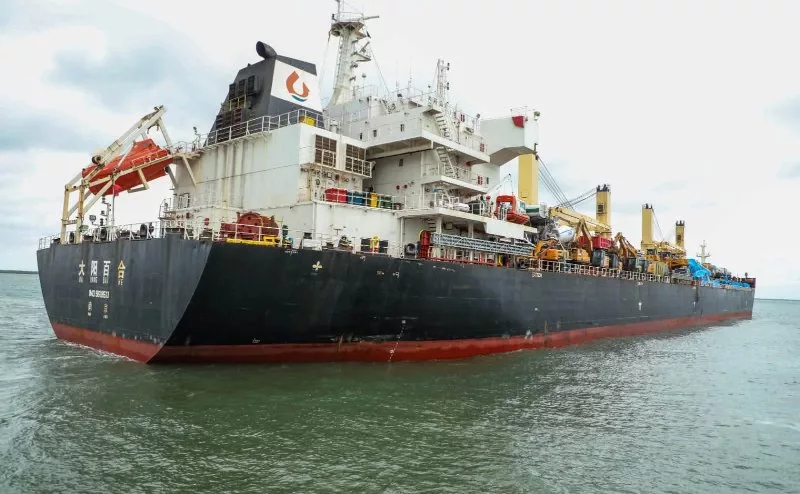
Preparations for the ceremony gathered momentum on Saturday when the Port of Lamu received MV Da Yang, the first vessel carrying heavy construction materials destined for the refinery project.
The ship docked carrying 2,930 tonnes of machinery and construction equipment that will be used during the initial phase of the refinery’s construction.
The arrival marked a symbolic milestone ahead of the official launch, becoming the first shipment of equipment specifically linked to the massive refinery development.
Kenya Ports Authority managing director, Captain William Ruto, welcomed the vessel upon arrival before presenting a Certificate of First Call and a commemorative plaque to the ship’s master, Captain Wang Shengli.
Captain Ruto described the vessel’s arrival as a strong indication that implementation of the refinery project had begun.
“The arrival of this vessel is very critical and shows the government’s commitment to ensuring this project succeeds. It will be a game changer for the entire region,” he said.
He said the Port of Lamu was fully prepared to handle increased cargo volumes associated with the refinery and future petroleum exports and imports.
Captain Ruto assured shipping partners that KPA had invested in efficient vessel turnaround, seamless cargo handling and customer-focused services that meet international maritime standards.
The port is expected to play a central role in the refinery’s operations by receiving crude oil shipments, handling petroleum tankers and facilitating export of refined products to regional and international markets.
The Lamu groundbreaking came days after Ruto toured the Dangote Refinery in Lekki, Lagos State, Nigeria, during his return from the United Nations General Assembly.
The visit was made at the invitation of Dangote, the president and chief executive officer of Dangote Group.
The Nigerian refinery is currently Africa’s largest single-train refinery, with a processing capacity of 700,000 barrels of crude oil per day.
It produces more than 100 million litres of petrol, diesel and aviation fuel daily and is supported by an extensive marine infrastructure that includes 120 kilometres of subsea pipelines and sea cables transporting crude oil directly from offshore vessels into the refinery.
Ruto said the Nigerian project demonstrated what African governments, investors and financial institutions could achieve through partnerships.
“This huge achievement is a testament of what African governments, investors and financial institutions can do together,” the President said after the tour.
Ruto said the planned refinery in Lamu would be larger than the Dangote Refinery and would fundamentally reshape Kenya’s petroleum industry.
He said it would improve fuel reliability, strengthen energy security and accelerate industrialisation across the region.
During his visit to Lagos, President Ruto also toured the headquarters of the African Finance Corporation (AFC), one of the continent’s leading infrastructure financiers and a key institution expected to support major industrial projects in Kenya.
The AFC recently established its first regional office outside Nigeria in Nairobi.
Kenya is partnering with the corporation in the development of the Dongo Kundu Integrated Industrial Park in Mombasa and the Naivasha Special Economic Zone, among other strategic infrastructure projects.
As part of strengthening that partnership, Kenya increased its shareholding in AFC by $25 million (about Sh3.25 billion) this year.
The government says collaboration with AFC reflects its broader strategy of financing transformative infrastructure through African institutions and private capital rather than relying solely on traditional lenders.
Energy experts say locating the refinery at Lamu port is strategically linked to the Lapsset Corridor, which was designed to open northern Kenya to large-scale trade and industrial investment.
The refinery is expected to increase cargo traffic through Lamu port, attract storage terminals, petrochemical industries and logistics companies and enhance the viability of planned crude oil pipeline infrastructure connecting Turkana to the Coast.
Once completed, the refinery will supply petroleum products to Kenya, Uganda, Tanzania, Rwanda, Burundi, South Sudan, Ethiopia and the wider Great Lakes region, reducing reliance on imported refined fuel from overseas markets.
For Lamu, the project is expected to trigger significant investments in housing, transport, services and industrial development around the port city, reinforcing its role as Kenya’s newest energy and maritime gateway.