
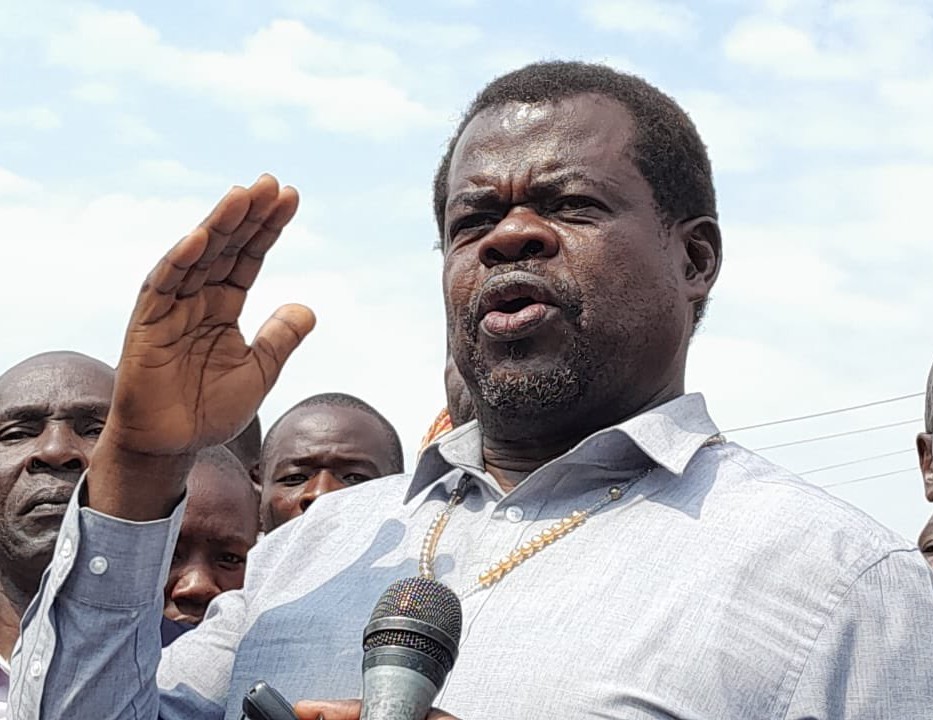
The High Court is set to deliver its final verdict on a petition by Busia Senator Okiya Omtatah challenging the national tallying of presidential election results.
Omtatah is challenging the establishment and operation of the national tallying centre, arguing that the Constitution places the primary and final responsibility for tallying, verifying and declaring presidential results at the constituency level.
The senator wants the court to declare the national tallying process unconstitutional and stop the Independent Electoral and Boundaries Commission from re-tallying or re-verifying presidential results after they have been announced by constituency returning officers.
According to the court records, the senator seeks “a declaration that the establishment and operation of the National Tallying Centre for the purpose of tallying, verifying, or in any way re-tallying presidential election results after their announcement by the respective constituency returning officers is unconstitutional.”
He argues that the constituency is the final level for tallying and verification of presidential election results and that the IEBC chairperson’s role at the national level should be limited to collating results received from constituencies and declaring the winner.
Omtatah has also challenged Section 39 of the Elections Act, which provides for the transmission and tallying of presidential election results at different levels.
He wants the court to find the provision unconstitutional to the extent that it allows multiple layers of verification of results already declared by constituency returning officers.
The senator is further challenging Regulation 83(2) of the Elections (General) Regulations, which provides for the tallying of results received at the national tallying centre.
Among the orders sought is one barring county returning officers and the IEBC chairperson from altering, re-tallying or further verifying results declared at constituency level.
Omtatah argues that the national process should instead involve simple collation and confirmation of the arithmetic needed to establish whether a presidential candidate has met the constitutional threshold for election.
Under Article 138(4) of the Constitution, a presidential candidate must receive more than half of all votes cast in the election and at least 25 per cent of the votes cast in each of at least 24 counties.
The petition also raises questions about public access to presidential election results.
Omtatah wants the court to declare that publication of results on the IEBC’s online portal alone does not adequately meet the constitutional requirement on access to information.
He is seeking an order requiring results announced at each constituency to be immediately placed in the public domain, with the media, political parties and other interested parties allowed to disseminate them.
The case comes as debate over the national tallying centre intensifies ahead of the 2027 election.
The People’s Coalition on Electoral Reforms, led by former Chief Justice David Maraga, has recently called for the scrapping of the national tallying centre at Bomas of Kenya.
The coalition argues that the Constitution does not expressly provide for a national tallying centre and does not give the IEBC power to re-tally or re-verify presidential results already declared at polling stations and constituencies.
However, Health Cabinet Secretary Aden Duale has defended the existing arrangement, arguing that the Constitution should be read together with the Elections Act.
Duale has pointed to Article 88(5), which requires the IEBC to perform its functions in accordance with both the Constitution and national legislation.
The Elections Act provides for the transmission and tallying of presidential election results at constituency and national levels, forming part of the legal framework under which the IEBC conducts presidential elections.
The judgment will therefore address the scope of the IEBC’s powers at the national level and the relationship between constitutional provisions governing presidential elections and legislation regulating the electoral process.