


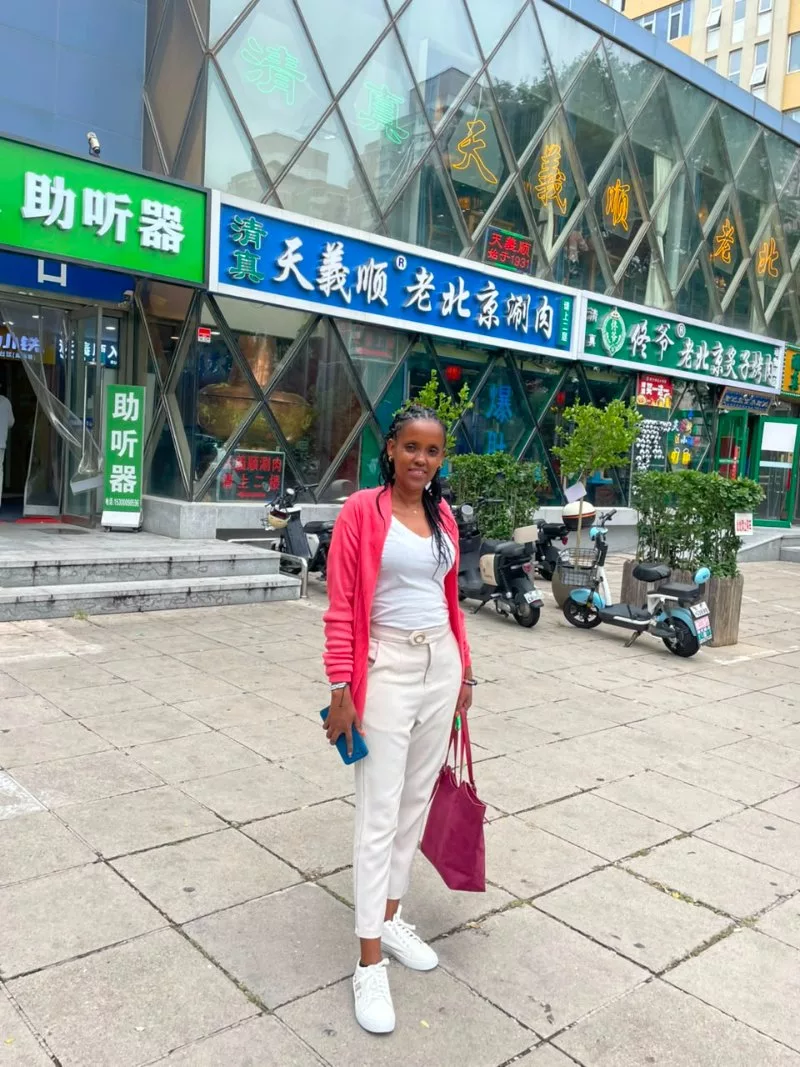
When I first arrived in Beijing on September 6, I expected to see a concrete jungle — towering buildings, busy roads and little space for nature.
Instead, the city surprised me.
From the airport to our hotel, I saw trees lining the roads and greenery spread across the city. Parks appeared between buildings, adding colour and life to the vast urban landscape.
That was my first surprise.
Throughout the drive, I was glued to the window, eager to take in everything around me.
In one park, elderly people had gathered around tables, playing card games and what looked to me like chess. Elsewhere, people walked their dogs. Small groups sat together, chatting and laughing. Others simply walked, enjoying the open air.
I watched these scenes from the moving vehicle, but they felt strangely familiar.
The picture that came to my mind was that of a society that has embraced a communal way of life — people making time to be together, whether walking, playing games or simply talking.
That struck a chord with me because I come from the Borana pastoralist community, where communal life is at the centre of who we are.
In my community, people band together in good times and bad. There is a strong sense that everyone belongs to the community before even the individual family. This creates pride, unity and a deep love for one’s people.
As I watched the people of Beijing, I began to understand something I had previously struggled to explain: why Chinese people appear to have such a strong sense of patriotism.
One small moment brought this home to me.
One of our hosts, who picked us up from the airport, was briefing us during the journey. At one point, she referred to “our China.”
I quietly asked myself: Would a Kenyan welcoming a foreigner ever naturally say, “our Kenya”?
The question stayed with me.
Perhaps when people grow up seeing themselves as part of something bigger than themselves, that sense of belonging extends beyond the family and community to the country.
You become proud not only of where you come from, but also of the people you share it with.
That was another surprise Beijing gave me on my first day.
As the day continued, I also noticed something else about the people I encountered: respect.
Not everyone I met spoke English, but the language barrier did not stop people from trying to help. Some politely gestured to show us where to go. Others reached for their phones, using translation apps to understand what we were asking and to respond.
There was patience in those small interactions. There was also hospitality.
For a first day in a new country, these simple encounters left a lasting impression on me. I had arrived expecting to be overwhelmed by buildings and crowds. Instead, what stayed with me was something more human — people gathering in parks, sharing public spaces, helping strangers and showing pride in their country.
Beijing, on my first day, did more than introduce me to a new city.