



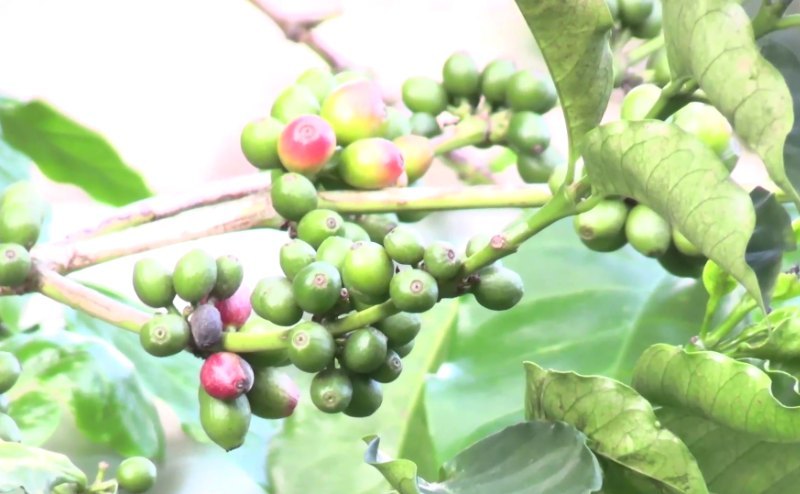
Coffee researchers are working on a new variety that could help farmers cope with climate change, pests and diseases while allowing the crop to expand into emerging coffee-growing areas.
The Coffee Research Institute (CRI) of the Kenya Agriculture and Livestock Research Organisation (Kalro) is currently screening new coffee materials by seeking to combine desirable characteristics of Arabica and Robusta coffee.
CRI Deputy Institute director Dr Tony Maritim said the research aims to develop a variety that is adaptable to different regions and resistant to pests and diseases.
Kenya is traditionally known for producing Arabica coffee, but researchers are exploring the potential of Robusta to address some of the challenges facing the industry, including Fusarium disease.
“We are currently screening a number of new varieties where we are now trying to integrate between the Arabica and the Robusta,” Maritim said.
He said the researchers want to develop a Robusta-based variety with unique characteristics that can adapt to different coffee-growing environments while offering greater resistance to pests and diseases.
The development comes as coffee farming spreads beyond the traditional growing zones, creating demand for varieties that can perform under different climatic and production conditions.
Coffee is traditionally grown in about 30 counties, but Maritim said new areas are emerging as serious players in the industry, including Laikipia, West Pokot and Elgeyo Marakwet.
“We must have the right material for these regions,” he said. He added that research was therefore increasingly focusing on varieties suited to conditions in emerging coffee-growing areas.
The new research builds on five coffee varieties already developed by CRI: SL28, SL34, K7, Ruiru 11 and Batian.
While SL28, SL34 and K7 remain popular among farmers, they face challenges from common coffee diseases such as coffee leaf rust and coffee berry disease.
Ruiru 11 and Batian, on the other hand, are more disease-resistant varieties that researchers encourage farmers to adopt.
Maritim said selecting climate-resilient varieties was also important as the industry moves towards regenerative agriculture. Under this approach, farmers seek to reduce their dependence on chemical pesticides, insecticides and inorganic fertilisers.
The institute is also researching the use of suitable shade trees in coffee farms. Some of these trees provide shade while helping to improve soil fertility through nitrogen fixation, reducing the need for chemical fertilisers.
The push for improved varieties comes at a time when Kenya’s coffee industry is showing signs of recovery, with production and farmer earnings improving.
According to Samuel Mwau, Assistant Director of Technical and Advisory Services at the Coffee Board of Kenya, national coffee production currently stands at about 50,000 tonnes.
Productivity among small-scale farmers in cooperatives has also improved, rising from the traditional one to two kilogrammes per tree to about three kilogrammes and above.
Coffee estates are performing even better, with productivity reaching about eight to 10 kilogrammes per tree.
Mwau said the improving returns are encouraging farmers to remain in coffee production and, in some areas, expand their acreage.
Kenya currently has about 119,000 hectares under coffee, with expansion being reported particularly in parts of the Rift Valley and western Kenya, where land is still available.
In some areas, farmers are increasingly considering coffee as an alternative to crops such as maize because of the income it can generate.
The price paid to farmers has also improved significantly.
Mwau said farmers are currently earning about Sh120 to Sh125 per kilogramme of coffee, compared with about Sh50 to Sh60 five years ago.
He attributed the renewed interest in the crop partly to better market prices.
The improved returns are coming as global demand for quality coffee remains strong, with Kenya continuing to rely heavily on specialty coffee markets.
Mwau said about 55 per cent of Kenya’s coffee is exported to the European Union, while other important and emerging markets include the United States, Japan, Australia, South Korea and countries in North Africa.
He said demand for Kenyan coffee currently exceeds the country’s supply, making increased production a priority.
“We need to work on our volumes and we need to work together — the government, the stakeholders and the farmers,” Mwau said.
Researchers say the development of varieties that can withstand changing climatic conditions and disease could be critical to sustaining production as coffee expands into new areas.
According to Kalro, the new variety is still under research and screening, but its development signals a shift towards coffee planting materials that can deliver both resilience and productivity.