


Social connection is now driving residential property value in Kenya, with developers increasingly prioritising wellness, interaction and shared experiences alongside traditional location, size and amenities.
According to property developer–HassConsult, the shift comes as wellness real estate gains momentum globally.
The Global Wellness Institute’s 2026 Global Wellness Communities and Real Estate report estimates the sector at Sh78.9 trillion ($548 billion), with the market projected to surpass Sh129 trillion ($1 trillion) by 2029.
The report identifies social infrastructure as an important component of wellness-focused developments.
It notes that people with access to such infrastructure are more than three times as likely to say they have close friends—32 per cent compared with nine per cent among those without access.
The trend could have particular significance in Kenya, where digital lifestyles are increasingly reshaping how people interact.
The report notes that Kenyans spend more time on social media than people in any other nation, with 20 per cent spending more than six hours a day online. It also indicates that 26 per cent of Kenyan employees experience loneliness frequently.
Property developers are now responding by creating residential environments designed to encourage face-to-face interaction and community participation.
HassConsult, developer of Enaki Town, has expanded its wellness and community model through the introduction of Elevate by Hass, an experience hub offering year-round fitness, wellness, children’s activities, entertainment, work, gastronomy and community programming.
“Traditional measures of residential value, location, size, specification, are no longer the full picture. When residents genuinely belong to where they live, it shows up commercially,” said Farhana Hassanali, Co-CEO and development director at HassConsult.
Enaki Town, which was conceived as a holistic lifestyle community focused on greener, more sociable and resort-style urban living, has 440 apartments and currently records 92 per cent occupancy. Several unit types are fully occupied and have waiting lists.
HassConsult said the performance points to growing demand for developments that combine housing with opportunities for social interaction, recreation and wellness.
At Enaki, a purpose-built movement studio supports permanent fitness and wellness programming delivered by specialist operator Yves Preissler.
Artcaffé operates a marketplace that has evolved into a social hub hosting high teas, children’s baking competitions and cultural festivals.
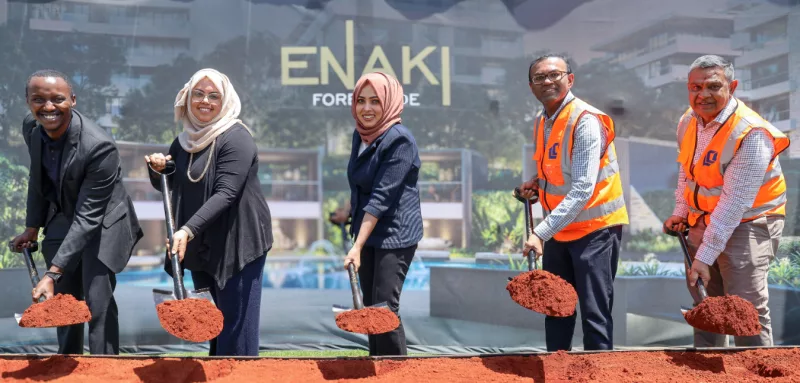
Building on demand for the Enaki model, HassConsult has also broken ground on its second residential phase, Enaki Forestside.
The development is centred around a 23,000-square-foot private forest and includes new fitness, social, work and wellness spaces.
The project has sold 50 per cent of its homes within four months of launch, providing another indication of demand for community-oriented housing.
Sakina Hassanali, Co-CEO and creative director at HassConsult, said developers will increasingly have to treat social interaction as a core part of residential design.
“The design brief of the future has to include human connection as an outcome. What draws people out of their homes and keeps them coming back cannot be left to chance. It must be designed, programmed and sustained,” she said.
The emerging model is expected to redefine competition, with developers increasingly judged not only by the buildings they deliver but also by the communities and experiences they create around them, the firm said.