



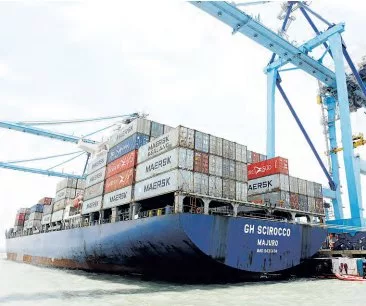
In a public statement issued on Thursday, August 27, 2026, KRA said cargo consolidation remains an important option for small-scale traders seeking to pool shipments, reduce logistics costs and simplify customs clearance.
The authority explained that customs valuation of imported goods is governed by law, with duty generally assessed based on the transaction value of goods, subject to applicable legal and risk-management requirements.
KRA said the arrangement was designed to address the needs of small-scale traders who consolidate their goods to simplify shipping and clearance formalities.
According to the authority, consolidation allows traders to benefit from a faster and more predictable clearance process while reducing the administrative burden associated with assessing numerous small consignments individually.
To facilitate the process, customs uses a minimum yield test for containers carrying commonly imported general goods.
KRA explained that the minimum yield serves as a risk-management reference for identifying containers that meet the threshold for clearance with minimal customs intervention, based on established risk parameters.
The authority said the minimum yield test was last revised in the 2022/23 financial year.
However, changes in the operating environment, including fluctuations in exchange rates, freight charges and changes to national and East African Community tax laws, prompted a review of the threshold.
KRA stressed that the Sh3.2 million minimum yield should not be interpreted as the amount of tax payable on every consolidated container.
“It is important to emphasise that the minimum yield is not a representation of the actual tax liability for the goods contained in a container,” the authority stated.
Instead, KRA said the figure is used as a risk-management reference under the simplified clearance arrangement, while the actual tax payable depends on the nature, value and classification of the imported goods.
The authority added that traders who do not wish to use the simplified arrangement can request customs to verify their containers.
In such cases, taxes would be determined based on the actual contents of the container, the correct customs value and proper classification of the goods.
Traders also have the option of de-consolidating their cargo into individual consignee parcels or consignments.
Under this arrangement, individual importers can make separate declarations and pay the applicable taxes directly to KRA based on their respective goods.