



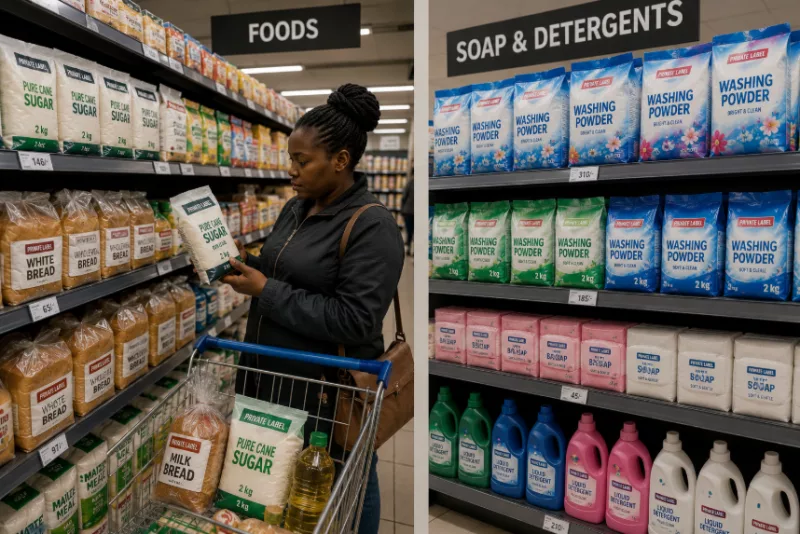
HIGH cost of living is pushing Kenyan consumers away from established brands towards cheaper private-label products and smaller package sizes, reshaping the fast-moving consumer goods market.
The Retail Trade Association of Kenya (Retrak) says shoppers are increasingly buying smaller quantities of detergents, cooking oil and other household essentials as they adjust spending to limited incomes.
The trend is prompting supermarkets and other retailers to expand their own-brand product lines, while manufacturers introduce micro-packs designed to meet consumers’ daily cash-flow needs.
Private labels, which are manufactured for and sold under a retailer’s brand, are gaining popularity because they generally offer lower prices while giving retailers greater control over pricing and margins.
“The trend is forcing manufacturers and retailers to rethink product sizes, pricing, distribution and packaging as inflation continues to squeeze household budgets,” Retrak, led by chief executive Wambui Mbarire, says.
Retrak’s August 2026 retail intelligence briefing, titled “Execution over Experimentation”, identifies affordability, operational efficiency and adaptation to changing consumer behaviour as key priorities for businesses.
The pressure is particularly evident in the informal retail sector, where millions of consumers make frequent purchases from kiosks and neighbourhood shops.
Manufacturers are increasingly using digital business-to-business platforms to supply these outlets directly, reducing reliance on traditional wholesalers and distributors.
The platforms allow suppliers to receive orders, process payments and organise deliveries electronically, helping cut distribution costs and move smaller packs closer to consumers.
The shift comes amid persistent pressure on household budgets. Kenya’s annual inflation rose to 6.5 per cent in July from 6.4 per cent in June, according to the Kenya National Bureau of Statistics.
Transport costs, food prices, housing and other essential goods and services continued to put pressure on household incomes.
Changing consumption patterns are also forcing manufacturers to reconsider packaging as they respond to the Sustainable Waste Management Act and Extended Producer Responsibility requirements.
Producers must balance demand for affordable smaller packs with the costs and environmental obligations associated with packaging and waste management.
The rise of private labels does not necessarily mean consumers are abandoning established brands.
Instead, shoppers are increasingly comparing prices and pack sizes before making purchases, intensifying competition between national brands and retailer-owned alternatives.
For retailers, private labels provide an opportunity to strengthen customer loyalty while serving price-conscious shoppers.
For manufacturers, the shift is increasing pressure to demonstrate clear value for money as consumers become less willing to pay a premium for brand recognition.
The retail market is hence becoming increasingly execution-driven, with businesses under pressure to align product sizes, pricing and distribution with the realities of household incomes.