


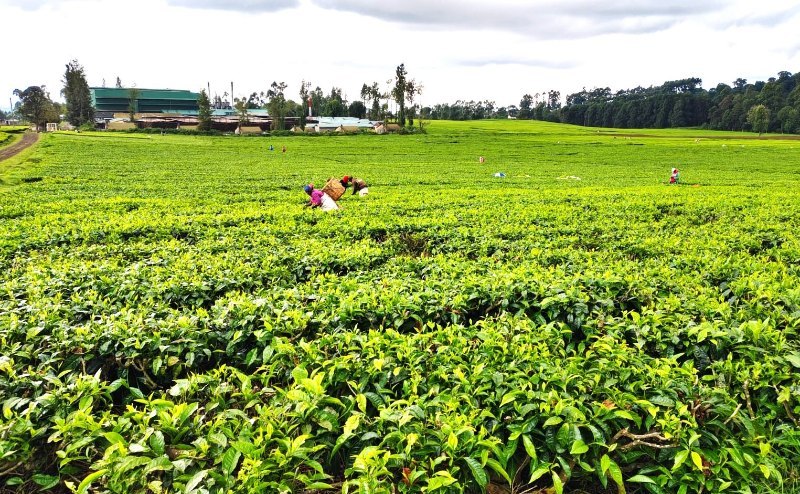
Tea farmers have cumulatively earned Sh55 billion from exports this year, with data showing Kenya continues to dominate the regional market despite concerns over the impact of the recently introduced levy.
Between January and June, Kenya offered about 186.2 million kilogrammes of tea at the auction, dwarfing volumes from neighbouring countries.
In comparison, Uganda offered about 22.6 million kilogrammes, Rwanda 13.3 million kilogrammes and Tanzania just over 300,000 kilogrammes during the same period.
The figures underline the country’s position as the leading supplier at the Mombasa auction, which serves as the main trading hub for tea produce from East and Central Africa and is the biggest auction globally for CTC tea.
Auction records show that local tea fetched an average price of Sh295 per kilo across the first 24 sales of 2026.
Tea Board of Kenya (TBK) CEO Willy Mutai attributed the performance to market fundamentals, saying prices and absorption rates are determined largely by quality, demand and supply rather than the newly introduced levy.
“What determines the value of tea offered by a factory is the quality. The effect of the tea levy on the price is negligible,” Mutai said.
He said global demand for tea varies depending on seasons and economic conditions in key export destinations.
Demand often tends to rise during winter months and ease during summer, while geopolitical developments such as the conflict involving Iran and the US also influence buying patterns in international markets.
Mutai explained that the long rains experienced between March and April boosted tea production, resulting in higher volumes being presented at the auction and consequently affecting absorption rates.
Despite the gains, the tea sector remains divided over the 0.8 per cent tea levy that took effect on May 1 this year.
Introduced through the Tea (Levy) Regulations, 2026, the levy is charged on the customs or auction value of exported tea and is expected to fund tea marketing, research, value addition and infrastructure development.
The levy has sparked opposition from factory directors, exporters and farmers, particularly from tea-growing areas east of the Rift Valley. They argue the levy has increased the cost of doing business and made their tea less attractive to buyers.
Some factory directors have linked declining absorption rates at the auction to the levy, claiming that international buyers are increasingly turning to teas from neighbouring countries, especially Rwanda, which continues to command premium prices.
Data from the first half of the year shows that Rwanda earned approximately Sh5.1 billion from tea sold at the auction despite offering only a fraction of Kenya’s volumes.
Rwandan tea fetched an average of Sh386 per kilo, significantly higher than Kenya’s average price of Sh295.
However, despite maintaining a premium throughout the six-month period, Rwanda’s price advantage narrowed steadily.
While the gap stood at about 87 US cents per kilogramme in January, it had fallen to about 52 cents by June as Rwandan prices softened and Kenyan prices showed signs of recovery.
“The volumes offered by Rwanda are too small compared to Kenyan volumes, making it impossible for buyers to rely on it,” Mutai said.
According to the board, Kenya’s dominance at the auction continues to be reflected in absorption rates. During Sale 24 last week, KTDA-managed factories recorded a 74 per cent absorption rate compared to 60 per cent during the corresponding sale last year.
In Sale 23, KTDA factories offered about 7.7 million kilogrammes of tea, of which approximately 5.8 million kilogrammes were sold, translating to a 77 per cent absorption rate. In the preceding sale, around 5.2 million kilogrammes were purchased from a similar quantity offered.
Tea that remains unsold is normally re-offered after three weeks.
Mutai rejected claims that factories in west of the Rift Valley region have benefited disproportionately since the levy came into effect.
Some directors argued that factories from the region, which traditionally recorded lower prices because of quality concerns, were now attracting stronger demand.
“There have been concerted efforts to sensitise farmers in the West of Rift region on how to improve their quality, which has in effect improved their sales,” Mutai said.
The levy has since become one of the most contentious issues in the sector, with opponents questioning whether sufficient consultations were conducted before its introduction. The board however insists that it will strengthen the sector and improve returns through enhanced marketing, research and infrastructure support.