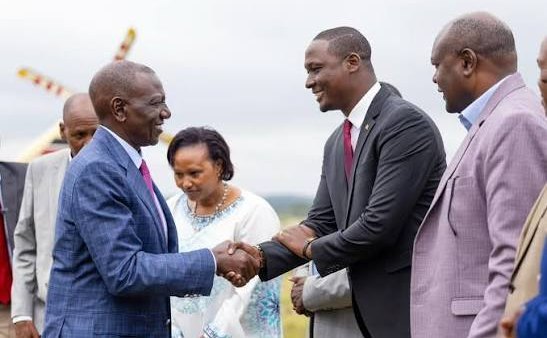
President William Ruto yesterday warned the opposition against engaging in divisive and exclusionary politics, saying such rhetoric risks destroying the country.
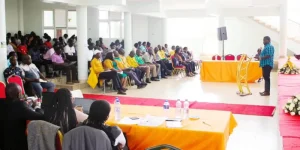
Speaking during a service at the Seventh-day Adventist Church in Kiserian, Kajiado County, Ruto accused opposition leaders of advancing narratives rooted in tribalism, hatred and political intolerance instead of presenting alternative policies to Kenyans.
“You will bring down this country with your divisive and exclusionary politics,” the President said.
The President took issue with politicians who classify Kenyans based on political loyalties, warning that such language could sow dangerous divisions.
“You hear people saying these are allies and others are traitors. Others say these are cousins, while others are enemies. That language will destroy our country. There is no need to divide people,” he said.
Ruto urged opposition leaders to focus on marketing their plans, agendas and visions rather than engaging in insults and ethnic mobilisation.
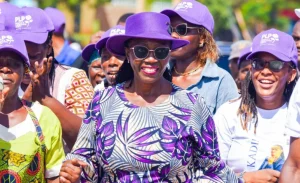
The service was attended by ODM leader Oburu Oginga, Deputy Party Leader Simba Arati and Homa Bay Governor Gladys Wanga.
The leaders reaffirmed their support for Ruto’s re-election and defended the government’s economic policies.
They criticised leaders who, they said, spend more time attacking the President than offering solutions to the challenges facing the country.
Ruto said the country’s democratic space should allow leaders to compete on ideas and development records, not on ethnicity and political labels.
“I want to appeal to all our colleagues that, even in competition, let us not inject hatred, tribalism and insults into politics.
“Let everyone explain themselves. Let everyone tell us their plans, agenda and vision and Kenyans are clever enough to know which agenda will prosper the country and which one will not,” he said.
Ruto challenged critics of his administration’s flagship programmes, including the Affordable Housing Programme and the Universal Health Coverage initiative, to provide workable alternatives.
“You are saying this housing programme is not good. Tell us the better one. You are saying UHC is not good and want to take us back to NHIF, which served only a few people. Let everyone explain themselves,” he said.
The President also defended the government’s handling of fuel prices amid global market disruptions linked to tensions in the Middle East.
He noted that while some countries had experienced fuel shortages and long queues at filling stations, Kenya had managed to cushion consumers through government interventions.
“Because of the problems in Iran, fuel prices have increased worldwide. Some countries ran out of fuel and motorists queued for three or four days.
“Here, we have tried to reduce the cost using our resources. Today, the price of diesel has reduced by Sh10, and we will continue looking for ways to make fuel affordable,” he said.
Ruto further dismissed criticism over his frequent foreign trips, saying they are part of his responsibility as President and are aimed at attracting investment and advancing Kenya’s interests abroad.
“People are asking why the President has returned from abroad and gone to Marsabit, Kakamega and now Kajiado. That is the work I accepted to do. I sought this job because I believed God had a reason for making me President,” he said.
“Some people are saying I should go on holiday. If you want to go on holiday, just go. For me, I have work to do. My diary is full for the next six months because this country is changing and we must put in the effort.”
The President revealed that he would travel to France on Monday to represent Africa at an international forum, insisting that such engagements are necessary for Kenya’s economic transformation.
At the same time, he mounted a defence of the 2026–27 Budget, saying it demonstrates the government’s commitment to agriculture, education and economic growth.
Ruto said funding for agriculture had been increased to Sh63 billion to support fertiliser subsidies, seed distribution and reforms in the coffee and sugar sectors.
He added that the education sector had received Sh702 billion, while allocations for scholarships, capitation and higher education support had more than doubled over the past three years.
“We have increased funding for scholarships and capitation from Sh43 billion in 2022 to Sh93 billion in this year’s budget. We want to ensure our universities are stable and our children have access to loans and scholarships,” he said.
Backing the government’s economic agenda, Oburu said Kenya should continue exploring local financing mechanisms to fund development projects and reduce dependence on external borrowing.
“We need to use our own resources to develop our country. All countries have budget deficits. The issue is how to manage those deficits responsibly,” Oburu said.
Governor Wanga urged leaders seeking elective office to present their track records to voters instead of engaging in constant criticism.
“It has now come to a point where anybody seeking leadership must tell Kenyans their record. If you were a district officer, what did you do? If you were a minister for many years, put your record on the table,” she said.
“As the ODM party, we have decided that we are going to work with you. We will work together into the future. You are serving one term, and you will serve a second term,” she said.