


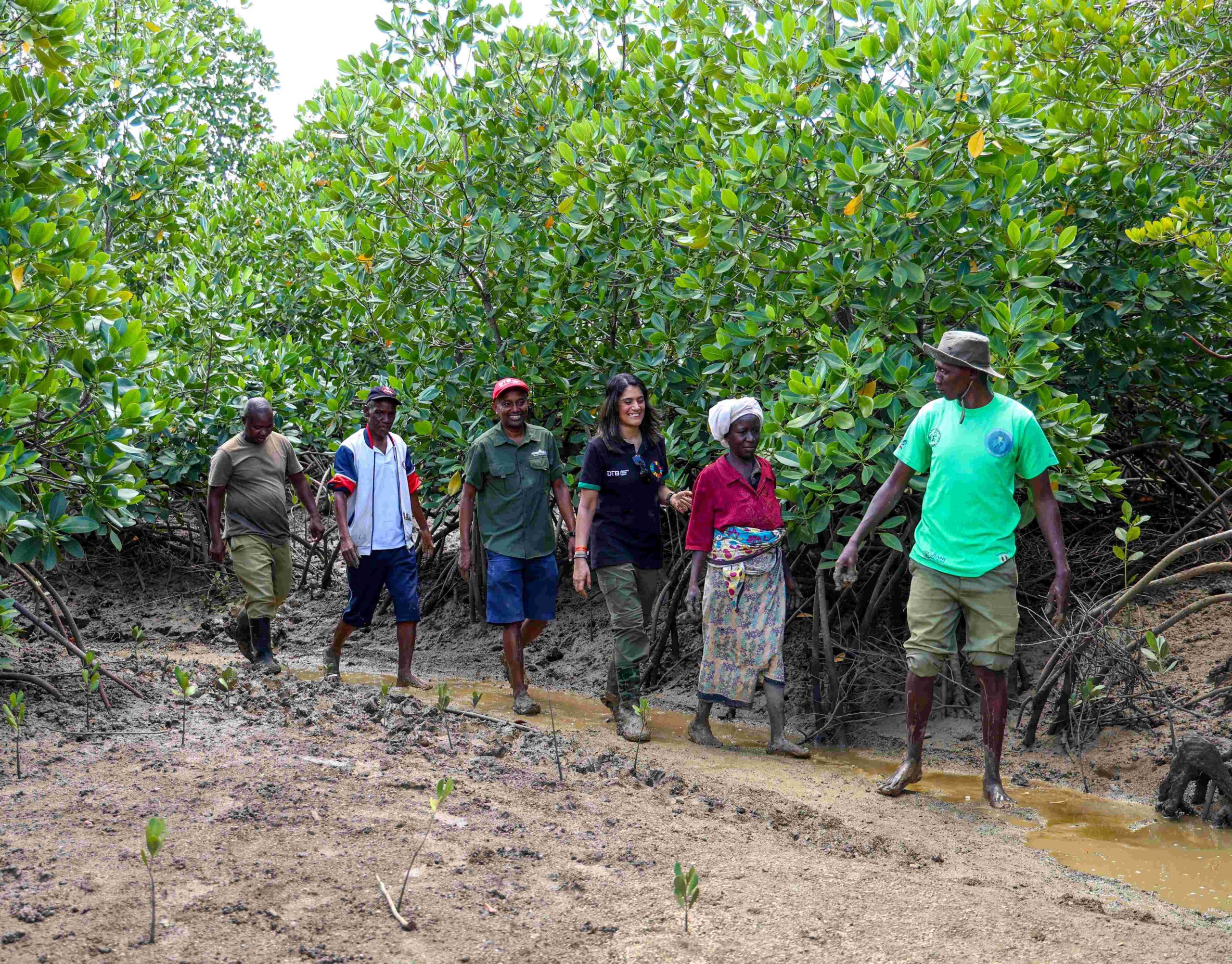
Women in Tsunza-Gutu, Kwale county, are smiling all the way to the bank as they mint millions from mangrove tree planting, improving their lives and conserving the environment.
Mwatsumbo Community Forest Association (CFA) chairperson Juma Mashanga said the poverty index in Tsunza, Kinango subcounty, has been declining because of mangrove forest restoration activities, which have revived fisheries activities in the area.
“One of the benefits of mangrove restoration is the guaranteed fisheries production, like 20 years ago when we had plenty of fish and fish species, but which were lost over the years because of mangrove forest destruction,” Mashanga said.
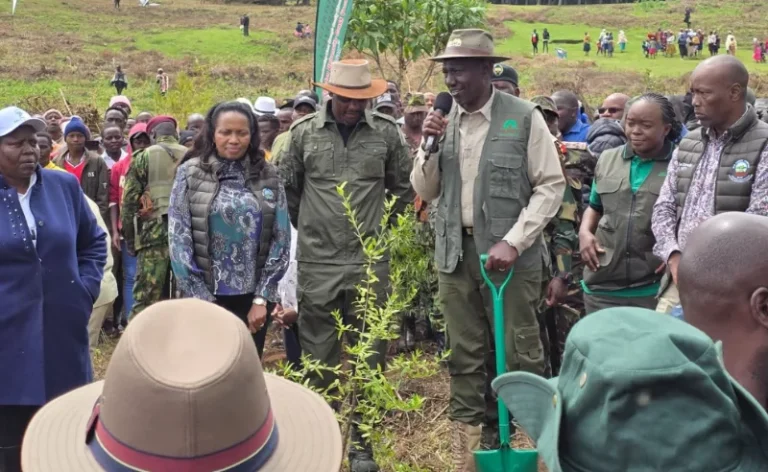
Speaking during the planting of 100,000 mangrove trees at Tsunza-Gutu during World Environment Day, in partnership with Diamond Trust Bank and Furaha and Baraka Farms, Mashanga said mangroves provide breeding grounds for prawns, a ‘cash crop’ for Tsunza residents, and crabs.
Tsunza is known for prawns, but with the destruction of mangroves, some prawn species disappeared.
However, with restoration efforts, the prawns are slowly returning.
In Mombasa, fresh prawns generally fetch between Sh1,500 and Sh4,300 per kilo, depending on their size, whether they are peeled or shell-on, and whether they are sourced directly from the docks or local markets.
“The moment you interfere with this ecosystem, you interfere with the lives of the people here,” Mashanga said.
He said since the entry of Furaha and Baraka Farms into mangrove restoration efforts in 2023, there has been a significant change in the lives of, especially, women in Tsunza.
“We now have more than 200 women involved in the restoration efforts, up from about 20 when we started,” Mashanga said.
He said in the last three months alone, they have made about Sh4 million as corporates rush to buy their seedlings in a bid to plant hundreds of thousands of trees.
The money has been distributed among all the women involved in the restoration work.
“During the rehabilitation period, in terms of socioeconomic development, we have earned about Sh7 million at the group level. We usually receive the money at group level before distributing it to individuals,” Mashanga said.
Resident Riziki Ngoka said she joined the other women after seeing their lives improve over the last few years.
“I saw their children remain in school while mine kept coming back home because of a lack of fees. So I approached them and asked how they managed to keep their children in school. They then told me about the mangrove planting efforts,” she said.
Ngoka said she is gradually seeing the benefits and can now afford regular meals at home.
“Now, I cook breakfast, lunch and supper. Before joining this group, I usually skipped lunch and, in some cases, breakfast too,” she said.
Apart from earning money, she said she feels she is breathing better-quality air because of the restored forest.
Furaha and Baraka Farms founder and CEO Daniel Mwero said the need to restore mangrove forests and the environment in general cannot be overstated.
He said of the 17 Sustainable Development Goals, they have achieved 10 so far in Tsunza.
“By virtue of having partners like DTB, KPA and Aiba Africa coming to plant with us here, they help the community with other issues such as school fees, improved classrooms, laboratories, toilets and scholarships for the bright and needy,” Mwero said.
Mwero said they have been allocated about 1,300 hectares (3,212 acres) in the Tsunza ecosystem by the Kenya Forest Service, within which they plan to plant 13 million mangrove trees.
So far, with partners, they have planted more than three million trees.
DTB Bank head of sustainability and communications Azmaira Thobani said the bank has a target of planting 1.2 million mangroves in Kwale county by 2026 under the ‘Much More than Trees’ initiative.
“Apart from just planting and growing trees, we also look at the benefits to the ecosystem. With mangroves, we protect the coastline, preserve marine life, fight climate change and benefit surrounding communities,” Thobani said.
The bank has a target of planting 10 million trees by 2030 and has already reached about two million.
Thobani said they work with different CFAs because, at the heart of their initiatives, they want communities to benefit the most.
“We cannot create impact alone. When we partner, we can do so much more,” she said.
She said together with partners, they train communities on how to plant and nurture seedlings, which they then purchase for planting.
The same communities are then tasked with monitoring the trees to full maturity.
The 2026 theme for World Environment Day is ‘Global Call for Climate Action’.