


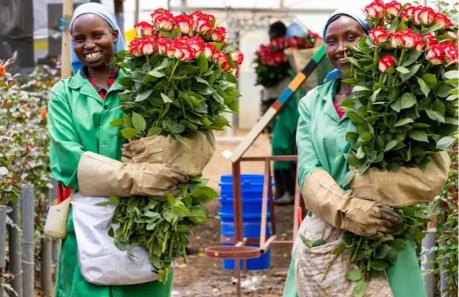
Kenya’s flower export earnings fell to Sh81.3 billion in 2025 from Sh72.1 billion, slowing growth but retaining the country’s position among top cut-flower exporters, an agency has said.
The latest figures by Agriculture and Food Authority (AFA), released ahead of the International Flower Trade Expo (IFTEX) 2026, underline the growing importance of floriculture as one of Kenya’s top foreign exchange earners and a key source of employment and rural livelihoods.
Calistus Kundu, AFA acting director general, said the horticulture industry exported 457,700 tonnes of produce valued at Sh143.78 billion last year, with cut flowers accounting for the largest share at 62 per cent of the total value.
Fruits contributed 19 per cent, vegetables 15 per cent and medicinal and aromatic plants four per cent.
“The flower industry remains the star sub-sector within horticulture,” Kundu said.
“Besides earning foreign exchange, the floriculture industry currently supports more than 150,000 jobs directly and indirectly, with women and youth making up a significant share of the workforce.”
Kenya is currently ranked among the top four global exporters of cut flowers, with exports reaching 143 destinations last year. Export volumes rose from 102,500 tonnes in 2024 to 130,600 tonnes last year.
Kundu said Kenya’s floriculture sector has built a global reputation for high-quality flowers, particularly roses, which account for about 69 per cent of the country’s flower exports.
Kenya also exports carnations and summer flowers grown across 21 counties under greenhouse and open-field systems.
More than 90 per cent of flower production is undertaken by medium- and large-scale growers, while smallholder farmers mainly produce summer flowers for export through consolidators.
The European Union remains Kenya’s largest market, with the Netherlands accounting for about 46 per cent of flower exports through the Aalsmeer Flower Auction and direct supermarket sales.
Other key destinations include the United Kingdom, Germany, Australia, Kazakhstan and countries in the Middle East, alongside emerging markets such as Japan, South Africa, Italy and Qatar.
Kundu said the government, through the AFA-Horticultural Crops Directorate, is implementing measures aimed at strengthening the sector and safeguarding Kenya’s competitiveness in international markets.
The measures include enforcing quality standards, streamlining licensing and compliance procedures, supporting sustainability programmes and improving traceability systems.
“We continue to work with stakeholders to address emerging market requirements and ensure Kenya remains a reliable and globally competitive source of high-quality flowers,” he said.
Isaac Macharia, director of Phytosanitary and Biosecurity Services at the Kenya Plant Health Inspectorate Services, said Kenya currently commands about 38 per cent of the EU market share for rose cut flower exports.
Macharia said maintaining strict phytosanitary standards remains critical in protecting export markets from pests and diseases.
Kephis has automated the issuance of phytosanitary certificates and import permits through the Integrated Export-Import Certification System to improve efficiency and compliance.
Kenya has also intensified pest surveillance, farm inspections and laboratory testing systems to meet international requirements, particularly in managing the False Codling Moth in roses destined for the EU, UK and South Korean markets.
Despite challenges such as rising freight costs and stricter environmental regulations in Europe, industry players said Kenya’s flower sector continues to demonstrate resilience and steady growth.
Kenya is now seeking to expand into new markets in North America, Southeast Asia, Eastern Europe and the Middle East as global demand for flowers continues to rise.
Dick van Raamsdonk, organiser of IFTEX, said the global flower trade still presents significant opportunities for Kenya despite economic and political uncertainties across international markets.
He said that tighter carbon emission regulations in Europe and uncertainty surrounding global freight costs remain major concerns for exporters.
“Despite these challenges, the Kenyan flower industry continues to grow. The sector is resilient, confident and forward-looking,” he said.
Van Raamsdonk said Kenya should continue targeting emerging markets in North America, Southeast Asia, Eastern Europe and the Middle East, where demand for cut flowers remains strong.
“Together with Colombia and Ecuador, Kenya belongs to the top three cut flower producing countries in the world. On the African continent, Kenya remains the leading producer by far,” he said.