
The Energy and Petroleum Regulatory Authority (EPRA) will announce new pump prices today as oil marketers anticipate petrol prices to be reviewed upwards.
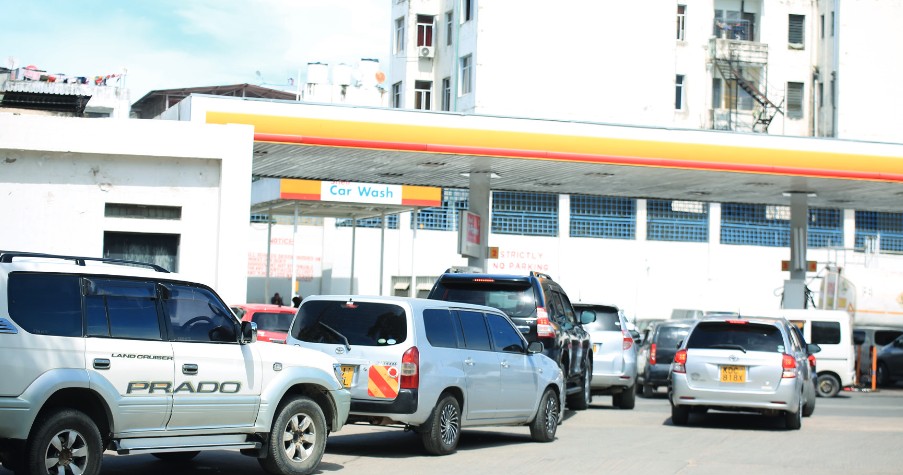
Kenya has withstood the pressure following the Iran war to maintain the same pump prices for almost two months now, but speculation of a likely rise has led to hoarding of the precious commodity.
Oil marketers have indicated that from their calculations, petrol prices may increase by about Sh37 per litre while diesel may jump up by Sh70 a litre.
However, if the state intervenes by activating the Fuel Stabilisation Fund, then the pump price may cushion the public even as the review reflects both local supply disruptions and global oil market volatility.
The current crisis was triggered by the February 28, joint attack on Iran by Israel and America, with Iran’s retaliatory attacks targeting the Gulf states where Kenya sources its supplies from under the Government-to-Government (G-to-G) arrangement.
The Strait of Hormuz, a key global oil transit route, has come into sharp focus after US President Donald Trump on Monday announced a naval blockade targeting Iranian-linked shipping as a counter to Iran’s own blockade on a key route that handles 20 per cent of global oil supply.
According to the March-April cycle, Super Petrol, diesel and kerosene currently retail at Sh178.28, Sh166.54 and Sh152.78, respectively.
In the February-March cycle, Epra reduced fuel prices by Sh4.24 for petrol and Sh3.93 for diesel, but these rates were retained in the March-April review.
On Monday, Energy Cabinet Secretary Opiyo Wandayi gave the clearest hint that consumers may have to dig deeper into their pockets at the pump when he appeared before a parliamentary committee.
“Fuel prices are up worldwide, but I don’t know if EPRA will increase or not, but the truth of the matter is prices are high,” Wandayi told the National Assembly Committee on Energy.
The CS explained that Kenya’s fuel prices are higher than its neighbours’ due to the country’s tax regime; “Our pump prices are slightly higher than the rest of the neighbouring countries because their taxes on fuel are lower than ours.”
Wandayi, whose ministry is under probe over claims of importation of substandard fuel, has defended himself, declaring that he will not resign from office.
Yesterday oil surged by more than 7% back above $100 a barrel due to Trump’s threat, with Brent crude, the global benchmark for oil prices, rising to $102.02 a barrel.
The strait, through which a fifth of the world’s energy shipments pass, has become a flashpoint of the conflict after Iran retaliated against US-Israeli strikes by threatening to attack vessels that try to use the waterway.
On Monday, the Unified Command of the Iranian Armed Forces said that US restrictions on vessels in international waters were “illegal and constitute piracy”.
It added that Iran would implement a “permanent mechanism to control the Strait of Hormuz following US threats”.
China has called for restraint. “The Strait of Hormuz is an important international trade route for goods and energy, and maintaining its security, stability and unimpeded flow is in the common interest of the international community,” a spokesperson for China’s foreign ministry said.
Oil prices, however, dipped in early Asian trade on Tuesday as hopes of more peace talks between the US and Iran eased concerns about further disruptions to energy supplies.
The price of global benchmark Brent crude fell by about 1% to $98.40 (£72.85) a barrel, while US-traded oil dropped by 1.7% to $97.40.
President Donald Trump said that Tehran has contacted Washington about a potential agreement.
Earlier, oil prices jumped above $100 a barrel following Trump’s order to blockade Iran’s ports after negotiations failed between the two sides at the weekend.
Speaking to reporters outside the White House on Monday, Trump said: “I can tell you we’ve been called by the other side. They’d like to make a deal very badly.”
Separately, the New York Times reported that Iran had proposed suspending uranium enrichment for up to five years, an offer rejected by the US which insisted on 20 years.
The report, which cited Iranian and US officials, also said Washington and Tehran had traded proposals for suspending Iran’s nuclear activity during talks in Pakistan but remained far from an agreement.
But it added that the discussions suggested there may still be a path to a peace deal, with a possible second round of face-to-face talks.