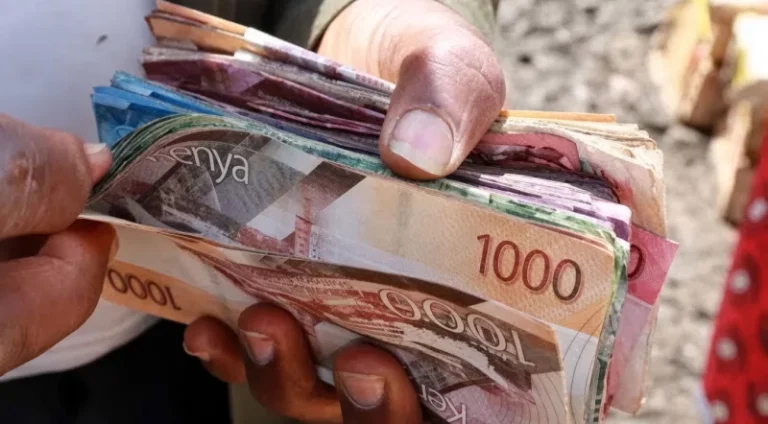



From IDs to NTSA offices, bribery in Kenya appears to follow a surprising pattern, one that seems to shift depending on whether you are single, married, divorced, or widowed.
A new survey by the Ethics and Anti-Corruption Commission (EACC) released on April 9 has revealed an unexpected pattern in Kenya’s everyday corruption landscape.
For single Kenyans, the pressure points appear early in life civil registration offices, the survey indicates.
Nearly half (45 per cent) reported paying bribes there, often tied to documents like IDs and certificates, with police officers close behind at 43.9 per cent.
The National Transport and Safety Authority officers came in third at 24.1 percent, land registry officers 23.8 percent and Registration of persons officers (IDs) at 18.9 percent
For those in monogamous marriages, the experience shifts slightly.
Police officers top the list at 37.7 per cent, followed by civil registration officials at 30.8 per cent suggesting routine encounters linked to mobility, compliance, and family responsibilities.
Land registry comes in third at 26.4 per cent, NTSA officers 24.7 per cent and registration of persons (IDs) at 20.9 percent.
In polygamous households, the trend leans more toward movement across borders.
More than half (54 per cent) reported bribing immigration officers, while 41.3 per cent paid bribes to police. 34.7 percent pay to the Civil registration officers while 15.9 percent pay to NTSA officers.
A similar pattern is observed among separated individuals, pointing to increased interaction with travel and enforcement systems. 34.1 percent pay bribes to Immigration officers, 30.2 per cent offer bribes to police officers, 21.8 percent to NTSA officers while 21 percent to registration of persons officers (ID)
But it is divorced Kenyans who stand out the most.
An overwhelming 72.9 per cent reported paying bribes to NTSA officials, the highest across all groups hinting at the bureaucratic hurdles tied to vehicle ownership, transfers, and licensing that often follow major life transitions.
This is followed by registration of persons officers (ID) at 23 percent, police officers came third with 20 percent while Public utilities officers came forth with 15.7 percent.
Widowed respondents, on the other hand, reported fewer interactions overall, with most bribes going to civil registration officials (28.3 per cent) and NTSA.
The Survey was conducted by the Ethics and Anti-Corruption Commission in collaboration with the United Nations Office on Drugs and Crime – Regional Office in Eastern Africa (UNODC-ROEA), the National Gender and Equality Commission (NGEC), the Kenya National Bureau of Statistics (KNBS), and Transparency International Kenya.
It examined citizens’ interactions with public officers in the delivery of public services across all 47 counties using household questionnaires administered through face-to-face Computer-Assisted Personal Interviewing (CAPI) with a nationally representative sample of 1,467 clusters of Kenyan adults aged 18 and above drawn proportionately from all counties based on the 2019 population census.
Out of 22,005 households sampled, 21,941 households were reached with 16,858 successfully interviewed.